


Original Coverage & Source Attribution: www.latintimes.com
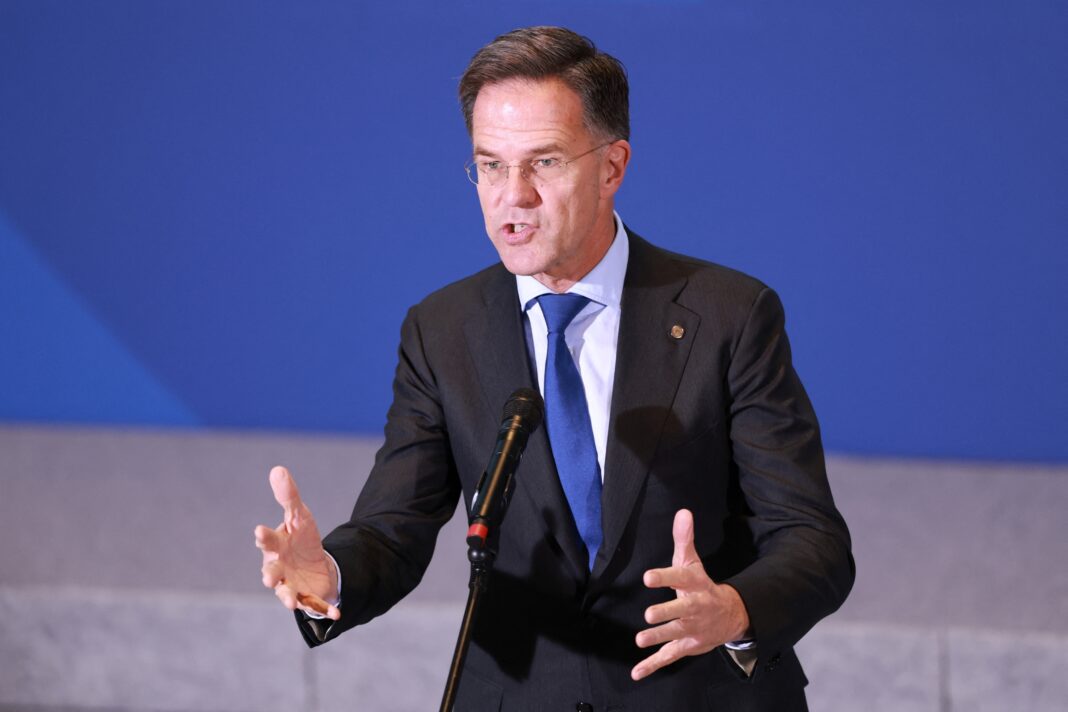
Photo by Kenzo TRIBOUILLARD / AFP via Getty Images
The Briefing
- Three aerial objects — confirmed as two missiles and a suspected jet-powered drone — crossed into Polish territory on November 20 during a large-scale Russian bombardment of western Ukraine; at least one has been identified as a Russian Kh-101 cruise missile.
- NATO Secretary General Mark Rutte traveled to Warsaw the following day and guaranteed the alliance would defend “every inch of Polish territory,” directing NATO’s Supreme Allied Commander Europe to assess vulnerabilities and implement force adjustments as needed.
- Operation Eastern Sentry — NATO’s standing eastern defense mission, active since September 2025 and involving France, Denmark, Germany, and the United Kingdom — provides the operational framework through which the alliance is now responding.
Polish territory was breached on November 20 when three aerial objects — two missiles and a drone — came down during a sweeping Russian bombardment of western Ukraine, triggering an immediate diplomatic and military response from the NATO alliance. The incident sent Secretary General Mark Rutte to Warsaw the next morning, where he delivered a pointed message to Moscow that left no room for strategic ambiguity.
A Border Crossed — and an Alliance Put on Notice
“I can guarantee that NATO will defend every inch of Polish territory,” Rutte told Poland’s national press agency PAP, reaffirming the alliance’s Article 5 collective defense commitment. Arriving after talks with Prime Minister Donald Tusk in Warsaw, the NATO chief said all allies stood in full solidarity with Poland and that the alliance would work to identify any defensive vulnerabilities the incident had exposed.
While Warsaw stopped short of formally invoking Article 4 of the NATO treaty — a step it had previously taken during a mass drone incursion in September 2025 — NATO’s North Atlantic Council scheduled an extraordinary meeting in Brussels for Monday to address Poland’s security concerns. Tusk’s primary demand: a reinforcement of the alliance’s aerial surveillance and detection infrastructure along Poland’s eastern border. Russia’s sustained missile campaign against western Ukrainian regions sharing a border with Poland, he argued, has produced a structurally unacceptable margin for error.
A Missile With a Name: The Kh-101
Polish Defense Minister Władysław Kosiniak-Kamysz confirmed at a Warsaw news conference that at least one of the objects—recovered near Nowy Lipowiec in Lublin Voivodeship—was a Russian Kh-101 cruise missile. The recovery follows a similar incident in the same region in late July, when investigators found another Kh-101 manufactured just months earlier in Russia’s Moscow region, underscoring Moscow’s reliance on newly produced long-range munitions near NATO borders.
Unlike the low-flying surveillance drones that defined earlier incursions, a Kh-101 cruise missile demands a significantly shorter detection and interception window. That qualitative shift — from drone to cruise-class munition — sharpens both the security implications and the political pressure on allied air defense infrastructure in the region.
NATO Puts Forces in Motion
Beyond his public pledge, Rutte confirmed that General Alexus Grynkewich, NATO’s Supreme Allied Commander Europe, had been directed to identify gaps in the alliance’s defensive posture and implement adjustments where necessary. Those measures could include expanded air patrols, denser radar coverage along the eastern flank, and tighter cross-border coordination protocols between allied militaries.
The Operation Already on the Ground
NATO’s response operates within the framework of Operation Eastern Sentry, the alliance’s standing eastern defense mission launched in September 2025 following a large-scale Russian drone incursion into Polish airspace. The operation — which draws on assets from France, Denmark, Germany, and the United Kingdom, including Rafale jets, Danish F-16s, frigates, and ground-based defense systems — was designed to provide flexible, integrated protection across the alliance’s entire eastern flank. Where previous violations were handled primarily through diplomatic consultations, Eastern Sentry means NATO now holds standing operational capacity to respond immediately and, if necessary, militarily.
Poland Is Done Waiting
Warsaw’s posture has hardened markedly over the past year. In September 2025, Poland became the first NATO member to actively shoot down Russian aerial objects inside its own borders — a step that European officials said fundamentally shifted the alliance’s engagement posture on its eastern frontier. By the time the November 20 missiles landed, Poland had already spent months pressing allies for stronger commitments.
Defense Minister Kosiniak-Kamysz and Foreign Minister Radek Sikorski have both argued publicly that the passive approach of earlier years is no longer viable given the volume and proximity of Russian strikes near the Polish-Ukrainian border.
The Question NATO Cannot Avoid
Each additional incursion — a wayward drone, a cruise missile crossing miles into allied airspace — narrows the interpretive distance between accident and provocation. Rutte sought to project measured resolve during his Warsaw visit, acknowledging he could not rule out another breach while making clear that the alliance’s commitment was absolute, guaranteeing that NATO would “defend every inch of Polish territory.”
Whether the Kremlin reads that posture as a credible deterrent — or as a line it can keep testing — will shape the trajectory of NATO’s most exposed frontier through the months ahead.