


Original Coverage & Source Attribution: oncodaily.com
Could a simple blood test help researchers understand whether a genetically engineered cancer treatment is working?
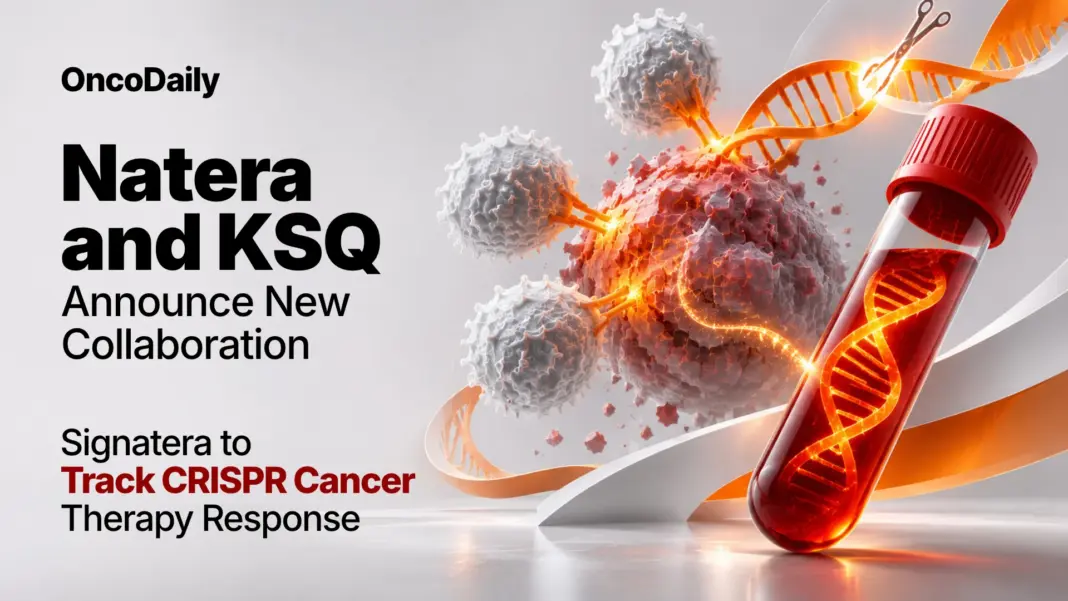
On November 23, 2026, Natera and KSQ Therapeutics announced a new collaboration combining two emerging technologies in oncology: CRISPR-engineered immune cell therapy and circulating tumor DNA (ctDNA) monitoring.
Under the agreement, Natera will use its Signatera Genome with Phased and Structural Variants blood test to analyze samples from an ongoing Phase I/II clinical trial of KSQ-004EX, an experimental cell therapy being investigated in patients with advanced solid tumors.
The goal is to determine whether changes in tumor DNA circulating in the bloodstream correlate with patients’ responses to the treatment.
What Is KSQ-004EX, and How Does It Work?
KSQ-004EX is an investigational engineered tumor-infiltrating lymphocyte (eTIL) therapy developed by KSQ Therapeutics.
Tumor-infiltrating lymphocytes are immune cells that have already entered a patient’s tumor and may recognize cancer cells. However, these cells can lose their effectiveness within the tumor microenvironment.
KSQ-004EX aims to overcome some of these limitations through genetic engineering.
Researchers collect immune cells from a patient’s own tumor and use CRISPR/Cas9 gene-editing technology to inactivate two genes: SOCS1 and Regnase-1.
These genes normally regulate T-cell activity. Their inactivation is intended to strengthen the immune cells’ ability to attack cancer and remain functional for longer.
After laboratory manufacturing and expansion, the modified cells are administered back to the patient.
Preclinical studies have shown encouraging improvements in T-cell expansion, tumor infiltration, persistence, and antitumor activity. Whether these benefits translate into meaningful clinical outcomes remains under investigation.
Six Cancer Types Included in the Clinical Trial
The ongoing Phase I/II study, registered as NCT06598371, is evaluating KSQ-004EX in patients with advanced or metastatic solid tumors, including:
- Melanoma
- Non-small cell lung cancer
- Head and neck squamous cell carcinoma
- Colorectal cancer
- Pancreatic cancer
- Cervical cancer
The first patient received KSQ-004EX in April 2025.
The initial phase focuses on treatment safety, tolerability, and dose selection, while the Phase II component is designed to evaluate antitumor activity.
Patients receive lymphodepleting chemotherapy before the engineered T-cell infusion, with interleukin-2 included as part of the treatment regimen when applicable.
How Will Signatera Monitor Treatment Response?
One of the major challenges in developing new cancer immunotherapies is determining how quickly and effectively a treatment is acting against a tumor.
Conventional imaging provides important information about changes in tumor size. However, researchers are increasingly investigating whether blood-based molecular measurements can provide additional insights into treatment response.
Signatera Genome uses circulating tumor DNA, small fragments of DNA released by cancer cells into the bloodstream, to monitor tumor-associated molecular signals.
As part of the collaboration, Natera will retrospectively analyze blood samples collected at multiple timepoints during the KSQ-004EX trial, including before treatment.
Researchers will investigate whether ctDNA levels decrease, remain detectable, or increase following treatment and whether these patterns correlate with clinical outcomes.
A decline in ctDNA could potentially provide evidence of antitumor activity, while persistent or rising levels might indicate residual or progressing disease. However, these relationships must be established specifically for KSQ-004EX.
The analysis is exploratory and is not currently intended to guide treatment decisions in the trial.
Why Does This Collaboration Matter?
The collaboration brings together two areas of cancer research that are advancing rapidly: genetically engineered cell therapies and molecular monitoring through liquid biopsy.
Although engineered immune cell therapies have demonstrated considerable potential, treating solid tumors remains challenging because of the complex tumor microenvironment, immune suppression, and limited T-cell persistence.
At the same time, ctDNA monitoring is being investigated as a way to better understand cancer dynamics during treatment.
Combining these approaches could help researchers identify molecular patterns associated with successful immune-cell therapy and better characterize patients’ responses.
Eric Matthews, General Manager of Biopharma at Natera, emphasized the growing importance of understanding tumor responses at the molecular level during early-phase oncology drug development.
Importantly, the companies have not announced clinical efficacy results from this collaboration, and it remains unknown whether Signatera measurements will reliably predict responses to KSQ-004EX.
Nevertheless, the study could provide valuable evidence about how blood-based molecular monitoring might complement conventional assessments in future cell therapy trials.
As personalized cancer treatments become increasingly sophisticated, measuring their effects at the molecular level may become an important part of understanding which therapies work, when they work, and for whom.
Read further on OncoDaily: Can Cell Therapy Succeed in Solid Tumors?