


Original Coverage & Source Attribution: urbanacres.in
Bengal’s special intensive revision (SIR) appellate tribunals have offered judges the option of working from home as they face a heavy backlog of appeals and logistical constraints at their hearing centre in Joka, according to a report by The Telegraph.
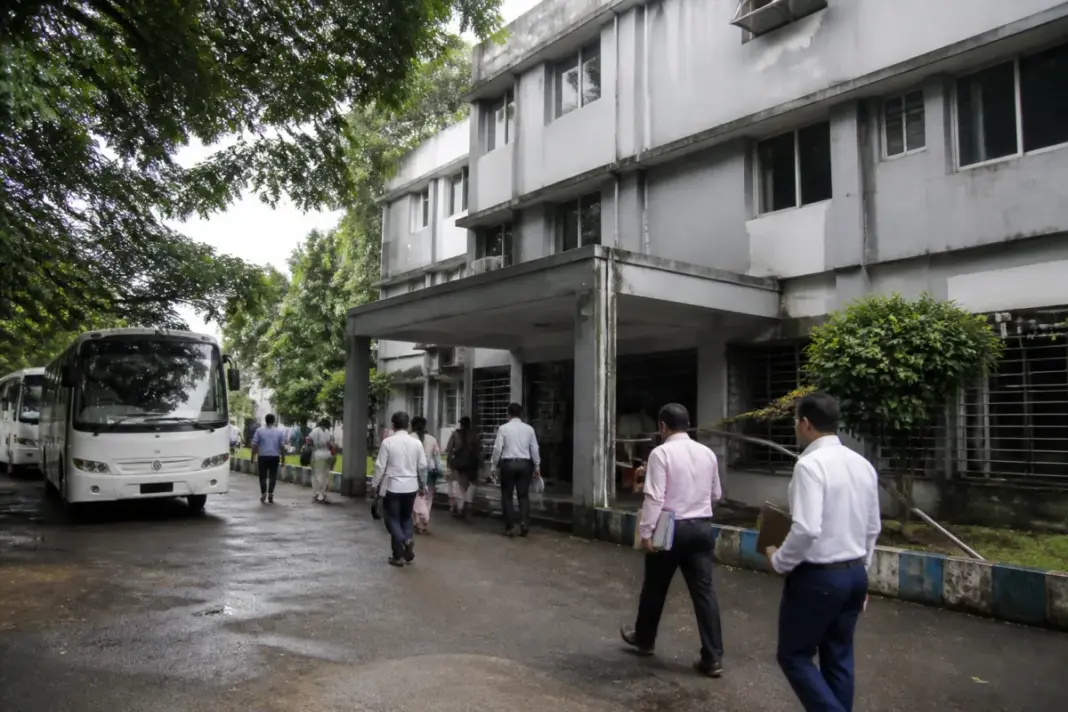
The tribunals currently operate from SPM-Niwas, a central government institute on the southern fringes of Calcutta, near IIM Calcutta. Several judges have reportedly complained about the long commute to the venue. One judge is said to spend about four hours travelling between home and Joka.
Sources cited by The Telegraph said judges had recently received calls from the state election commission through tribunal nodal officers, asking whether they would be comfortable conducting hearings from home. At least two judges were reported to have agreed in principle, subject to the provision of suitable infrastructure and adequate staff.
The proposed arrangement is intended to improve the tribunals’ productivity, but officials indicated that remote hearings would not resolve the operational problem unless supporting personnel and transport were also arranged. One official said that a judge could hear only 10 to 12 appeals a day because of logistical limitations. Work generally begins at about 11am and ends by 4.30pm because staff need to leave, with additional time taken up by lunch.
Four buses currently transport tribunal staff between Joka and Howrah, Sealdah, Baruipur and Diamond Harbour. The report did not specify whether the proposed work-from-home arrangement would require new transport routes, additional technology systems or revised procedures for document handling and voter appearances.
The capacity issue has become more significant after the Supreme Court directed the Election Commission on Monday to prioritise appeals filed by voters whose names were deleted from the electoral rolls over applications seeking inclusion of names. The court also asked the commission to give precedence to appeals from excluded voters in Calcutta, Howrah and five other municipalities where civic elections are due, the report said.
During the hearing, advocate Prashant Bhushan told the Supreme Court that around 38 lakh appeals had been filed and approximately one lakh had been disposed of. Of the disposed cases, re-inclusion orders were issued in about 93 per cent of applications challenging deletions, according to the report.
Around 22 lakh appeals were filed by voters challenging the removal of their names, while about 16 lakh applications sought inclusion of names, most of them filed by Election Commission officials. Tribunal officials said judges would, for now, focus on the 22 lakh appeals relating to deleted names.
The Kolkata Municipal Corporation area, which covers 17 Assembly seats, has around one lakh appeals against exclusions pending, The Telegraph reported. That backlog has direct significance for residents whose ability to participate in forthcoming civic elections depends on their appeals being heard and decided.
The tribunals have also faced changes in judicial assignments. Retired Calcutta High Court Chief Justice T.S. Sivagnanam, who was initially entrusted with appeals from Calcutta, stepped down in May. Justice (retired) Kanchan Chakraborty was subsequently assigned the cases but fell ill soon after taking charge. He resumed hearings earlier this month.
For affected voters, the proposed remote-working option matters only if it translates into more hearings and timely decisions. A 29-year-old resident of Entally, whose name was removed from the revised rolls, told The Telegraph that he hoped his appeal would be heard before the Kolkata civic elections.
The report also quoted Prasenjit Bose, chairperson of the Congress’s Bengal unit SIR committee and a petitioner in the Supreme Court, as welcoming the intention behind the court’s order while calling for evidence that it would produce the intended result. Whether work-from-home arrangements improve disposal rates will depend on the availability of staff, transport, hearing infrastructure and administrative follow-through alongside the judges’ increased flexibility.