Original Coverage & Source Attribution: www.palatinate.org.uk
By Scott Bartram
Ash Dyke’s Congo kayaking has TikTok fretting about rubbernecking. But morbid curiosity is as old as exploration itself, and we might as well be honest about it.
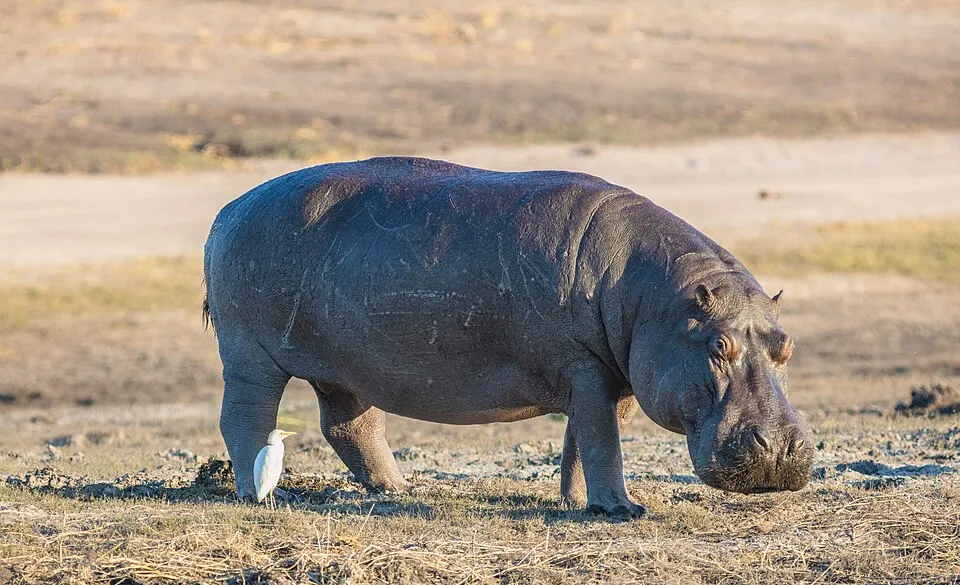
Ash Dykes might be eaten alive by a hippopotamus this month, and I’ll be watching if he is.
That sounds rather ghoulish. Dykes, a Welsh adventurer, is a real man with a real family, and the risks are just as real. Paddling a flimsy kayak for three weeks through the malarial Congo Basin in crushing heat and surrounded by Australian levels of deadly wildlife is no time for ‘the only thing we have to fear is fear itself’ schtick.
But I’m not alone in watching the build-up on TikTok and Instagram – he has over 2.8 million followers across both – and nor will I be alone in watching the 435-mile voyage itself down the Sangha River. I’ll be watching because it’s dangerous, not despite it, and so will almost everyone else.
Admiration of courage and a morbid curiosity about what courage might cost are not opposites but two inseparable aspects of the same view
You wouldn’t know it from some of the comments. Thick with pleas to stay safe, to think again, to remember his family, they’re surely sincere, but not the whole story. Nobody follows a countdown to a man navigating a crocodile-infested river in the hope that nothing happens. Who wants to watch that? The danger is the draw, and every anxious comment is a little vindication.
This is usually the moment to bash social media for turning us all into Romans in the Colosseum: ‘Are you not entertained?’ yell the content creators. But videos of danger or grisly results come up on our feeds because we engage with them and, like the Dude in The Big Lebowski, the algorithm abides. It shows us Dykes’s videos because we watch them.
There’s nothing new about our fascination with daring adventures, or indeed publishers’ awareness of it. Henry Morton Stanley found Dr Livingstone on the New York Herald’s money, because the paper knew it would make a great copy at least and the publicity stunt of the century at best. The Times bought the rights to George Mallory’s Everest expeditions for the same reasons.
Yet making an adventure public does change it. You are then telling a story about yourself, about the place, about the people who live there. And how you tell it affects what your audience thinks of all three. ‘Are you not entertained?’ is not the only question.
How Stanley portrayed himself, Africa, and Africans is obvious from a couple of his book titles alone: Through the Dark Continent (1878) and In Darkest Africa (1890). Little wonder that he felt few qualms about helping Leopold II of Belgium to build what became the horrific Congo Free State.
Joseph Conrad wrote Heart of Darkness, after witnessing the forced labour, chain gangs, and squalid scramble for plunder in the Free State in 1890, to attack Stanley’s story of civilising hero-explorers.
But even Conrad’s story was told by a European narrator about a European expedition; Africa is still a frightening backdrop and Africans barely speak. Chinua Achebe’s Things Fall Apart was the decisive reply: Africa has its own history and character, independent of European storytelling.
As the West African proverb popularised by Achebe goes, “until the lions have their own historians, the history of the hunt will always glorify the hunter.” Dykes’s countdown, too, depicts the Congo as a frightening place: panning shots of misty jungle either side of a huge dark river, angry gorillas on the banks, all overlaid with kitsch horror music, and even a direct reference to “drop[ping] into the heart of darkness.”
I’ll be watching because it’s dangerous, not despite it, and so will almost everyone else
To be fair, the Congo Basin is dangerous, and of course he’s communicating this – he wants viewers. He also promises to “meet the communities along the way,” as he did on his hike across Madagascar. Those videos showed friendly villagers and giddy children, but also poverty and civil strife. It seemed an honest portrait, which bodes well, though neither I nor any other viewer can really know how accurate it is.
Admiration of courage and a morbid curiosity about what courage might cost are not opposites but two inseparable aspects of the same view. So yes, I’ll be watching because it’s dangerous. The real question is what Dykes does with our attention. Stanley used it to sell an enlightened civilisation illuminating a benighted continent. Dykes can do better: let the villagers, the fishermen, and the guides speak for themselves. I hope he informs, educates, and entertains, in that order. And of course, I hope he makes it to Mossaka, the finish line of his trip. But if a hippo does take an interest, I’ll be watching. And so, whatever you tell yourself, will you.