Original Coverage & Source Attribution: www.mercomindia.com
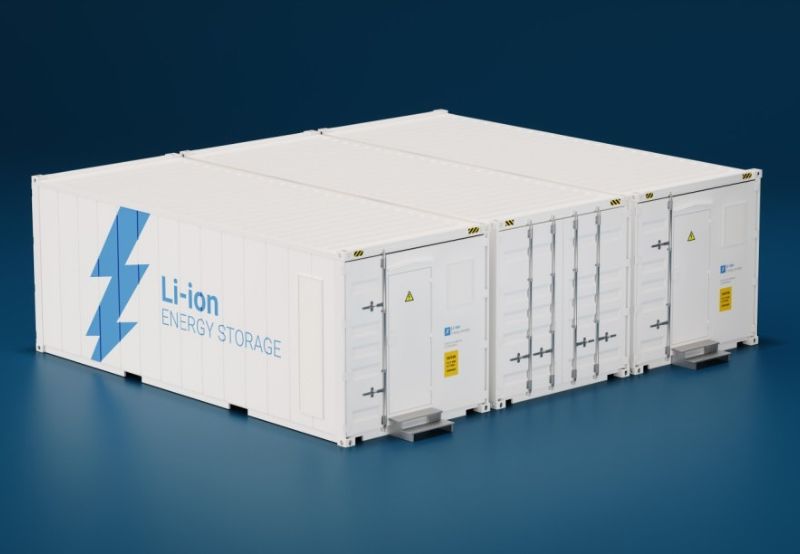
Solar module manufacturer and engineering, procurement and construction (EPC) services provider Sahaj Solar has announced plans to set up a 1.8 GWh battery energy storage system (BESS) manufacturing facility in Dakor, Gujarat.
The Ahmedabad-based company plans to invest about ₹250 million (~$2.64 million) in the facility, excluding the cost of the already-constructed factory premises.
The facility will serve both domestic and international markets and is expected to start operations by October 2027. The project will be financed through debt and internal accruals and will support the company’s plans to vertically integrate its existing solar power business.
According to Sahaj Solar’s annual reports, the company recorded consolidated revenue of ₹4.19 billion (~$44.23 million) in financial year (FY) 2025-26, up from ₹3.30 billion (~$34.80 million) in FY 2024-25. Profit after tax stood at ₹295.73 million (~$3.12 million), compared to ₹275.43 million (~$2.91 million) in the previous financial year.
In March 2026, Sahaj Solar approved the incorporation of a step-down subsidiary in the United Arab Emirates (UAE) to implement a proposed 750 MW solar manufacturing facility with a strategic partner.
The company’s board reviewed an earlier plan to establish a solar panel manufacturing facility in India. However, after assessing the prevailing market conditions and potential cost advantages in global manufacturing markets, the company decided to pursue the project through a UAE-based entity.
India’s cumulative installed battery storage capacity reached 9.3 GWh as of June 2026, according to Mercom’s Q2 and 1H 2026 Energy Storage Landscape Report.
Standalone battery storage dominated cumulative installations, accounting for 83% of capacity. Solar-plus-wind projects with storage offering round-the-clock capabilities accounted for 9%, followed by solar-plus-storage projects at 8%.
Other solar-plus-wind projects with storage and floating solar-plus-storage accounted for marginal shares. Battery storage procurement also expanded sharply during the first half of 2026.
Gujarat had the largest pipeline of standalone battery storage capacity, followed by Rajasthan and Andhra Pradesh.