Original Coverage & Source Attribution: www.iranintl.com
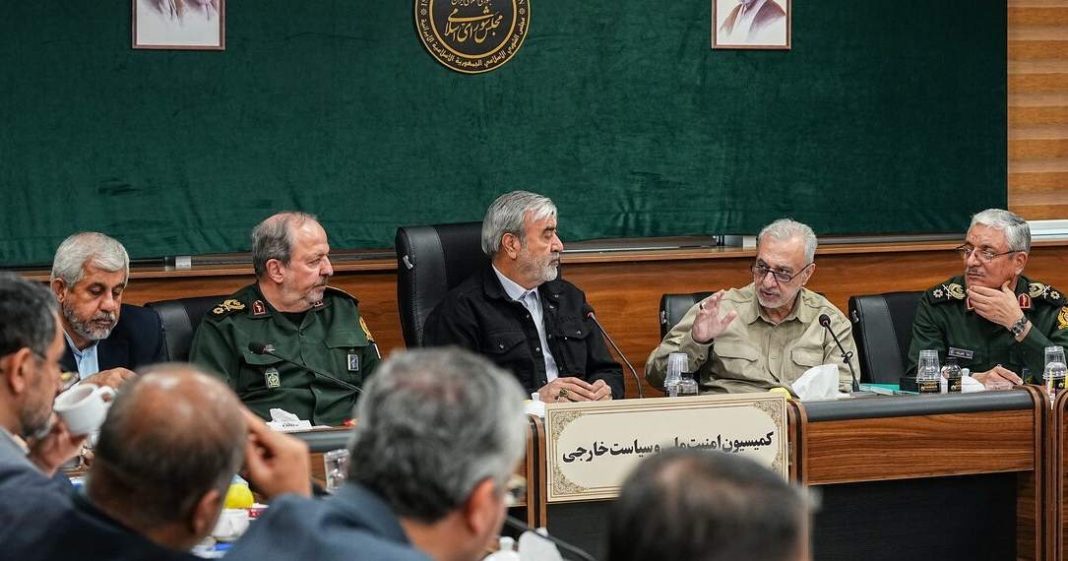
Yadollah Javani, the Revolutionary Guards’ political deputy, warned on Wednesday, October 21, that vital internet cables in the Strait of Hormuz could be targeted if Iranian infrastructure came under attack.
The strait’s importance to global oil and gas shipments may suggest that it holds similar significance for international internet traffic. Telecommunications data, however, paints a different picture.
According to the International Cable Protection Committee (ICPC), five active submarine cable segments pass through the Strait of Hormuz, accounting for less than one percent of the world’s international bandwidth.
-
Iran finds a new weapon beneath Hormuz
Telecommunications research firm TeleGeography identifies three major cable systems serving the route: Asia Africa Europe-1 (AAE-1), FALCON and Gulf Bridge International (GBI).
The principal data routes linking Europe and East Asia pass through the Red Sea, meaning the strategic importance of Hormuz to global energy markets does not translate into equivalent influence over the internet.
Cables serving Iran’s neighbors
Submarine cables crossing the Strait of Hormuz, according to TeleGeography, have been routed through Omani waters because of longstanding political considerations and difficulties in relations with Iran.
These cables primarily serve countries in the Persian Gulf, meaning an attack would pose a more immediate threat to regional connectivity than to the wider global internet.
Damage to submarine cables in the Strait of Hormuz could disrupt international connectivity in Bahrain, Qatar, Kuwait and the United Arab Emirates, although all four countries have alternative terrestrial connections. Saudi Arabia is less dependent on Persian Gulf cable routes, with most of its international bandwidth carried through systems landing on its Red Sea coast.
Why cutting cables does not mean cutting internet access
The global internet does not depend on a single network or point of failure. Telecommunications operators use multiple submarine and terrestrial routes to carry data and can redirect some traffic when a connection becomes unavailable.
-
IRGC-linked media hints at threat to Persian Gulf undersea internet cables
Such rerouting may reduce speeds, increase latency or disrupt certain services, but it does not necessarily disconnect users entirely.
Damaging a cable is also fundamentally different from depriving a country of internet access. The outcome depends on the number of affected routes, operators’ dependence on them and the capacity remaining elsewhere in the network.
Mehdi Saremifar, a Canada-based technology expert, described earlier Revolutionary Guards threats against submarine cables as largely rhetorical in an interview with Iran International.
Referring to similar threats made by Iranian authorities during the summer, Saremifar said their calculations had used the total volume of global submarine cable traffic rather than the much smaller amount passing through the Strait of Hormuz.
“These cables carry much of the traffic for countries along the southern shores of the Persian Gulf, Kuwait, parts of Iraq, Jordan and Syria. That means traffic in these areas would be affected, but not all of it,” Saremifar said.
Alternative terrestrial connections, including routes through Saudi Arabia and Egypt, could carry some of the displaced traffic, Saremifar said, adding that Iran’s earlier threats had already encouraged consideration of backup routes.
“So it is neither a particularly far-reaching threat nor a particularly serious one,” Saremifar said.
He also questioned the operational significance of the earlier warning, noting the institutional background of the Revolutionary Guards official who issued it. Evidence of actual naval movements toward the cables would warrant a different assessment, he said.
Damage could disrupt communications and economic activity in Persian Gulf commercial centres, but would not necessarily produce a prolonged internet outage, Saremifar added.
What the Red Sea disruptions reveal
Previous submarine cable failures have disrupted communications without shutting down internet access across entire regions.
In February 2024, three cables were damaged in the Red Sea, most likely by the dragging anchor of the Rubymar, a cargo ship struck by Houthi missiles. Repairs took six months, according to TeleGeography.
Four submarine cables were damaged in the Red Sea in September 2025, disrupting connectivity across parts of the Middle East and Asia, according to the Center for Strategic and International Studies.
In March 2024, damage to four cables off West Africa disrupted internet services in 13 countries. Operators rerouted some traffic through unaffected submarine and terrestrial networks, according to the Internet Society.
These cases illustrate an important distinction: the time required to repair a cable is not necessarily the length of the resulting internet disruption. Operators may restore some services through alternative networks before physical repairs are completed.
Security risks in the Persian Gulf could delay cable repairs by restricting access for specialized vessels. However, the availability of alternative submarine and terrestrial routes means delayed repairs would not necessarily cause a prolonged internet shutdown across the region.
Legal constraints on targeting submarine cables
Submarine communications cables are also subject to international legal protections.
The United Nations Convention on the Law of the Sea protects the laying and maintenance of submarine cables under Article 79, while Article 113 requires states to criminalize certain intentional or negligently caused damage to cables beneath the high seas.
Legal responsibility would depend on factors including the location of an attack, applicable jurisdiction and the international obligations of the countries involved.
During armed conflict, international humanitarian law also applies.
According to the International Committee of the Red Cross, civilian communications infrastructure is generally protected against direct attack unless it meets the specific criteria for becoming a military objective.
Military use of part of a communications network does not automatically make the entire network a lawful target. The principles of distinction, proportionality and precaution must still be observed.
These requirements are particularly relevant to cables carrying civilian communications for several countries simultaneously.
The gap between the threat and the internet’s reality
Javani’s warning follows earlier threats by Iranian officials against submarine internet infrastructure in the Persian Gulf.
Yet the Strait of Hormuz’s limited share of international bandwidth, together with the availability of alternative routes, means that even substantial damage to cables in the area would not amount to a global internet shutdown.
The more immediate consequences could fall on Persian Gulf Arab states and businesses dependent on regional connectivity.
The threat therefore highlights a gap between the Revolutionary Guards’ warnings and the technical and geographical limits of carrying them out: cables in the Strait of Hormuz can be damaged, but the global internet does not depend on them to remain operational.