



Original Coverage & Source Attribution: www.telegraph.co.uk
Economists have warned that the fall in value signals the end of residential property as an asset class.
Paul Cheshire, an emeritus professor at the London School of Economics and a former government adviser, previously told The Telegraph: “Houses are not in any decent sense assets.
“They are certainly not investment assets. [That idea] is a bit of a self-deception.”
Dwindling property values mean many homeowners face no longer making a profit, and are instead burdened by a financial millstone.
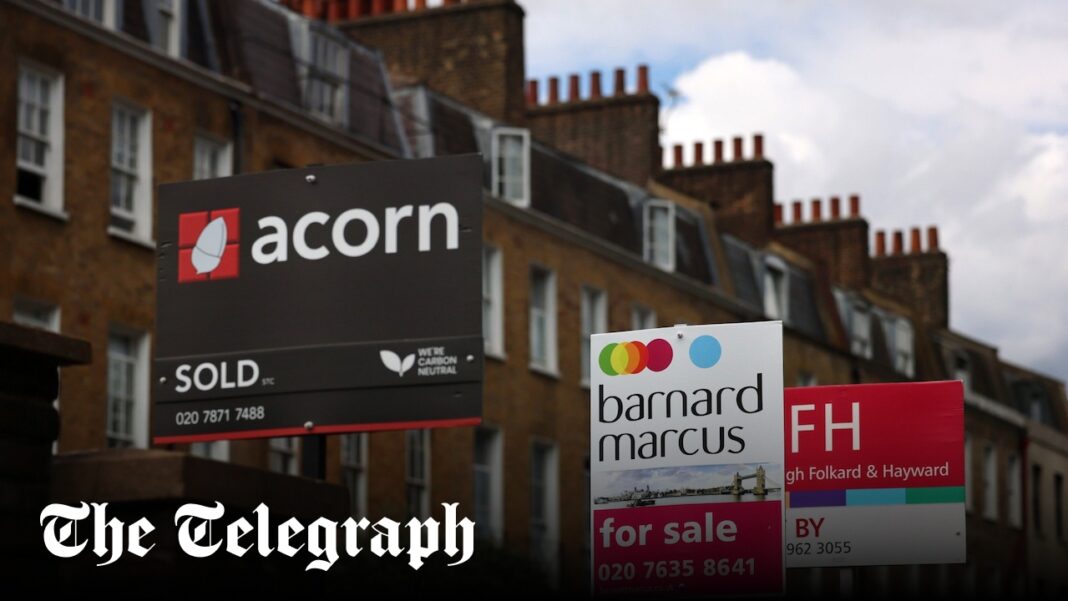
The downturn is most pronounced in London, where foreign buyers have dried up and stamp duty rates have become increasingly punitive.
Chris Sykes, co-founder of mortgage brokerage MSP Financial Solutions, warned that many former first-time buyers were stuck in flats they cannot sell.
Mr Sykes said: “Generally it is people who bought five to 10 years ago who are the ones getting caught out by this.”
He noted a couple who were trying to sell a studio flat in east London that has fallen by 20pc since they bought it six years ago.
“It seems like half the people in the block want to sell at the same time so it is a race to the bottom,” he added. “They are pretty much in zero equity on it. By the time they have covered fees, they will be paying money to get out of it.”
Particularly in the capital, buyers are able to negotiate large discounts on flats.
“Some people are desperate to sell,” Mr Sykes said.
He noted a flat in north-east London that was first listed at £550,000 but had gone under offer at £480,000 – a 13pc price cut.
Theoretically, lower house prices in proportion to earnings should mean that homes are becoming more affordable to buy.
However, rising mortgage rates caused by a recent spike in inflation mean that, for anyone who is not buying with cash, homes have become more expensive to buy.
Figures from the Bank of England show that the average rate on a new two-year fixed-rate mortgage taken out in September was 4.72pc, up from 4.07pc.
This has added £888 to the annual cost of taking out a typical £200,000 loan.