Original Coverage & Source Attribution: www.nato.int
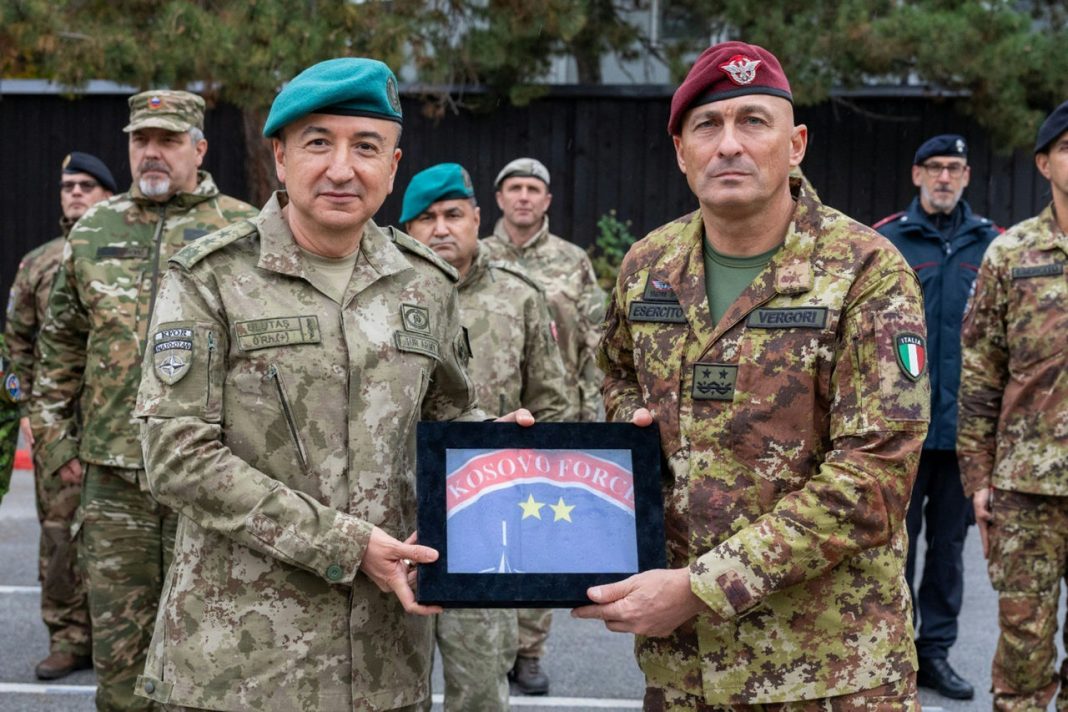
On 14 October 2026, Major General Roberto Vergori, from Italy, took the helm of the NATO-led KFOR mission, at a change of command ceremony held at KFOR Headquarters, in Pristina. He succeeds Major General Özkan Ulutaş, from Türkiye. The Commander of Allied Joint Force Command Naples, Admiral George M. Wikoff, presided over the ceremony. Representatives of the institutions in Kosovo and of the international community were in attendance.
Admiral Wikoff paid tribute to Major General Özkan Ulutaş’s leadership and service during the KFOR change of command ceremony and welcomed his successor, Major General Roberto Vergori. He praised Major General Ulutaş’s commitment throughout two tours as KFOR Commander, highlighting his engagement with communities across Kosovo and his work to strengthen relationships with the Kosovo Police and the EU Rule of Law Mission (EULEX). “He did so with initiative, adaptability, and selfless commitment to the mission and to those under his charge,” Admiral Wikoff said. The Admiral also recognised the sacrifices of KFOR personnel and their families.
Reflecting on KFOR’s continued contribution to a safe and secure environment for all communities in Kosovo, Admiral Wikoff highlighted the ongoing optimisation of the mission to maximise its effectiveness. He expressed confidence in Major General Vergori’s leadership and reaffirmed the support of Allied Joint Force Command Naples. “Roberto, thank you for accepting this responsibility,” Admiral Wikoff said.
Major General Ulutaş pointed out: “Throughout, KFOR stood laser-focused on the pursuit of a single goal: contributing to lasting security for all people and communities living in Kosovo, and freedom of movement, in accordance with our long-standing UN Mandate; KFOR also continued to support the EU-facilitated dialogue between Belgrade and Pristina.” Major General Vergori emphasised that KFOR personnel “remain deeply committed to fulfilling our UN mandate, in contributing to create the right conditions for a future in which new generations can enjoy the full benefits of lasting peace, democracy, and prosperity.”
The security situation in Kosovo has remained generally stable and has continued to improve. In June, NATO announced that it would optimise KFOR’s posture, to ensure that the mission remains fit for purpose. This process is ongoing. It entails a gradual and calibrated adjustment of KFOR’s posture and strength, over the following year. It is conditions-based and can be reversed, if security developments require it.
The Western Balkans is a region of strategic importance for NATO. The Alliance’s commitment to regional stability is steadfast, and KFOR continues to contribute to lasting security for all people and communities living in Kosovo, and freedom of movement, in accordance with our long-standing UN Mandate, based on UN Security Council Resolution 1244 of 1999, at all times, impartially, and in close coordination with the Kosovo Police and the EU Rule of Law Mission in Kosovo (EULEX), in their respective roles as security responders.