Original Coverage & Source Attribution: www.gadgetmatch.com
Every starting line has a few moods running at once. A runner near the front is thinking about splits, while someone in the middle is calculating whether they trained enough.
Then, someone toward the back is checking their laces for the fourth time and feeling perfectly happy to be there.
Nike’s new race-day system was built around that range, and it also gives you a perfectly good reason to look at new shoes. (Which I’m choosing to treat as research.)
Because if there’s one thing runners understand, it’s that a race is never simply a race. It’s a training plan, a playlist, a breakfast strategy, a weather forecast, and potentially, a completely new pair of shoes.
The big idea
Nike introduced three shoes that work together as one lineup: the Nike Apex, the Alphafly 4, and the Swooshfly.
Nike calls it its most comprehensive race-day offering yet, adding a new structure to the road-running shoes already in its catalog.
The interesting part is how Nike has organized the lineup. Racing footwear is often presented as a hierarchy, with the fastest shoe sitting at the top and everything else somewhere beneath it. That can make the shoe wall feel a little like there is a bouncer deciding whether you have earned the good pair.
Nike’s approach is more welcoming. Each shoe has its own purpose, and runners can choose based on their goals, experience, and the kind of race day they want to have.
It’s an excellent news for anyone who has ever walked into a running store, picked up the most expensive shoe, and immediately started mentally explaining why the purchase was necessary.
Nike Apex
The Apex sits at the top of the range. Nike describes it as its most advanced expression of speed, made for runners chasing the edge of marathon performance.
If you’re training for a breakthrough result and every second counts, this is the shoe Nike is pointing you toward. It’s the serious one; the grown-up one. The shoe that enters the conversation when your race plan contains phrases such as “negative split” and “sub-three.”
It’s also the one most likely to make your current racing shoes suddenly feel very ordinary after you read the spec sheet.
This is how it starts, by the way. You read about the foam. Then, you look at the plate. Then, you watch one review and then, another. Suddenly, you are comparing marathon shoes at 1 o’clock in the morning and explaining to yourself that this is research.
Nike Alphafly 4
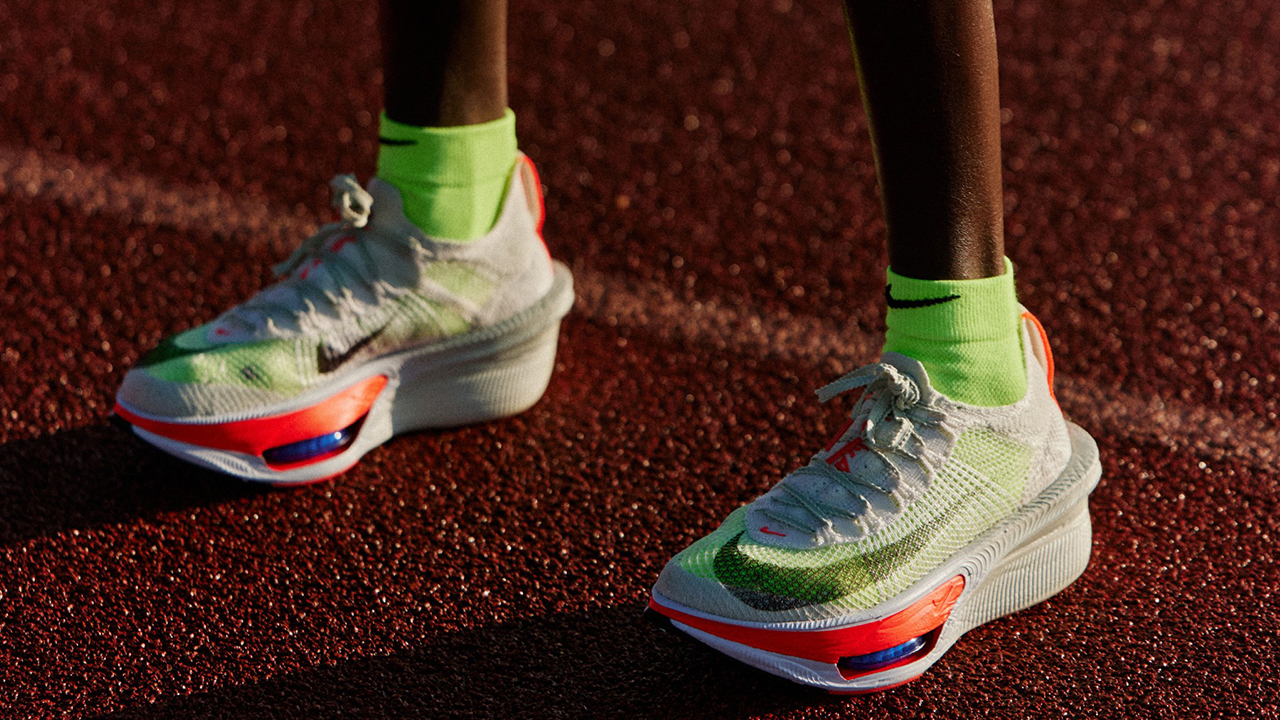
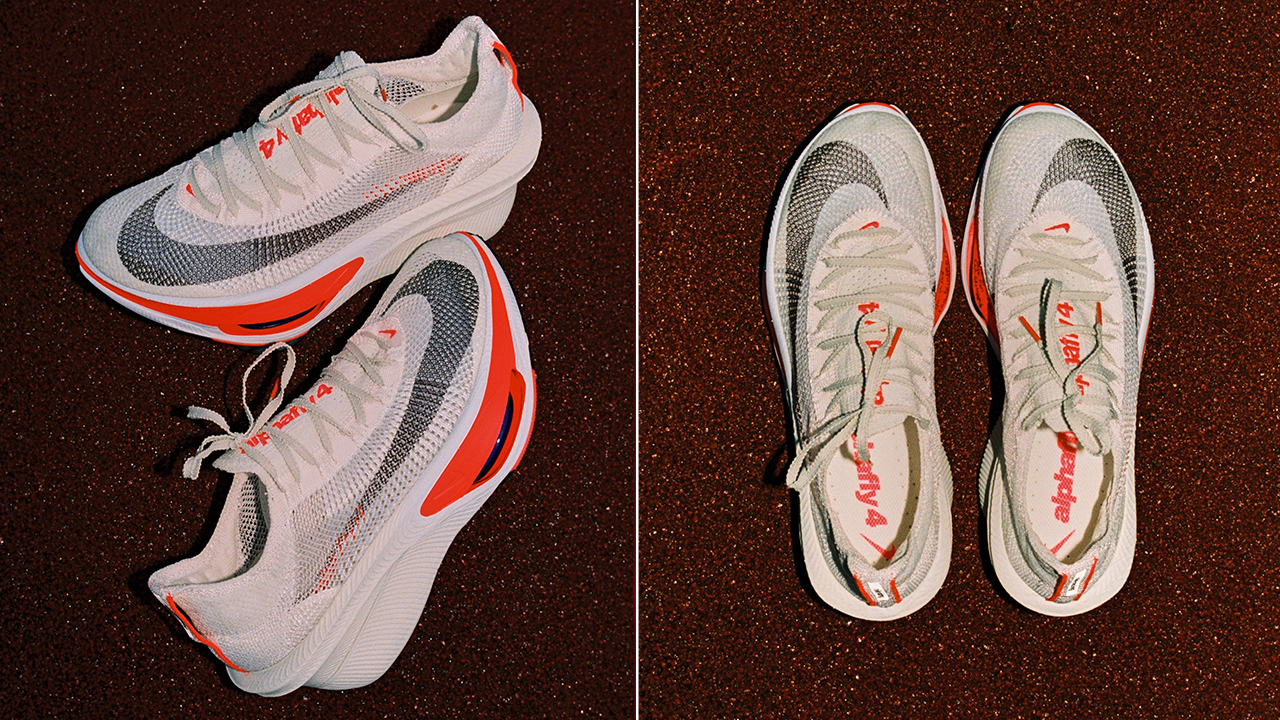
The Alphafly 4 is designed for a wider group of runners. According to Nike, it balances responsiveness, comfort, stability, and efficiency over distance, bringing race-day speed into reach for more athletes.
If you already have a few finish lines behind you and a personal best in your sights, this is where Nike says you fit. It’s the sensible choice, by which I mean the one you can probably explain at checkout without needing a detailed financial presentation afterward.
The beauty of having a race-day system is that you can also stop treating the fastest shoe as the only shoe worth wanting. Your race history, distance, goals, and preferences all get a seat at the table.
Of course, I still believe every runner deserves at least one shoe that makes them walk around the house for no reason after putting it on.
Nike Swooshfly
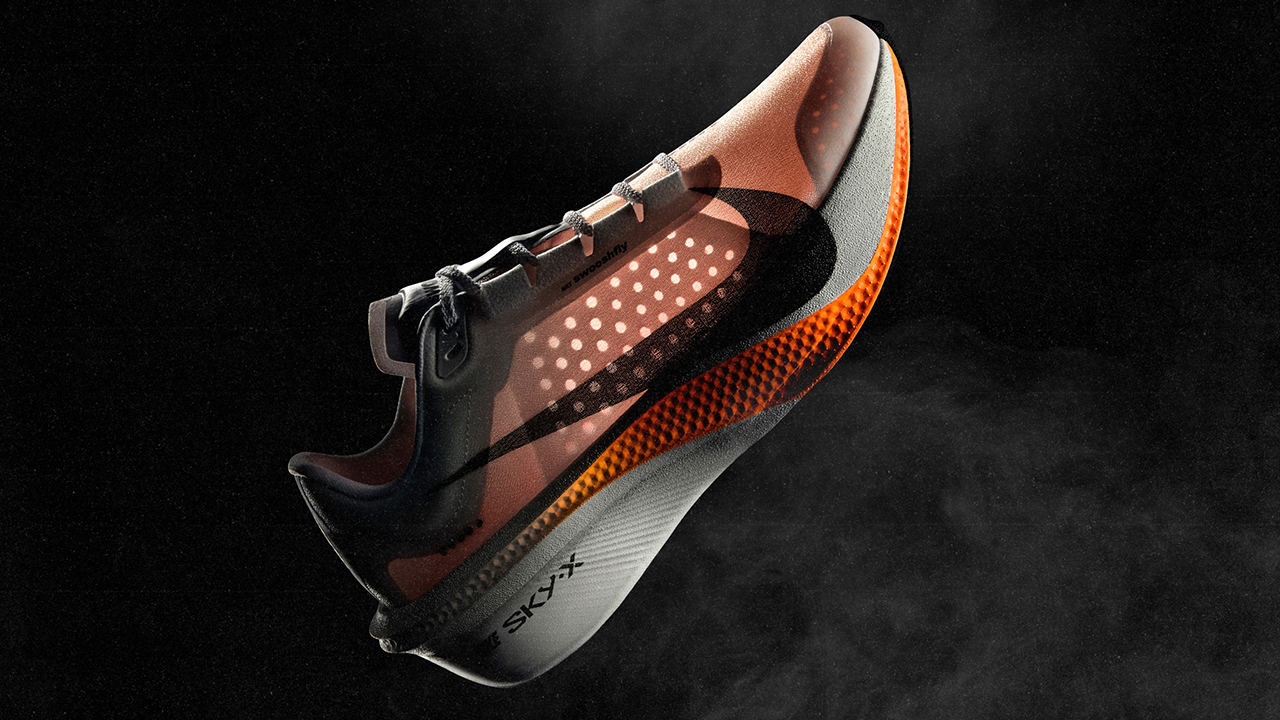
The Swooshfly is the entry point to the system. Nike positions it as an invitation to race day, with cushioning designed to help runners feel confident and ready for a distance they have not raced before.
If your first starting line is coming up, this is the shoe Nike made with you in mind. I like that idea because race-day nerves are very real.
You can have the training plan, the race belt, the gels, the carefully selected playlist, and enough screenshots of the course elevation profile to qualify as cartography, and you can still feel nervous when you get to the start line.
A shoe that feels approachable can be part of making that first race feel less intimidating. And once you finish? Well, congratulations. You are now a ~certified~ runner, which means you can begin looking at shoes for your next race.
Where these shoes came from?
Nike says each shoe began with a runner’s problem. That problem was studied at the Nike Sport Research Lab, translated into product design, and tested with athletes before the shoes reached a starting line.
That’s a lot of homework before anything makes it onto a shelf. It also explains why Nike talks about the three shoes as a system rather than three separate products.
The lineup draws from more than 50 years of Nike’s racing history, beginning with co-founder Bill Bowerman’s earliest handcrafted spikes and continuing through the original super shoes that helped reshape modern racing more than a decade ago.
Today, that history comes together through athlete insight, scientific research, and technology designed to improve running economy.
What’s under the hood?
Behind every glamorous race-day photo is an alarming amount of engineering, testing, data, sweat, and people whose job is apparently to figure out how much faster humans can become when you put the right materials under their feet.
Technically, the system brings together Nike’s proprietary Air Zoom platforms, advanced foams, and engineered plates. Nike says each combination has been developed around the needs of its intended runner, with different approaches to comfort, confidence, efficiency, and speed.
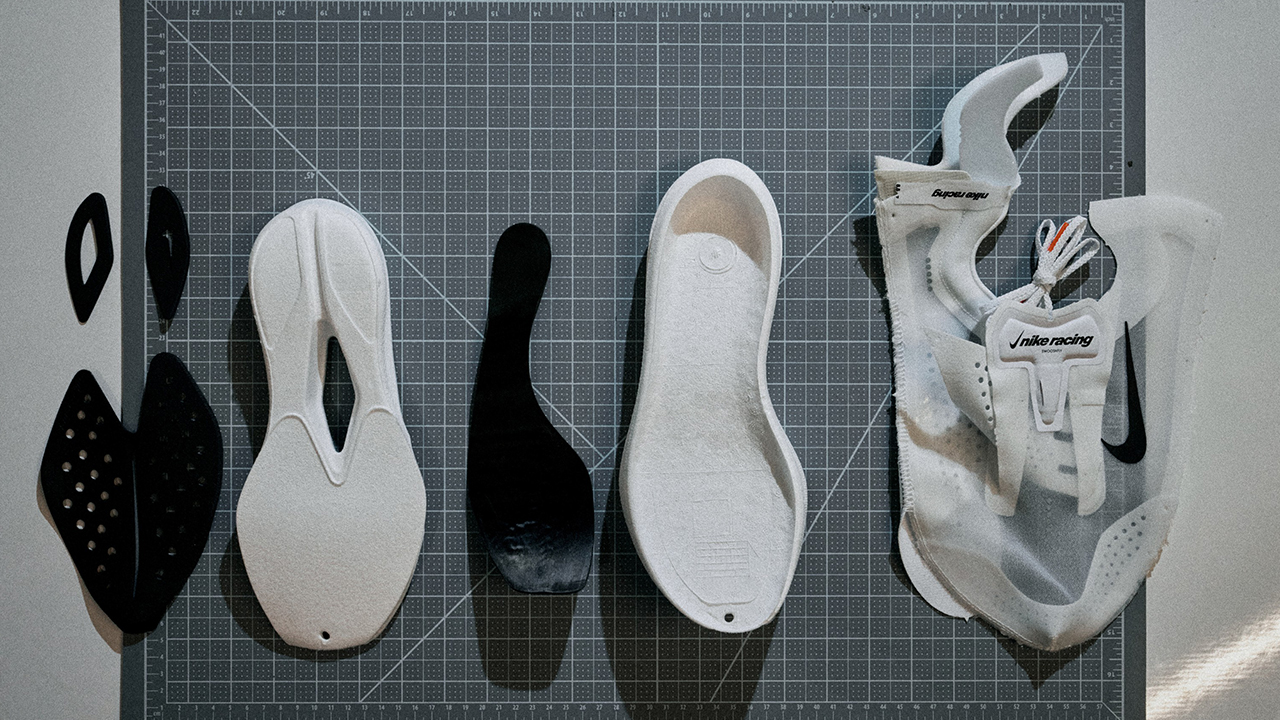
This is where the spreadsheet part of your brain can take over. Foam density. Plate geometry. Cushioning. Responsiveness. Weight. Running economy.
Meanwhile, another part of your brain is saying, “Yes, but does it look good with my race kit?” Both are valid considerations.
The bigger point is that the fastest shoe on paper isn’t automatically the best shoe for every runner. A marathoner chasing a personal record may want something very different from someone standing at their first 10K start line. The event may be the same, but the reason for being there can be completely different.
That’s what makes Nike’s new system interesting. It treats race day as something that belongs to every kind of runner, from the athlete chasing seconds to the person who is still figuring out what racing feels like.