Original Coverage & Source Attribution: www.businessinsider.com
Autonomous weaponry capable of performing some of the roles of human soldiers could be key for smaller NATO militaries unable to match larger militaries in manpower.
Maj. Sebastian Langvad, a Norwegian Army officer and lecturer at the Norwegian Military Academy, told Business Insider that advancing technology is increasingly eliminating the need for humans to perform certain combat roles, such as pulling a trigger. These developments could be particularly meaningful for smaller nations with limited manpower.
Investment in remote systems that can take over some soldiers’ roles is key because “we can compete with Russia when it comes to technology and funding, but we cannot compete when it comes to putting soldiers in the field,” Langvad said.
“We have more to gain from breaking that link between volume of combat power and the amount of people,” he said.
Norway, a NATO member, has a population of fewer than 6 million, compared with Russia’s more than 143 million.
Norway also faces higher personnel costs. “Each individual soldier just by wage levels is so much more expensive for us than it is for Russia, relatively speaking,” Langvad said.
He said technology cannot yet completely replace human soldiers on the front lines and likely won’t be able to for years. “The human still has an unsurpassed combination of flexible modes of mobility, decentralized intelligent decision-making, and often being readily available.”
But as technology and weaponry become more powerful, militaries should accept that “there is no intrinsic value to the human on the front line,” he said, adding that every feature of a human soldier that has made them ubiquitous throughout history “can logically be replaced by a combination of different technologies if used correctly,” even if that technology is not yet fully realized.
He distinguished conventional combat from missions such as peacekeeping and state-building, where the presence of human soldiers can itself be important.
Want more Business Insider in your news feed?
Add BI in Google so our reporting is easier to find when you’re searching for what matters.
ANATOLII STEPANOV/AFP via Getty Images
Langvad said he believes that weaponry with enough autonomy to take over all of the roles of a human in a foxhole is “quite close to existing” and that its limit could soon be an ethical one imposed by militaries, rather than a technological hurdle.
A boost for smaller militaries
Smaller NATO militaries have acknowledged the advantages of greater autonomy. Estonia’s 2026 Defense AI Strategy, issued by its defense ministry, says AI and autonomous systems can create “asymmetric and cost-effective advantages, despite the size discrepancy vis-à-vis the adversary.”
Some industry figures have expressed similar ideas.
Agris Kipurs, CEO of Latvian drone maker Origin Robotics, previously told Business Insider that smaller nations need weaponry that allows fewer operators to do more tasks, “and pretty much the only answer to that is autonomy.”
Eliot Pence, the founder of Canadian defense firm Dominion Dynamics, which makes autonomy, communications, and command-and-control systems, told Business Insider that “Canada has a real need for autonomy,” in part because it has one of the lowest per-capita soldier ratios among NATO members.
“The ability to extend command and control across this vastness is not just sort of a nice-to-have; it’s a need to have,” he said.
German defense technology company ARX Robotics has systems in Ukraine and with Western militaries, and the UK has ordered an initial batch of its GEREON robots.
David Roberts, CEO of ARX Robotics UK, told Business Insider that having one soldier controlling a single system won’t work “for a smaller force like the British Army trying to control the number of systems required for its length of front line and expected concept of operations.”
“As a result, autonomy will be required to cope,” he said.
For NATO militaries, the value of autonomous systems extends beyond simply addressing manpower shortages, Langvad said. Countries have the resources to send systems in place of human soldiers, preventing the unnecessary sacrifice of human lives at war.
Taking over some front-line roles
Ukraine’s fight against Russia’s invasion has accelerated the use of remotely operated weapons and driven advancements in autonomy.
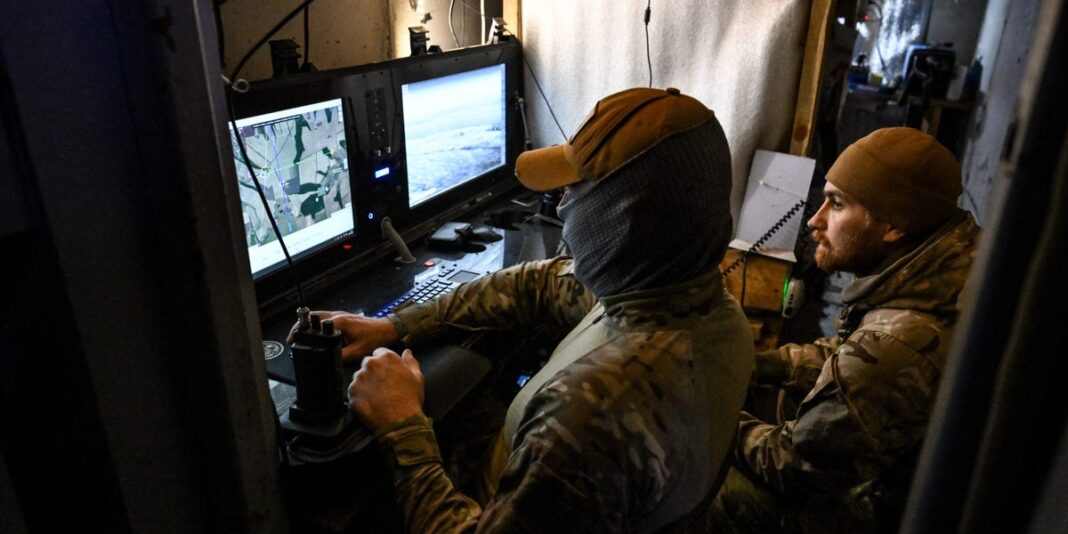
Drones perform reconnaissance and strikes, even medical evacuations, while ground robots carry supplies, evacuate the wounded, and operate weapons.
Remote weapons have become central to the fighting, with Ukrainian officials attributing the vast majority of Russia’s front-line casualties to drones. They have likewise been used to harm Ukrainian troops as Russia also invests heavily in uncrewed systems.
The degree of autonomy in those weapons varies. Some are simply remote-controlled, while others can identify and track targets. But as autonomy grows, Ukraine says human troops still make the final decision to fire.
Langvad said that Ukraine has “supercharged” an existing trend toward more remotely controlled weaponry. He described Ukraine’s approach as the right “core military logic,” but said each country needs to adapt its lessons to its own military.
Norway, like many other allies, is moving towards having more remotely operated and uncrewed combat systems, though nowhere near the scale of Ukraine.
Its defense ministry published its Drone Strategy for the Defence Sector last December. It said uncrewed systems let high-risk operations “be carried out without endangering personnel” and “can supplement and replace large, personnel-intensive, and costly platforms, achieving similar military effects at a lower cost.”