

Original Coverage & Source Attribution: movieweb.com
A great war movie features a few notable qualities. While the action can be paramount, the emotional weight each character brings to the story can heighten the impact of intense scenes. The camaraderie established in the story may give way to horror moments later, when shots start ringing out, and no one’s safety is guaranteed. Those scary experiences can have a psychological impact, warping optimism into bleak outlooks or showing the resilience of someone who keeps pushing through with strong moral convictions.
The deep-seated character elements add to the movie’s overall realism, turning a good story into a great one. That also extends to the film’s era-accurate aesthetics, from the uniforms to the weapons and vehicles used. It’s one thing to show audiences a soldier, but it takes time and effort to get their rank, uniform, and patches correct. While a director can craft a world of bombastic mayhem for viewers, the ultimate compliment for a war movie comes when historians and experts praise the details the movie got right.
That’s exactly what Clint Eastwood did, bringing audiences into the hellish nature of war. Although it didn’t set the box office aflame, the film has been praised by experts for its “savage” battle scenes, and the ambitious project has found more success with audiences in the years since its release.
Clint Eastwood’s Epic WWII Plans Saw Mixed Results
Eastwood wanted to bring a very distinct story to theaters in 2006, showing both sides of the Pacific Theater conflict during WWII. To do so, he directed two films back-to-back, each slated for release only months apart. Flags of Our Fathers was released in October and told the American side of the story, showing the Battle of Iwo Jima and the aftermath for the men believed to be featured in the famous flag-raising photo. Letters from Iwo Jima was released in December and told the story from a Japanese perspective.
Neither movie was a massive box-office hit, but Letters from Iwo Jima had a smaller $19 million budget, while Flags of Our Fathers had a heftier $90 million budget. Letters from Iwo Jima earned a better Rotten Tomatoes score, with an impressive 91% rating from critics, while Flags of Our Fathers earned a solid 76% critics’ rating. Those scores may have contributed to the films’ box office returns. Letters from Iwo Jima had a better showing in theaters, earning $68.7 million at the worldwide box office, while Flags of Our Fathers managed only $65.9 million globally.
Both movies were nominated for various Academy Awards, but only Letters from Iwo Jima earned nominations for Best Director and Best Picture. It’s possible the box office results could have been different if the films had been released in the opposite order, with Letters from Iwo Jima‘s better reviews potentially setting up Flags of Our Fathers for a bigger box office. While that notion toys with hindsight, the result ultimately gave audiences two exceptional war movies, with Flags of Our Fathers emerging as an underrated gem that has since drawn critical praise and reappraisal from many viewers.
The Battle Scenes in ‘Flags of Our Fathers’ Deserve More Credit
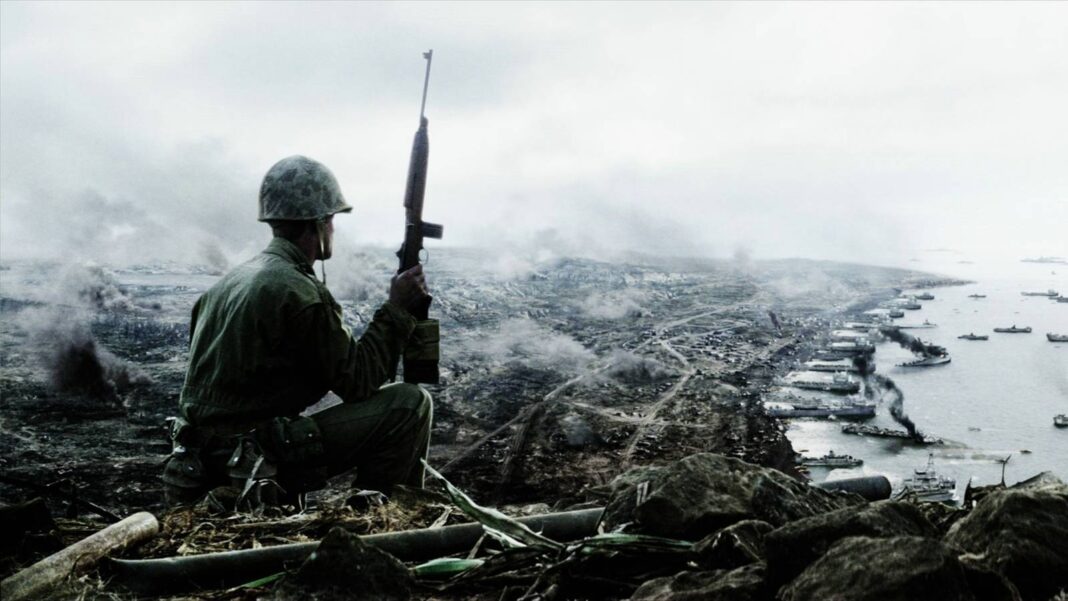
When it comes to film sequences showing amphibious landings during WWII, Saving Private Ryan has become the gold standard, capturing the terror on the boat before plunging audiences into a nightmare fusillade seconds later. In Flags of Our Fathers, Eastwood captures a similar onslaught of gritty, hellish imagery as the American Marines storm the beaches of Iwo Jima. It’s so effective that it has drawn praise from experts, including former Marine Corps special operations team leader Elliot Ackerman.
In a video for Insider, Ackerman looked at Flags of Our Fathers, focusing on the movie’s amphibious landings and brutal combat sequences. Ackerman notes that “Amphibious operations have always been a large part of the Marine Corps’ identity, but particularly so in the Second World War, in the island-hopping campaign in the South Pacific.” To capture one of the Pacific Theater’s most infamous battles, Eastwood pulled out all the stops, ensuring the film accurately depicted the vehicles and tactics used.
“The Battle of Iwo Jima is one of the most famous battles in that island-hopping campaign, and during that campaign Marines would often land on these islands using, whether it was Higgins boats or amphibious tractors, and you see those types of landing boats depicted in the opening sequence here of Flags of Our Fathers.”
Warner Bros.
Ackerman discusses the film’s “savage” battle sequences, with weapons like flamethrowers being particularly heinous and accurately portrayed.
“I think one thing this clip shows is the violence and intensity of these types of tactics, and the fighting, whether it’s the flamethrowers being used to clear out pillboxes or the types of close air support that’s being flown, I think accurately conveys the extent of the savage fighting that occurred on Iwo Jima.”
‘Flags of Our Fathers’ Gets High Marks for Realism
Paramount Pictures
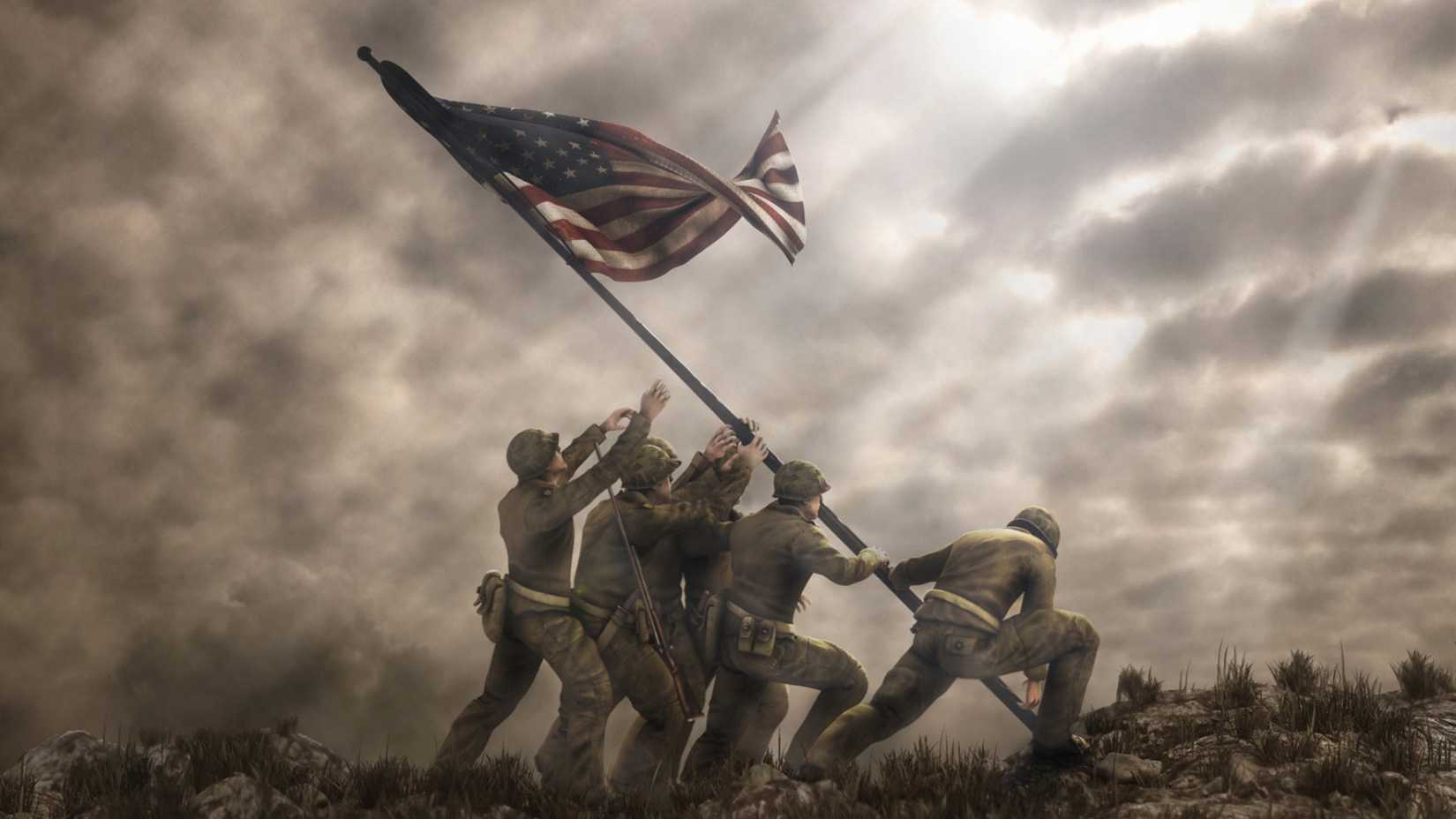
The Battle of Iwo Jima produced an iconic moment: the historic flag raising. Ackerman notes that it “became a very famous photograph and the Marine Corps memorial in Washington, DC, is a statue of the flag raising on Iwo Jima.” Flags of Our Fathers follows the people believed to be in that very photograph. Still, the iconic flag-raising imagery hasn’t been a driving force in later conflicts, with Ackerman adding:
“The raising of American flags in recent wars really isn’t as prevalent. I think in Vietnam, in the Battle of Hue City, an American flag was raised. We don’t really see it in Iraq and Afghanistan because the nature of those missions were different. We ostensibly weren’t conquering those lands for America; we were working with our partners.”
Ackerman gave Eastwood’s movie high marks, awarding Flags of Our Fathers an overall 8/10 score. It seems the director captured the battle and gritty aesthetics so well that the only reason the former Marine kept it from earning a perfect score was that he wasn’t on the battlefield himself.
“I would give this one an eight. I don’t think I can go necessarily much higher because I wasn’t there, so I feel like eight is safe. But to me, this seems like a very well-thought-out depiction.”
While Flags of Our Fathers may have underperformed at the box office, the movie has continued to attract a growing audience since its release. Many have circled back to the movie thanks to an impressive cast that includes Paul Walker, John Slattery, and Ryan Phillippe. Whatever drew you to the movie, you likely found, as I did, an immersive war movie with amazing battle sequences that embraces a disjointed narrative for maximum emotional impact. The beach assault alone is worth seeing, but you won’t be disappointed if you’re looking for an accurate look at the Battle of Iwo Jima.
Sources: Rotten Tomatoes, Box Office Mojo
- Release Date
-
October 19, 2006
- Runtime
-
135 minutes
- Writers
-
Paul Haggis, William Broyles Jr.