Original Coverage & Source Attribution: www.thewrap.com
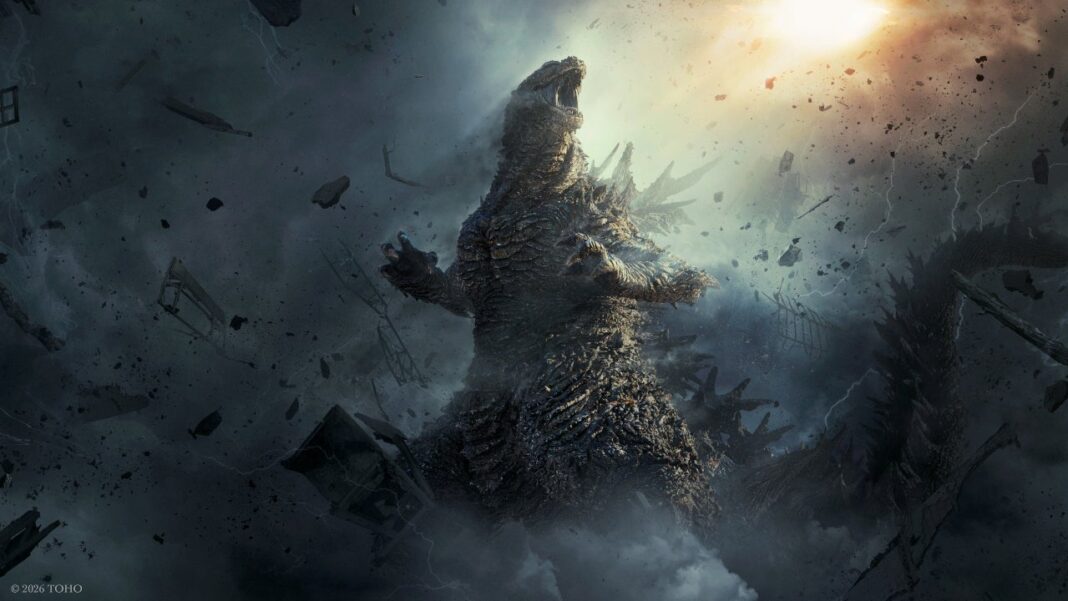
Three years ago, Takashi Yamazaki and Toho surprised the world with “Godzilla Minus One,” an acclaimed new installment in the longest running franchise in movie history that made nearly $114 million at the global box office — including $57.1 million in the U.S. and Canada — and became the first “Godzilla” film to win an Oscar.
Now they’re back with “Godzilla Minus Zero,” a film that could not only reach even greater box office heights but is currently projected to take the No. 1 spot this weekend from Warner Bros.’ “The Cat in the Hat.” While the original “Godzilla Minus One” was a surprise hit in 2023 with a No. 3 opening of $11.4 million behind the Beyonce concert film “Renaissance,” “Godzilla Minus Zero,” which will be getting Imax support, is expected to triple that opening with a $30-35 million domestic opening weekend.
That would make it just the fourth non-English movie in U.S. box office history to top the weekend charts. The first to reach No. 1 in the U.S. was Mel Gibson’s “The Passion of the Christ” in February 2004 with a still-record $83.8 million opening. Though it was an American production, Gibson chose to shoot the Gospel adaptation in Hebrew, Latin and reconstructed Aramaic.
Six months later, during the final weeks of summer 2004, the Mandarin-language wuxia film “Hero” from director Zhang Yimou was released by Miramax and topped the charts with an $18 million opening, still standing as one of the top 5 highest domestic grossing non-English films.
Then, 21 years later, Sony/Crunchyroll’s “Demon Slayer: Infinity Castle,” which was released in both English and Japanese dubs, opened to $70.6 million in September 2025, setting an all-time opening weekend record for anime films.
Though Godzilla has been a part of the Hollywood franchise landscape through the Legendary-produced MonsterVerse — which will return next March with “Godzilla x Kong: Supernova” — the original Toho series that began back in 1954 hasn’t had a huge amount of U.S. success. Prior to “Minus One,” the 2016 Toho film “Shin-Godzilla” grossed just under $6 million in the U.S. Back in 1999, “Godzilla 2000,” which was released by TriStar domestically, only grossed $10 million.
But between its well-placed release during the early December dead period for major studio releases and its subsequent streaming run on Netflix and other platforms, “Godzilla Minus One” has rejuvenated interest in the Toho series beyond just the devoted fanbase it has built in the West.
Mixing a late 1940s setting that takes “Godzilla” back to its postwar Japan roots with arguably the most fearsome depiction of the titular kaiju ever put to screen, “Minus One” has set the stage for “Minus Zero” to become a breakout sequel that could put it among the top 3 highest grossing non-English films of all time.
While critics are split on whether it is better than its predecessor, they agree that “Minus Zero” is at least a very worthy successor, giving the film a 91% Rotten Tomatoes score. The question now is how much further the film can grow the audience beyond opening weekend, which will likely be driven by fans who saw “Minus One” either on opening weekend or during holdover weeks after discovering it through word-of-mouth.
As always with breakout sequels, the ceiling for “Minus Zero” will be determined by how many uninitiated moviegoers it can inspire to get caught up by watching “Minus One” at home — it is currently streaming on Prime Video — before going out to buy a ticket.
While there will be some competition next weekend from Amazon MGM’s “How to Rob a Bank,” the big competition for “Godzilla” for general audiences will come in two weeks from Lionsgate’s “Hunger Games: Sunrise on the Reaping,” which is expected to be the highest grossing film this month with stronger presales than its 2023 predecessor, “The Ballad of Songbirds and Snakes.”
As movies like “Demon Slayer” and shows like “Squid Game” have shown, the aversion to subtitles among mainstream audiences has thawed compared to decades past. And with critics praising the kaiju battles of “Minus Zero,” it’s possible that some of the MonsterVerse-only “Godzilla” fans could be pulled over to theatrically sample Toho’s original version of the series for the first time.
Warner Bros.’ animation comeback
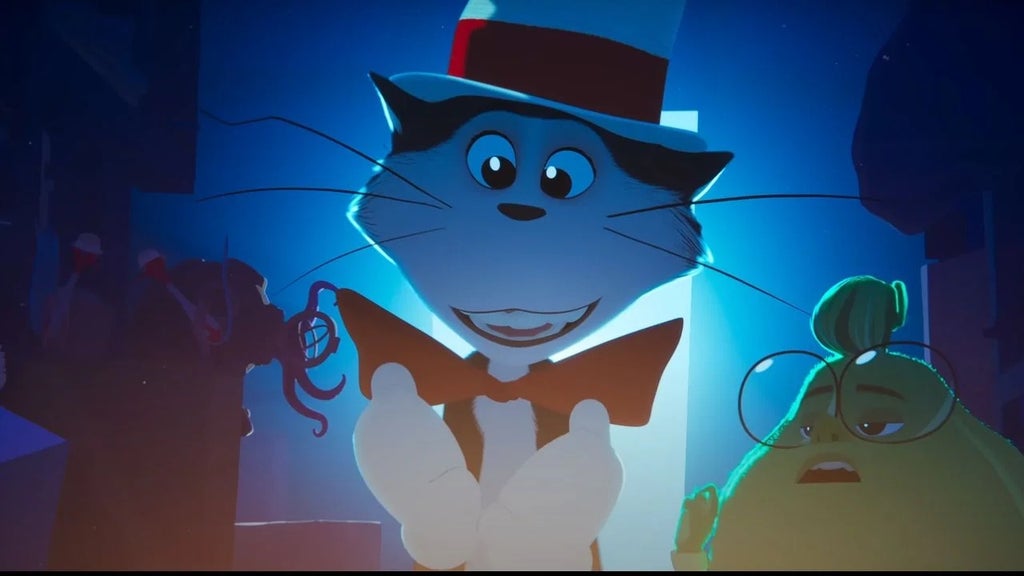
If Godzilla claims victory this weekend, it will be over “The Cat in the Hat,” a Dr. Seuss adaptation that marks the return of Warner Bros. to theatrical animation but which is currently looking like it will be yet another uphill battle for the studio with a domestic opening of just $20-22 million against a reported budget of nearly $100 million.
Long before David Zaslav decided to bring Warner Bros. into Hollywood’s ever-consuming consolidation wave, former studio chiefs Michael De Luca and Pam Abdy hired former DreamWorks chief Bill Damaschke to revive the division known as Warner Animation Group.
After rebranding WAG to Warner Bros. Pictures Animation, Abdy, De Luca and Damaschke greenlit a wave of projects that would put animation back in the studio slate after a three-year absence, including the original animated musical “Bad Fairies,” an adaptation of Sanrio’s “Hello Kitty,” and another Dr. Seuss adaptation, “Oh the Places You’ll Go!” from director Jon M. Chu.
But that rebranding also came with the infamous cost-cut shelving of “Coyote vs. Acme,” which grossed $101 million worldwide earlier this year after it was acquired by Ketchup Entertainment.
With a major studio marketing campaign behind it led by a huge promotional blitz by lead voice actor Bill Hader, “The Cat in the Hat” should at least be able to outgross the “Looney Tunes” comedy that Warner dropped as it will be the family film of choice for parents with kids too young to see the PG-13 “Wildwood” until Disney’s “Hexed” arrives at Thanksgiving.
But if “Cat” can’t grow its audience beyond that subset enough to hold on against “Hexed” come Thanksgiving, its closest comp on the high end might be the original Sony animated film “Goat,” which opened to $27.2 million 3-day/$35 million 4-day on Presidents Day weekend, going on to gross $195 million worldwide. Early reviews for the film are mixed, with some critics enjoying Hader’s performance as The Cat and the decision to do a looser adaptation of Seuss’ children’s book while other critics saw that decision as one that cost the film the spirit of its source material.
As always, it will take at least two weekends to really gauge how well this family title is gathering interest. If word-of-mouth among families is strong enough, “Cat” may be able to coexist alongside “Hexed” and earn steady turnout from parents and kids who will increasingly come to theaters as its theatrical run extends into and past the Thanksgiving holiday window.
But if theatrical success does come for this Seuss adaptation, it won’t be as immediate as Illumination’s “The Grinch,” which earned a $67.5 million opening in this early November slot in 2018. Certainly, the disparity can be chalked up to Illumination’s successful brand building with families through hits like “Despicable Me” and “The Secret Life of Pets” compared to a Warner animation wing that has been dormant for years. But if “Cat in the Hat” can’t get the revived WBPA off to a good start, then getting it up to speed is yet another thing that will have to be added to Skydance’s to-do list as it integrates Warner Bros.’ entire IP stable and more than three dozen slated films into its motion picture operations.
A Hindu epic and a comedy political thriller
Two other films in targeted wide release will provide additional support farther down the charts. Sony Pictures will release the Indian blockbuster “Ramayana: Rise of a Legend” which is the first film from that country to receive the “Filmed for Imax” label. Directed by Nitesh Tiwari and produced by Namit Maholtra, CEO of the VFX and animation studio DNEG, the two-part film production is among the most expensive ever undertaken in film history with a reported $420 million combined production and marketing budget over both installments.
“Ramayana,” which is a retelling of the classic Hindu epic of the same name, was produced with the hope of drawing in not just millions of moviegoers across its home country to see it in dozens of language dubs but also a global Indian audience in diaspora communities around the world, which is why Sony jumped onboard to distribute the film outside of India.

But to be truly successful, both “Ramayana” films will have to join the ranks of the highest grossing Indian films of all time, a list currently topped by the 2016 sports drama “Dangal,” which grossed approximately $305 million worldwide. In the U.S., where it is projected for a $6-10 million 4-day opening from 1,300 locations, “Ramayana: Part 1” will look to at least match the $28.1 million total that the Hindi action film “Dhurandhar: The Revenge” grossed earlier this year.
Back on the domestic specialty side, Searchlight Pictures will also be releasing Martin McDonagh’s “Wild Horse Nine,” a darkly comedic political thriller about two CIA agents who travel to Easter Island just before the 1973 U.S.-backed military overthrow of the Chilean government. The film from the director of “In Bruges” is projected for a $7 million opening from approximately 1,000 locations.
That release strategy is a radical departure from the platform release and slow rollout of McDonagh’s past films. In 2017, “Three Billboards Outside of Ebbing, Missouri” grossed $54.5 million domestically thanks to more than four months of theatrical play extending through Oscar season, where it won two Academy Awards.
But in 2022, with the established awards season theatrical market decimated by an aging core audience and shortened windows, McDonagh’s “The Banshees of Inisherin” grossed a scant $10.5 million using the same slow rollout release pattern. With the advent of Letterboxd building a new generation of ardent cinephiles in the past four years, “Wild Horse Nine” will at least outdo “Banshees,” though it remains to be seen how much that younger crowd will show up alongside the older demographics that have shown up for McDonagh’s work in the past.