Original Coverage & Source Attribution: cleantechnica.com
Support CleanTechnica’s work through a Substack subscription, on Patreon, or on Stripe. Help us produce all of the high-quality, original content we publish week after week despite the challenges of content-scraping AI, antisocial media, inflation, and other hurdles.
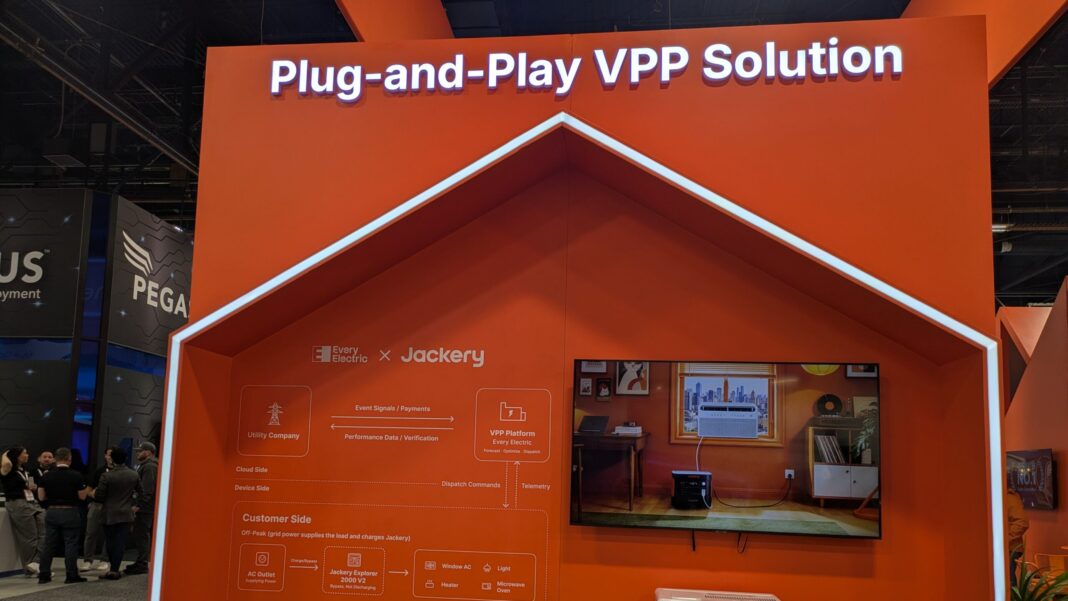
Earlier this week, Jackery announced a strategic partnership with Brooklyn-based consumer energy aggregator Every Electric to offer the first plug-in Virtual Power Plant (VPP). The program starts with New York City apartment residents. I went to the RE+ in Las Vegas to meet with leaders from Jackery and Every Electric to learn more.
The plug-in VPP costs customers nothing but earns them money by turning their household appliances into grid stabilizing assets. For the customer, the process is simple:
- Sign up with a refundable $30 deposit for greater priority or pick an option with no deposit. Keep existing utility plan.
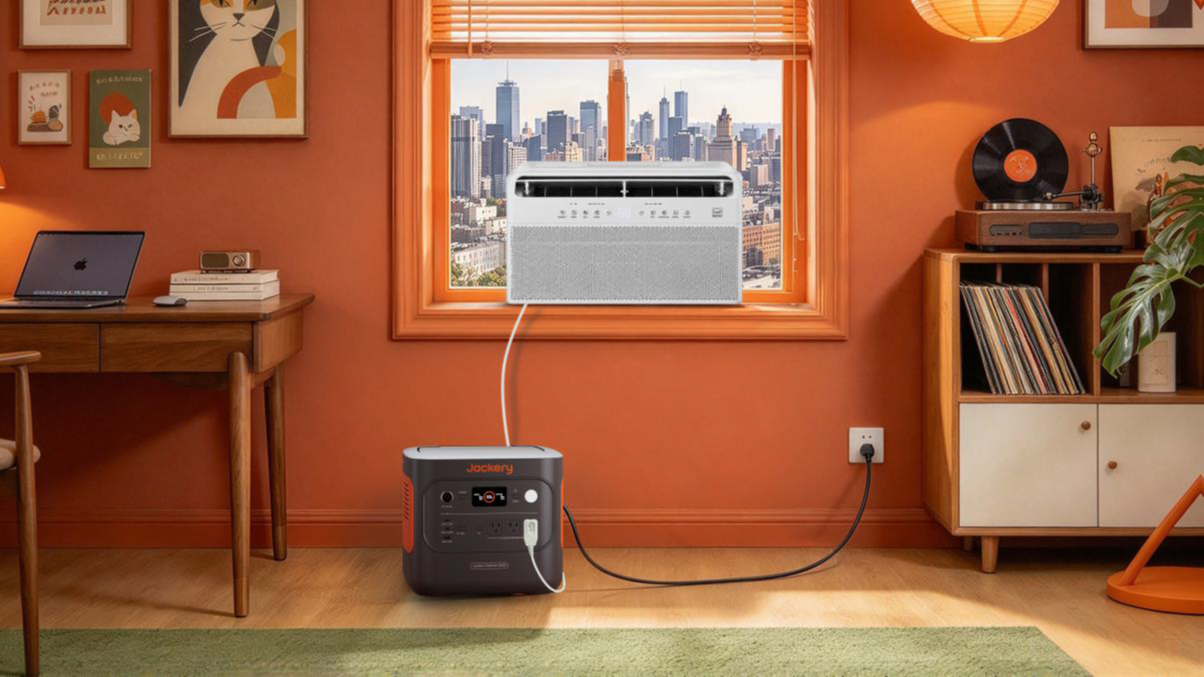
- Receive batteries for free, plug into standard outlets, plug air conditioners into the batteries and connect the batteries to Wi-Fi.
- Use air conditioning as you normally would and get paid up to $150/year per battery.
- The portable battery is available in the home throughout the year for emergency backup.
That’s it. As Every Electric puts it: “Get paid to plug in.” Alternatively, a customer can buy the batteries for a discounted price through the program of $650 and receive a higher payback per year, up to $250 per battery. Over the 11-year rated lifespan, purchasing the battery could increase the total net payback, although the upfront cost would be a little higher.
It seems almost too simple and convenient for the customer. However, a lot of complex work and coordination is happening behind the scenes. The Jackery battery is in communication with Every Electric, who automates power management to charge when electricity demand is low and discharge to run the air conditioner when electricity demand is high. This kind of active demand response can go far beyond the typical TOU plan to directly mitigate utility demand shifts. Every Electric monitors data for each battery. The demand response of the combined storage across thousands of individual batteries is aggregated and sold to the utility, in this case Con Edison. Then the benefits are divided up and distributed to customers based on their contributions. Over 2000 batteries were in the initial trial phase, with a larger scale rollout planned next year. I am already on the waitlist, along with over 15,000 other NYC households.
Because it does not feed electricity back into the grid, implementation is much simpler. No electrician needed. The system monitors the amount of energy being stored and deployed at the point of use with no need for user intervention. Unlike traditional demand response that turns off appliances, there is no inconvenience to the user. Thermostats do not need to be adjusted. Smart appliances are not needed. The battery simply provides power when grid demand is high, shaving off the peaks.
You may still be asking “what’s the catch?” Currently, the system needs to coordinate a large number of relatively small batteries under the same utility to have enough combined capacity to sell to the utility. To start, it is only being offered in New York City, which sets the blueprint. In the initial application, the batteries will be used with 120V air conditioners, up to around 12,000 BTU. This is a common size for NYC apartments, letting one battery size serve a wide range of customers, simplifying initial rollout. It also offers clear return on investment based on how much electricity is used, when that electricity is used and when demand peaks for the utility. However, I wouldn’t expect it to stop there.
The batteries being used are led by the Jackery Explorer 2000 v2. This battery has 2042 Wh of capacity and up to 2200 W of output with 4400 W of surge power. A total of three outlets are on the front panel, as well as two USB-C and a USB-A port. Due to the UPS function, the portable power station adds protection and would be ideal to plug in a computer or sensitive electronics, in addition to the air conditioner. Although the VPP is based on air conditioner use, using all the outlets can potentially add to the amount of load shifted by the VPP and, as a result, increase the amount of payback for the customer. Plugging in other forms of energy consumption could also extend the benefit beyond the times of year when the air conditioner is being used.
At 40% smaller and 34% lighter than the previous generation model, the Jackery Explorer 2000 v2 weighs 39.5 lb. That’s less than a 5-gallon water cooler bottle but less bulky to carry. Due to the plug and play nature, people changing apartments within the city can easily take it with them at 13.2” x 10.4” x 11.5”. Multiple levels of safety protections and a ruggedized portable design using automotive-grade LFP batteries ensure safe operation even if apartment occupants bump into it.
That portability also contributes to the emergency preparedness capability of the battery. For the months of the year when the air conditioning isn’t running, the battery could provide backup power for a refrigerator in a power outage, for example. Of course, Jackery also offers batteries specifically for refrigerators. Those batteries are not a part of the initial program… yet.
This also gets to a limitation of the current program. To keep the program manageable as it scales up, only one size of battery in one use case is initially being offered. Right now, the biggest challenge is scaling up. Making it too complicated at the start would make scaling up more difficult. However, once the program reaches scale, more options can become available. Jackery also offers batteries with greater aesthetic appeal, like the slim FridgeGuard, which may be a better fit for the homes of some customers. As the program scales up, the applications have the potential to diversify.
Power To The People
Much of RE+ focused on supplying power and storage for data centers. While residential clean energy tax credits (25D) have been cut, data centers can still benefit from the Clean Electricity Investment Tax Credit that can add up with bonuses to cover half the cost of the project. With additional state and federal incentives piled on top, the majority of the cost of data center ESS can be covered by subsidies. With the heavily subsidized storage and large-scale contracts with the utility, data centers can access benefits not typically available to residential customers.
However, the plug-in VPP changes the energy storage dynamic. People get credit for energy storage deployment at the point of use. AI technology, rather than just being a consumer of resources, is being used to automate the VPP system and let the benefits flow to more families. By starting with small window air conditioners, the system also tends to provide relief to people living in typically older apartments, rather than the sleek new high rises with multi-million-dollar apartments.
There is no need for home electrical upgrades. In fact, by taking some of the load off the circuit, the potential for my wife to trip the breaker from ironing in the living room while the TV and air conditioner are running on the same breaker is reduced. As the energy monitoring comes directly from the battery, it also isn’t dependent on smart meters.
Urban Aggregated BESS
For the system to have enough total capacity to sell to the utility, the plug-in VPP needs to connect thousands of batteries to provide multiple MWh of storage. This scale can easily be accomplished in urban areas. In addition, the value of the system will heavily depend on the local price of electricity and the variability in price. In NYC, electricity is significantly more expensive than in most of the US.
New York City apartments are a perfect starting place. While apartments tend to be far more energy efficient than detached houses and have lower net emissions overall, many of us living in apartments have traditionally felt a bit left out on clean tech. We don’t have roofs for rooftop panels. We typically do not have attached garages to place large permanent batteries or access to modify the electrical panel. If we do have the ability to make electrical modifications to the apartment, they can be prohibitively expensive in NYC. As such, a plug-in VPP is an exciting development for those of us living in apartments.
A plug-in VPP also makes the benefits of battery energy storage more accessible to urban areas. Often, there is not room for container-sized batteries. In places like New York City, the fire regulations are so strict, and the permitting is so complicated that large-scale BESS becomes exceedingly difficult to execute. Large-scale BESS, if approved, could take years to deploy.
According to NREL, the national average full installed price of utility scale BESS was $334/kWh of capacity in 2024, with hardware making up roughly two thirds of the total. However, the cost would undoubtedly be higher in NYC. For comparison, the discounted Explorer 2000 v2 in this program (which avoids retail markup) comes in at $318.32/kWh, with no added permitting or installation cost. That is also significantly less than the installed cost of many home batteries used in traditional VPPs, like Tesla Powerwall. Once delivered, it can be online within minutes.
Currently, plug-in VPP is the fastest, easiest and least expensive way to add battery capacity that shaves peak demand on urban grids in the US.
As high draw usage like air conditioning increases, more stress is placed on the grid. Transformer and other electricity transmission and distribution infrastructure upgrades can be expensive. Having storage at the point of use reduces the amount of electricity that needs to flow through the grid during peak periods. As plug-in VPP is deployed more broadly, the benefits will be experienced more broadly. And CO2 emissions can drop in the process.
While the benefits of the program are already attractive, the initial program may just be the tip of the iceberg. In New York City, buildings over 25,000 square feet must reduce their greenhouse gas emissions under Local Law 97 (LL97). This includes many apartment complexes and offices. The deployment of batteries at the point of use has the potential to reduce emissions.
While the current batteries and air conditioners in the program are 120V, Jackery also makes batteries that are 240V. For appliances that have intermittent use but high draw, like heat pumps, hot water heaters, ranges, etc., 240V connections are often needed to provide the necessary power. The electrification of applications that were previously run on gas or fuel oil can greatly reduce building emissions. But many apartment buildings do not have 240V outlets available. However, larger Jackery models can charge on 120V, accumulate charge and discharge at 240V for intermittent use. There is potential for batteries to support the higher voltage electrification without expensive electrical upgrades while also providing VPP benefit. The math would have to work out and it hasn’t happened yet. But the potential is clearly there.
Overall, the potential applications for this approach are massive. Already, I can see the potential to transform energy storage in NYC. In talking with Jackery and Every Electric, I started thinking about where the technology could go from here. Plug-in VPP could apply far beyond just New York City. However, that is for a follow-up article.
Sign up for CleanTechnica’s Weekly Substack for Zach and Scott’s in-depth analyses and high level summaries, sign up for our daily newsletter, and follow us on Google News!
Advertisement
Have a tip for CleanTechnica? Want to advertise? Want to suggest a guest for our CleanTech Talk podcast? Contact us here.
Sign up for our daily newsletter for 10–15 new cleantech stories a day. Or sign up for our weekly one on top stories of the week if daily is too frequent.

CleanTechnica uses affiliate links. See our policy here.
CleanTechnica’s Comment Policy