Original Coverage & Source Attribution: defence24.com
Photo. Wikimedia
EU member state ambassadors have agreed to impose sanctions on 145 entities and individuals linked to the Russian financial system, the so-called shadow fleet, and disinformation campaigns.
According to Reuters, EU foreign ministers are expected to formally adopt the new entries to the sanctions lists during Monday’s meeting. Subsequently, they will be published in the Official Journal of the European Union, which will give them legal force.
New sanctions
The new sanctions cover two main regimes: the EU restrictive measures system related to the violation of Ukraine’s territorial integrity, which currently lists approximately 4,500 individuals and entities, and the regime concerning hybrid activities.
In Brussels, it was agreed to add 113 individuals and entities to the sanctions list. These include 50 Russian banks, entities supporting the operations of the so-called shadow fleet, energy companies, and further representatives of Russian business – diplomats cited by Reuters reported.
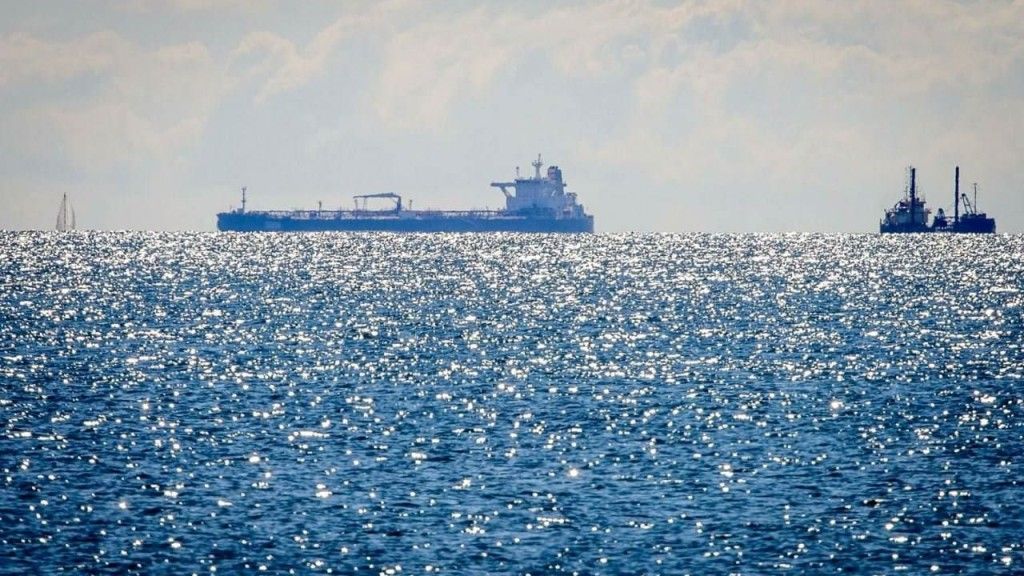
As noted by editor Agnieszka Zielińska, despite Western sanctions, Russia continues to profit from the export of energy resources, which help finance its war against Ukraine. The sale of fossil fuels brings the Kremlin approximately €193 billion annually. However, the shadow fleet has its weak points – specifically three.
An analysis by CSIS shows that two vessels — Umba and Kola — handled approximately 53 per cent of Russia’s seaborne Arctic oil exports since the beginning of the full-scale invasion of Ukraine. Another 24 per cent passed through the transshipment anchorage in Murmansk, in the Kola Bay. In total, at least 77 per cent of sanctioned Arctic oil exports, valued at approximately $14.5 billion, passed through these three points. (…) Such a high concentration means that disruptions to the operation of just a few facilities could affect a significant portion of Russian exports,” Zielińska points out.
The shadow fleet is also being used as a tool of hybrid warfare that Russia is waging against NATO and EU member states. Since 2022, there have been numerous incidents related to the security of underwater power cables in the Baltic Sea region. One example is last year’s manoeuvres by a Russian vessel near the power cable connecting Poland and Sweden.
Under the regime concerning hybrid activities, 31 individuals and entities involved in foreign manipulation activities are to be sanctioned.
One diplomat reported that the new entries on this list are a response to an attempted drone attack on the airport in Leipzig, Germany, in August this year. Berlin attributed responsibility for this incident to Moscow.
In early September, we reported on E24 about attacks carried out near the Jänschwalde coal-fired power plant. As written by editor Karol Byzdra, police found several dozen incendiary and explosive devices on the grounds of a nearby electrical substation.
Findings by German media suggest that the perpetrators also used home-made projectiles resembling rockets. Welt reported that they were connected to copper wires, which, after being launched, were intended to fall onto power lines and cause a short circuit,” Byzdra adds. The event was described as an attempt at serious sabotage, and suspicion fell on Russia.
Russia has repeatedly denied that it conducts sabotage operations in NATO countries or is preparing for a confrontation with Alliance nations.
MM / Łukasz Osiński PAP