



Original Coverage & Source Attribution: www.distilledpost.com
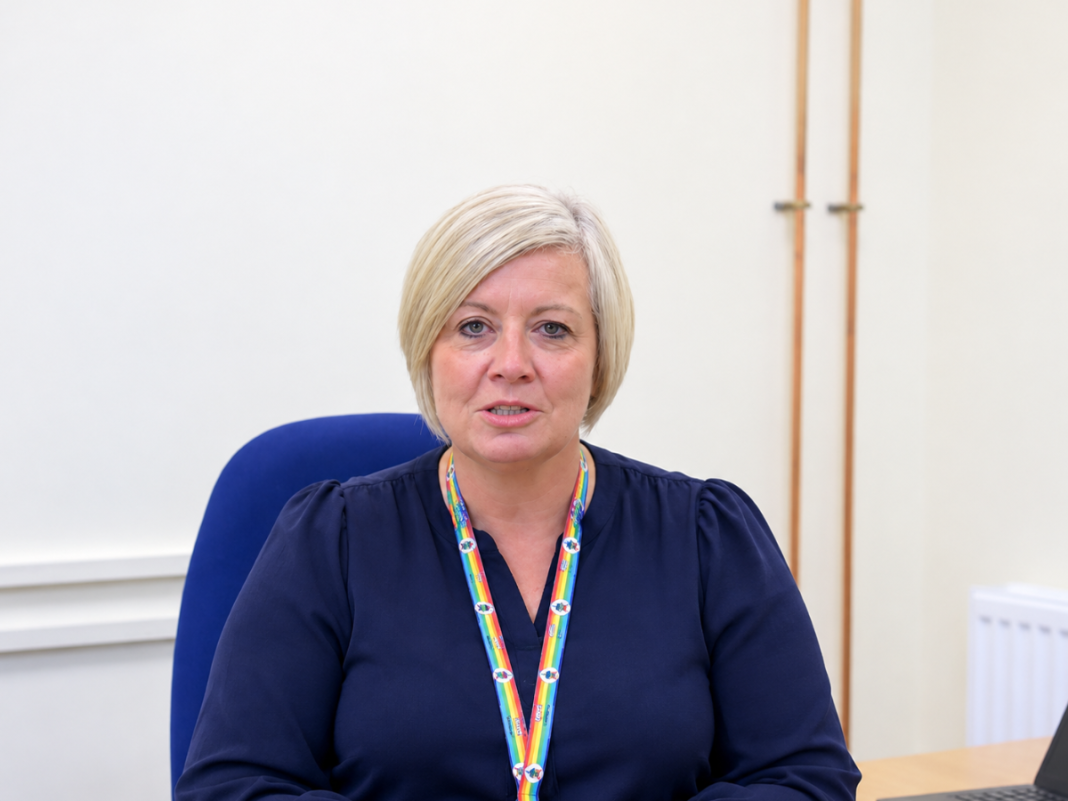
Stacey Hunter, Group Chief Executive Officer, University Hospitals Tees
A firework exploded in the face of Aleks Stasiukiewicz, a 17-year-old from Hartlepool, in November 2024, and the blast knocked him to the ground. Surgeons at James Cook University Hospital in Middlesbrough could not save his left eye or part of his eyelid. His mother has described the care there as incredible, and the family has asked the public to heed safety warnings. Their appeal reached the public this week alongside NHS England’s annual firework alert, which carried the figures that give the story its weight: 85 firework-related admissions in November 2025, up from 60 a year earlier, and 161 across 2025 as a whole, against 120 the year before.
Those rises, 42 per cent for the month and 34 per cent for the year, need reading at their proper size. A caseload of 161 will not register against a waiting list measured in millions, and no operational director will redraw winter plans around it. Earlier NHS reporting recorded 116 admissions in 2020/21 and at least 607 across the five years to 2019, an average near 120 a year, though recording practices have shifted and the series cannot be compared with confidence. No admissions data for this autumn exist yet, so the warning rests on last year’s pattern. The sober reading is a modest and probably genuine increase in a small number of cases, and anyone claiming a system-wide crisis would be overstating the evidence.
The relevance lies elsewhere, in what each case demands. A serious eye or facial injury in a teenager calls first on plastic surgery and ophthalmology, then on prosthetic fitting and psychological support that can run for years. The admission figure captures only the opening episode. Specialist burns and reconstructive expertise sits in a limited number of units, and the demand arrives as winter pressure builds on the emergency pathway that feeds them. The service pays a high price in scarce skills for an event that no clinician had any opportunity to prevent.
That asymmetry sits awkwardly beside the government’s declared direction. The 10 Year Health Plan, published in July 2025, commits the NHS in England to a shift from sickness to prevention, with healthy choices made easier for the public. Health leaders broadly welcomed the ambition. Fireworks reveal how often its levers lie in other hands. Product standards and sales restrictions belong to the Department for Business and Trade and its Office for Product Safety and Standards, under regulations dating from 2004 and 2015. Enforcement is shared between Trading Standards and local authorities. The NHS holds the clinical evidence and a loud public voice, but it cannot change what is on the shelves or pay for the inspectors who check them.
The position of Stacey Hunter, group chief executive of University Hospitals Tees, illustrates the distinction between the NHS’s prevention ambitions and its regulatory powers. Hunter welcomed the 10 Year Health Plan in July 2025, saying its priorities reflected the group’s existing hospital-at-home services and its plans for future care. She also stressed the importance of partnerships with local authorities, primary care and voluntary-sector organisations to address the wider determinants of health and wellbeing. The group’s 2025–2030 strategy similarly identifies preventing illness, rather than simply treating it, as a national priority and commits to working with partners to improve community health. These commitments establish prevention as part of the group’s strategic direction, but they do not give its leadership control over fireworks regulation or enforcement. The gap remains: hospitals can treat the consequences of dangerous products, while the powers to restrict those products sit elsewhere.
Timing makes the point sharper. In July the Department for Business and Trade published a consultation on the regulation of fireworks and pyrotechnics, with responses due by 7 October. It seeks views on restricting noisier products to professional users and on updating the list of banned articles. Its stated concerns, at least in the published ministerial framing, centre on noise, neighbourhood safety, vulnerable people and animals, with injury to young people a less visible theme. Scotland took a different route in 2022 by allowing councils to designate firework control zones. Whether Westminster follows is open, and any response to the consultation will take months, so another Bonfire Night will pass under the existing rules.
The pattern is familiar from other areas of public service reform. A harm is recorded in one budget, produced under the rules of a second and policed by a third, and no single minister answers for the total. Health leaders end up commenting on an outcome over which they hold the least power, which sits poorly with a service asking the public to believe in a longer-term shift. A fireworks policy designed with the casualty department in the room would look different from one designed around nuisance complaints.
Several practical implications follow. Trusts hold case-level detail on who is injured and by which products, and systematic sharing with Trading Standards would give enforcement better evidence than anecdote. Integrated care boards, which carry responsibility for population health, have reason to include firework injury in their prevention work with councils. Policymakers should accept that a prevention strategy owned by one department will under-deliver wherever the hazard is created in another. Councils that want control-zone powers have a case grounded in hospital data and in noise complaints. For the public, the clinical advice remains simple: supervise children closely and call 999 or 111 without delay after an injury.
A prevention strategy earns its name in the places where the NHS has no jurisdiction, and a teenager in Hartlepool is as good a test of it as any target in the plan. Until responsibility for product safety, enforcement and local powers is arranged around the outcome in the operating theatre, the warning will be reissued each autumn and the surgeons at James Cook will go on doing the work.