Original Coverage & Source Attribution: inc-1-smart-business-story.beehiiv.com
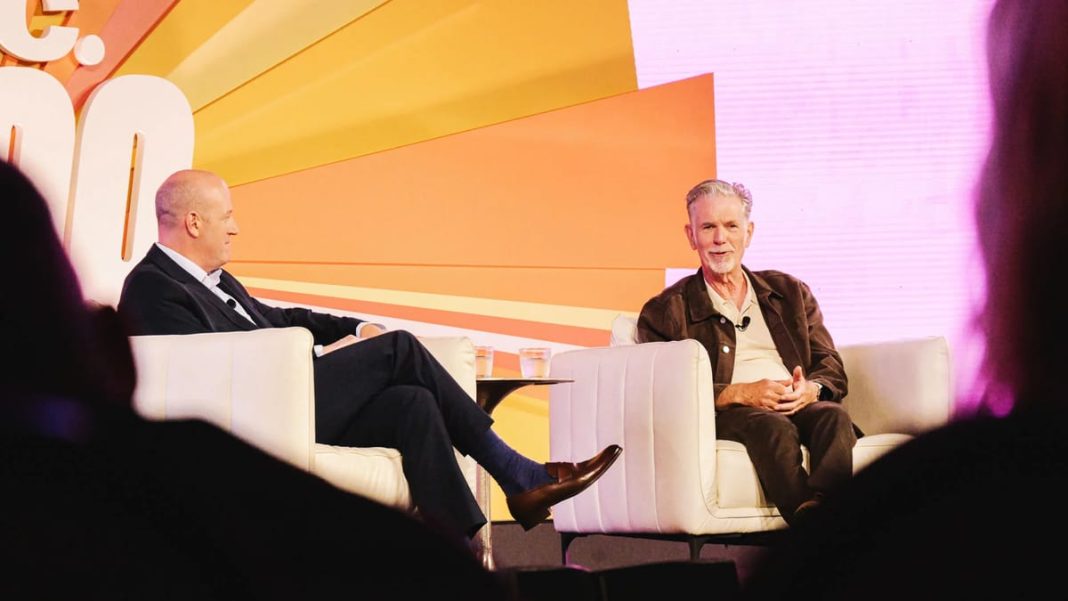
Inc EIC Mike Hofman and Reed Hastings. Photo: Nathan Bajar
Hey everyone, welcome back to Inc.’s 1 Smart Business Story! Reed Hastings built Netflix by betting on the future. But one of the company’s biggest mistakes came from getting there before its customers were ready.
Speaking at the 2026 Inc. 5000 Conference & Gala, the Netflix co-founder reflected on the company’s evolution from mailing DVDs to streaming. Streaming had always been part of the vision. Still, when Netflix launched the service in 2007, it faced a trade-off: DVDs offered a huge content selection but took days to arrive, while streaming was practically instant but initially offered a much narrower library.
That tension eventually contributed to Hastings’s self-described “big mistake.” In 2011, Netflix announced Qwikster, an attempt to separate its DVD and streaming businesses. Netflix’s stock fell about 75 percent, and Hastings said the decision “traumatized” customers who were still perfectly happy getting DVDs in the mail.
But Hastings doesn’t view that failure in isolation. Netflix was willing to make radical bets as it took on Blockbuster, embraced streaming, moved into original programming, and expanded globally. Now Hastings is applying his appetite for reinvention somewhere very different: Powder Mountain, the Utah ski resort he purchased and has been developing with new lifts, a private clubhouse, and a public land-art installation.
In this story you’ll discover:
-
Why being right about the future doesn’t mean customers are ready for it today
-
That successful innovation requires balancing conviction with timing
-
When a bold strategy doesn’t pay off in one instance, that doesn’t mean the shift in direction is entirely wrong
Netflix co-founder Reed Hastings spoke at the Inc. 5000 Conference & Gala about lessons learned at Netflix and his new venture at Powder Mountain.
During a fireside chat at the 2026 Inc. 5000 Conference & Gala in Dallas, Netflix co-founder Reed Hastings reflected on nearly three decades of risky bets—including the one that badly backfired.
Netflix launched in August 1997 by renting out DVDs by mail, then eventually moved into streaming. The company initially positioned itself as an online Blockbuster.
“We named the company ‘net’ for internet and ‘flix’ for movies because it was always going to be internet movies,” Hastings said, referring to the vision to move from mail order to streaming.
Hastings said that the Netflix team went through about 50 revisions of the company’s signature (and now retired) red mailing envelope, working within the U.S. Postal Service’s one-ounce stamp limit. A DVD weighs 0.8 ounces, leaving just 0.2 ounces for packaging. Needless to say, they figured it out. By 2005 or 2006, Netflix had become the country’s biggest mailer, sending a couple billion pieces a year.
“We spent a lot of time on postal sorters and polycarbonate breaking properties,” he said. “And, you know, it wasn’t very glamorous for the first 20 years.”
Netflix launched its first streaming service, Watch Now, in January 2007, a decade after its founding, as rivals like Apple and Amazon began selling movies as individual downloads. Netflix instead bundled streaming into its existing subscription, betting that, as Hastings put it, “all this content was going to come over the internet.”
But streaming came with a new set of challenges. “So on DVD, we had 100 percent of the content of the world, but it took two days to get to you,” Hastings explained. “And then when we started streaming, it took two seconds to get to you, but we only had a narrow slice of the content.”
To fill out its streaming library, Netflix first licensed content from premium channels like Starz and Epix. As they added more content, the attempt to reconcile the different business propositions for customers became an issue. That led Hastings to what he called a “big mistake.” In 2011, Netflix launched Qwikster, a plan to split the DVD business from streaming. Netflix’s stock dropped about 75 percent, and Hastings said the company “traumatized” its customers.
“We were leaning into the future before they were ready for it,” he said. “We were all into streaming because it was like we had to get there. We would die. But for the customers, they were like, ‘you know, this DVD thing is still working out pretty well.’”
Hastings said the misstep was the cost of a company willing to make radical moves towards beating Blockbuster, getting into streaming, launching original content, and going global. “In hindsight, we didn’t stick the landing,” he said. “But it’s kind of the wrong test, because the right test is: Did the business work? And it did.”
Would you like to receive Inc.’s new CPG newsletter when it launches?
We’re gearing up to launch a bigger, bolder edition of Inc’s CPG coverage on Beehiiv, with interviews, breaking news, and access to exclusive events.
5 More Smart Business Stories:
Quantitative Thinkers Are Building Ideas Worldwide on WorldQuant BRAIN
WorldQuant BRAIN is a global simulation and research platform for students, aspiring researchers and quantitative thinkers from around the world.
On BRAIN, that spirit of exploration continues through challenges, collaboration and opportunities to develop new quantitative research ideas.