Original Coverage & Source Attribution: universemagazine.com
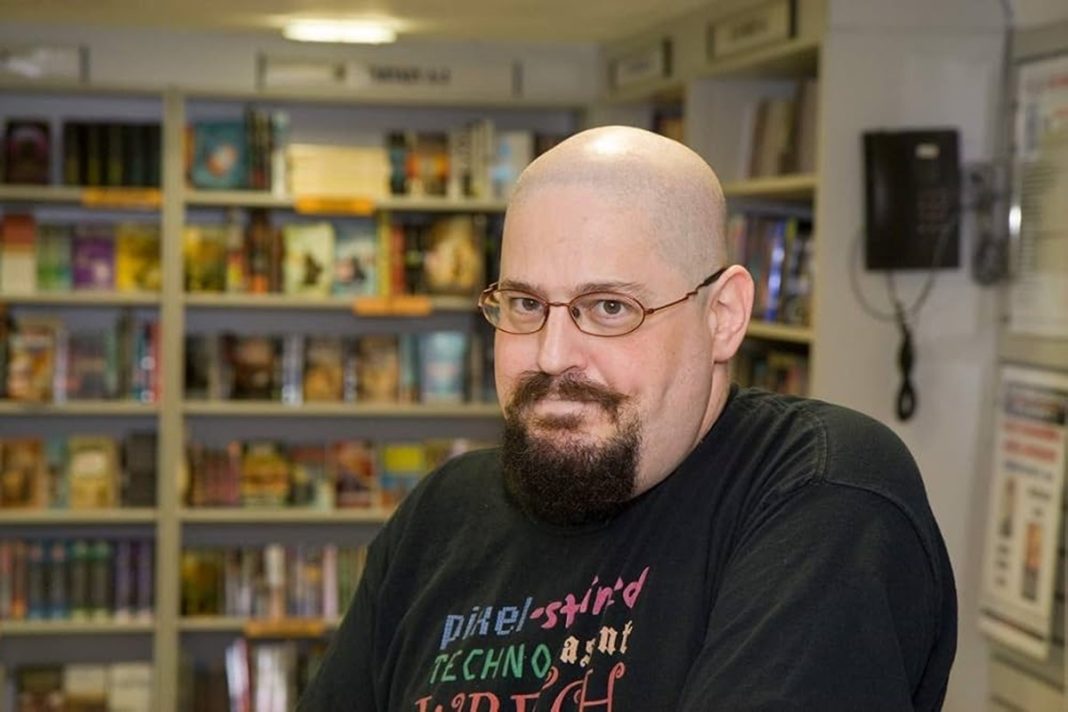
Charles Stross is one of Britain’s most prominent science fiction writers. He writes both science fiction and fantasy, but is best known for his novels “Accelerando” and “Glasshouse.” These novels are set in space, where advanced technologies have transformed people’s lives.
“The Life of Charles Stross”
October 18 marks the birthday of British science fiction author Charles Stross. He is best known for his novel “Accelerando,” which explores how advances in technology and space exploration might lead humanity to the so-called technological singularity. However, his life and writing career extend well beyond this work.
Charles was born in Leeds in 1964 and recognized from an early age that he wished to become a writer. Fortunately, an old typewriter was available at home, enabling him to practice his writing. He wrote his first short story at the age of 12.
In the latter half of the 1970s, while Stross was still in school, the fantasy-adventure board game “Advanced Dungeons & Dragons” was released and eventually achieved legendary status. Charles became an enthusiastic fan of the game and began writing articles about it for the tabletop gaming magazine “White Dwarf.” He later created several monsters for the game, which were subsequently included in its official rulebook.
However, writing was initially a hobby for Stross. After completing high school, he enrolled in college and earned a bachelor’s degree in pharmacy in 1986. He worked in the field for a period before realizing that he was more interested in programming. He subsequently returned to college and earned a degree in computer science in 1989.
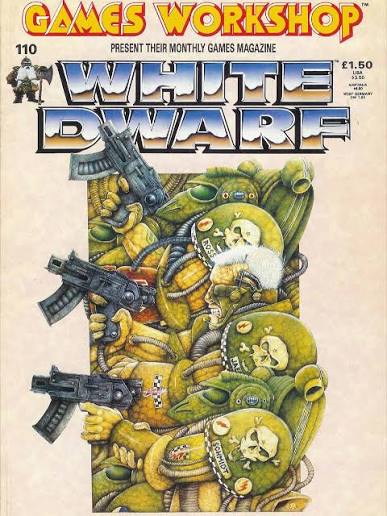
However, even before then, his writing had developed into more than a mere hobby. In 1987, he published his first short story, titled The Boys, in Interzone magazine. The story is set in a dilapidated space colony that a group of refugees views as a potential refuge. It includes descriptions of how people’s lives might change with advances in electronics and biotechnology.
For a period, Stross worked as a programmer; however, his literary pursuits gradually occupied an increasing proportion of his time. From 1994 to 2004, he wrote for Computer Shopper magazine, authored a column on the Linux operating system, and undertook freelance writing assignments.
Eventually, his short stories — and later, his novels — earned Charles Stross not only recognition but also sufficient income to make writing his primary occupation. Which of his works, then, are worth reading?
“Accelerando”
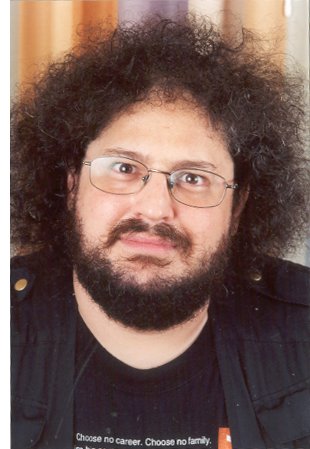
Stross published his best-known novel in installments between 2001 and 2004. Accelerando was released as a single volume in 2006 and received one of the science fiction field’s most prestigious honors in 2006: the Locus Award in the “Long Form” category.
The word “accelerando” is a musical term referring to an increase in tempo. This aptly captures the events depicted in the nine short stories, which together portray how the world is changing at an increasingly rapid pace around the members of a single family across three generations.
In the initial installments, the protagonist, Manfred Max, continues to lead a life — as a programmer and businessperson — that remains quite familiar to us. However, companies are already registering online and establishing ownership structures that are barely comprehensible to humans; aerospace firms are pursuing ambitious projects and exploring the Solar System; and someone has even conceived of uploading the nervous system of a lobster colony to a computer, where it unexpectedly achieved consciousness.
As the story progresses, the intervals between its various sections gradually expand to span years and decades. The protagonists include not only Manfred and his two wives, but also his daughter Amber, who establishes her own asteroid-mining company; an imam from Yemen; and uploaded human consciousnesses traveling aboard a vessel the size of a Coca-Cola can toward the nearest brown dwarf. Later, alien civilizations emerge that have already abandoned the biological foundations from which they arose. Within the Solar System, power no longer rests even with corporations, but with artificial intelligence, which is gradually transforming it into a vast supercomputer.
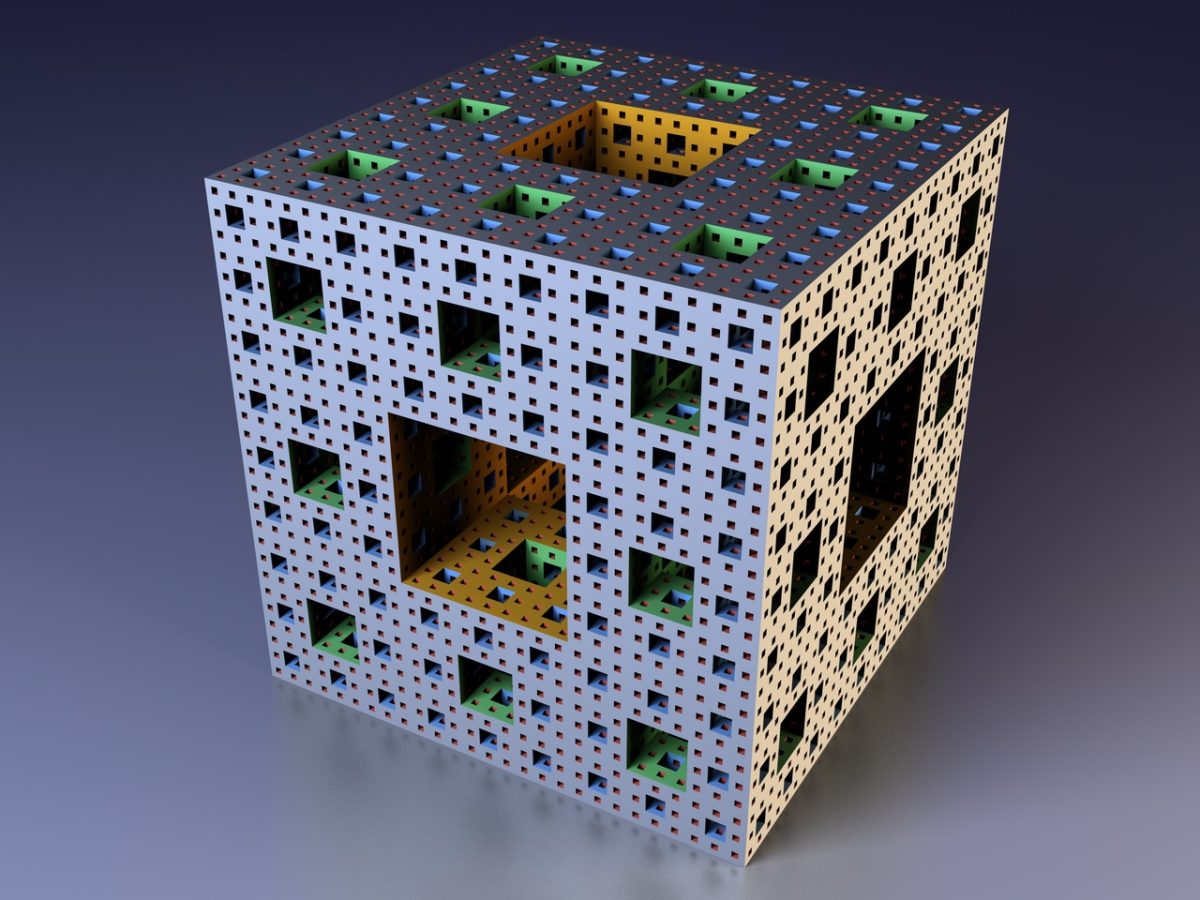
Stross skillfully integrates numerous complex concepts and themes into the plot. For instance, are you familiar with the Menger sponge? It is a fractal — that is, a self-similar structure — whose surface area approaches infinity as the depth of its structure increases, while its volume approaches zero.
In the novel, the space station takes this form. This is an exceptionally compelling concept, supported by a sound scientific rationale: it provides an expansive living area while requiring relatively little material and maintaining remarkable structural strength. The only challenge is that residents must adapt to zero gravity, relying exclusively on magnetic fixtures attached to surfaces that may serve equally well as floors, ceilings, or walls. “Accelerando” is one of those books worth reading to familiarize yourself with all the major science fiction and futurological ideas of our time.
“Glasshouse”
The novel “Glasshouse” is often described as a sequel to Accelerando. This characterization is understandable: Glasshouse was published shortly after “Accelerando” in 2006 and received the prestigious Prometheus Award, as well as three additional nominations.
In reality, however, they are not directly connected; rather, they are united by a shared concept that shapes the world: the technological singularity. This hypothetical scenario envisions that, driven by continually advancing artificial intelligence, artificial technologies will develop so rapidly that the trajectory of civilization’s progress will become nearly vertical, leaving people unable to keep pace with unfolding events.
The sole difference is that, in “Accelerando,” the reader observes this moment approaching, whereas in Glasshouse, it has already occurred, as the events are set in the 27th century. Humanity inhabits colossal cylindrical habitat stations distributed across countless star systems, traveling between worlds and individual rooms via portals.
Objects, including human bodies, are composed of nanomachines. Consciousness can be uploaded to and downloaded from computers. This is precisely why the erasure of information constitutes the most destructive weapon in the universe. Computer worms consume not only people’s memories but also history itself.
It is precisely because of these factors, together with the rapid evolution of data storage formats, that humanity has no knowledge of what occurred on Earth before the technological singularity. To a considerable extent, the novel’s plot centers on the characters’ efforts to understand the past and discover their own identities.
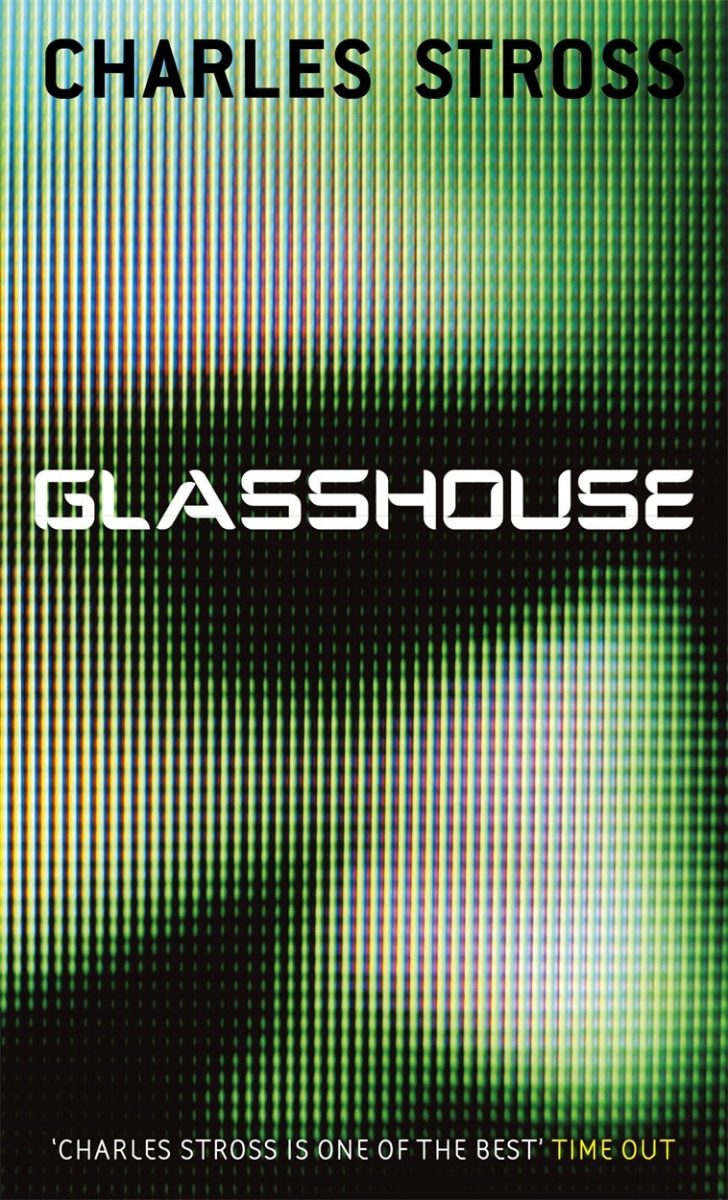
Regarding the name, it is often translated as Glasshouse. In fact, however, it refers to a specialized type of prison with transparent roofs, which allow guards to monitor inmates continuously.
“Singularity Sky” and “Iron Sunrise”
While writing “Accelerando,” Stross published two novels, “Singularity Sky” and “Iron Sunrise,” which explored humanity’s cosmic future following the technological singularity. In this case, however, the singularity occurred unexpectedly. In short, a godlike artificial intelligence appeared, identifying itself as Eschaton, and resettled humanity across several planets resembling Earth.
This technique enabled the author to portray a scenario more characteristic of science fiction. Although humans have established settlements in space, they remain fundamentally unchanged from their present-day selves. Some have even regressed to a primitive state.
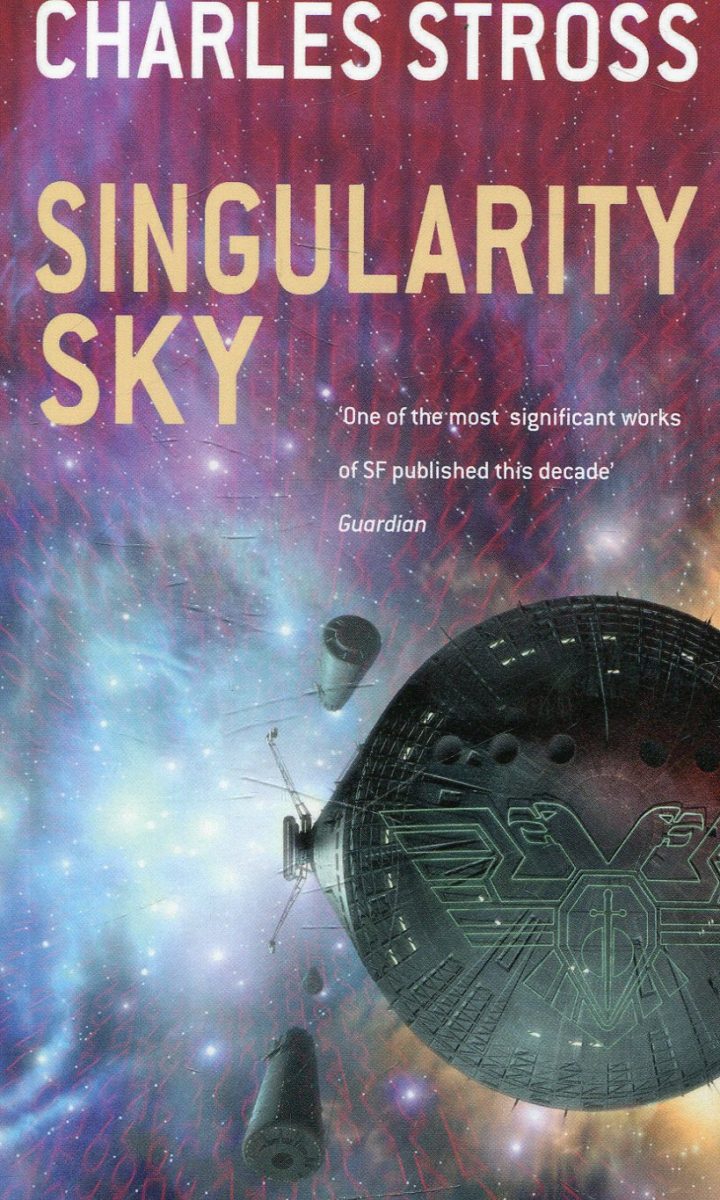
However, it appears that not everyone hastened to establish interstellar empires; some instead sought to bring about a future in which consciousness uploading and nanotechnology await us. What might happen if a group of posthuman entities — indifferent to traditions and conventions — were to arrive in a system where illiterate peasants live alongside individuals armed with blasters?
What would occur if a rain of cell phones fell upon a planet governed by a totalitarian regime, and its inhabitants were offered the following: “We’ll grant your wishes — just entertain us”? How would the conflict conclude between a formidable space battleship and a cloud of nanorobots seeking to dismantle it?
The Merchant Princes and other works
When discussing Charles Stross, it is also worth mentioning his other works, even though they have little to do with space-related themes or technology. Chief among these is the “The Merchant Princes” series.
Stross began writing it in the early 2000s as an attempt to create a fantasy story. However, he soon realized that he did not need hundreds of unique spells or a dozen fantasy races. All he needed was the ability to travel between worlds, an ability passed down through generations.
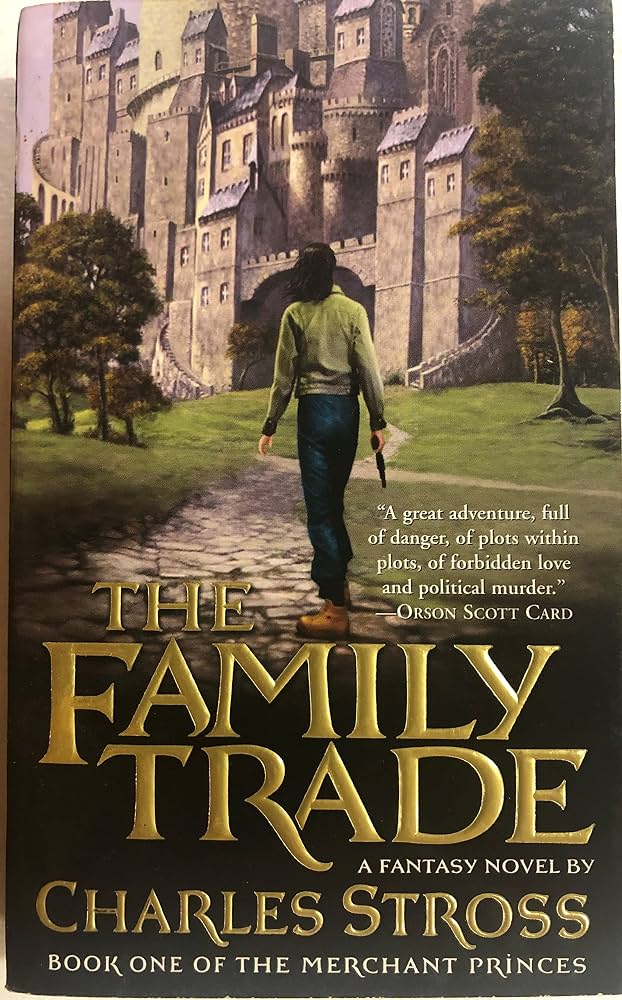
That is how the series began — a series that now comprises nine books. The various worlds through which the main character travels are geographically identical to our own. However, they contain different countries and religions, and their technologies differ considerably. Consequently, the ability to travel between them offers those who possess it remarkable opportunities for enrichment. Such activities, however, are closely intertwined with political intrigue and rivalries among the various families of “travelers.”
Another notable series created by Stross is “The Laundry.” The series takes its name from a covert government agency that investigates various supernatural phenomena. It combines elements of the spy thriller genre with the supernatural and draws on the Cthulhu Mythos created by H. P. Lovecraft.
This author has produced several other noteworthy works, including the short story “Missile Gap.” It recounts how, unexpectedly, amid the Cold War, the entire surface of the Earth transforms into a ring surrounding an unknown star located in the Small Magellanic Cloud. Charles Stross’s work is consistently fascinating.
!function(f,b,e,v,n,t,s){if(f.fbq)return;n=f.fbq=function(){n.callMethod?
n.callMethod.apply(n,arguments):n.queue.push(arguments)};if(!f._fbq)f._fbq=n;
n.push=n;n.loaded=!0;n.version=’2.0′;n.queue=[];t=b.createElement(e);t.async=!0;
t.src=v;s=b.getElementsByTagName(e)[0];s.parentNode.insertBefore(t,s)}(window,
document,’script’,’https://connect.facebook.net/en_US/fbevents.js’);
!function(f,b,e,v,n,t,s)
{if(f.fbq)return;n=f.fbq=function(){n.callMethod?
n.callMethod.apply(n,arguments):n.queue.push(arguments)};
if(!f._fbq)f._fbq=n;n.push=n;n.loaded=!0;n.version=’2.0′;
n.queue=[];t=b.createElement(e);t.async=!0;
t.src=v;s=b.getElementsByTagName(e)[0];
s.parentNode.insertBefore(t,s)}(window, document,’script’,
‘https://connect.facebook.net/en_US/fbevents.js’);
fbq(‘init’, ‘325252195039742’);
fbq(‘track’, ‘PageView’);