

Original Coverage & Source Attribution: www.latintimes.com
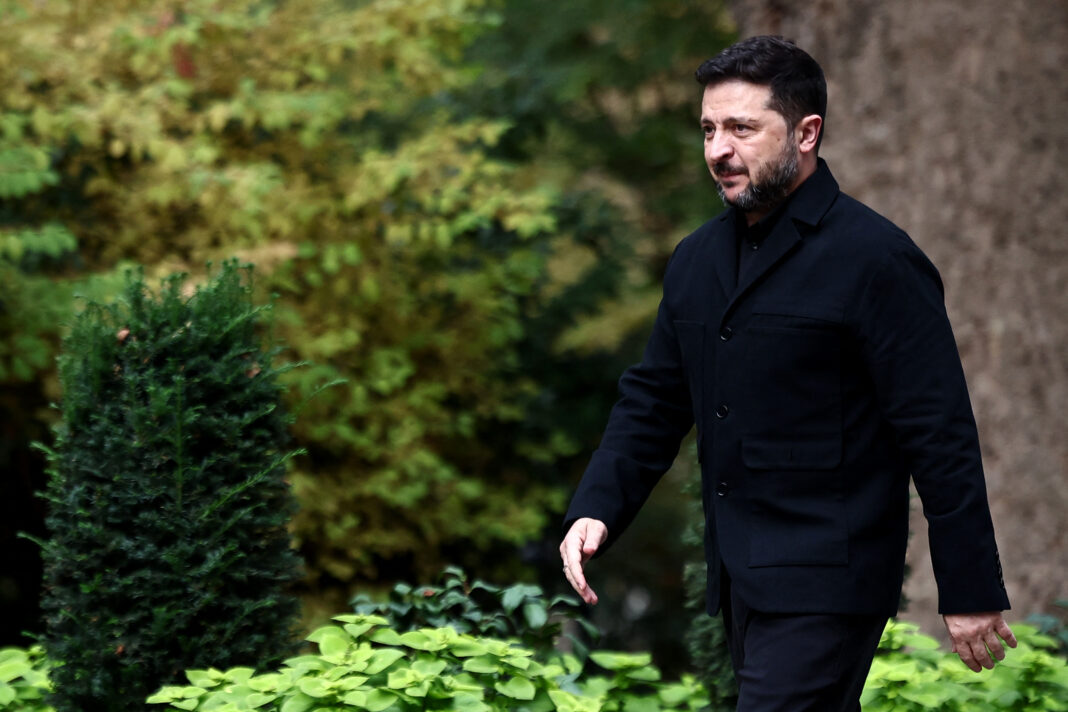
Photo by Henry Nicholls / POOL / AFP via Getty Images
The Briefing:
- Russian Foreign Ministry spokeswoman Maria Zakharova accused Ukrainian President Volodymyr Zelensky of seeking uncontrolled escalation and a direct clash between Russia and NATO to derail peace talks.
- The remarks followed Belarusian President Alexander Lukashenko’s published comments offering to fly with Zelensky to Moscow and act as his security guarantor for talks with Russian President Vladimir Putin — an offer Zelensky dismissed as unserious before suggesting Lukashenko bring Putin to Kyiv instead.
- Ukraine has repeatedly called for limited ceasefire arrangements covering energy infrastructure and Black Sea shipping, while reporting that Russian negotiators declined de-escalation steps or cited the need for Putin’s personal approval.
Russia’s Foreign Ministry spokeswoman Maria Zakharova leveled sharp accusations against Ukrainian President Volodymyr Zelensky on November 26, claiming he is pushing NATO toward direct conflict with Russia to derail a diplomatic settlement in the war.
Zakharova: Zelensky Is Torpedoing Diplomacy
Speaking at a press briefing in Moscow, Zakharova charged that through his actions, Zelensky was seeking to “trigger uncontrolled escalation” and permanently derail the negotiation process. The spokeswoman claimed that the Ukrainian president does not care about the fate of millions of people across Europe, adding that he was pushing NATO into direct conflict with Russia and could no longer count on his Western partners.
The remarks fit a well-established pattern in Russia’s diplomatic messaging throughout the conflict. Each time negotiations between Russia, Ukraine and the United States appear to gain momentum, Moscow has introduced new allegations — drone attacks, assassination plots, sabotage operations — that threaten to stall progress. Western analysts and Ukrainian officials have consistently pushed back against such claims, arguing it is Moscow, not Kyiv, that has obstructed meaningful peace efforts.
Kyiv’s Counter-Narrative
Kyiv has pointed repeatedly to Russia’s rejection of every incremental ceasefire proposal advanced during 2026. Moscow declined even limited formats, including a mutual halt to strikes on energy infrastructure and a maritime ceasefire in the Black Sea. Speaking after the November 19 Coalition of the Willing meeting in Berlin, Zelensky said Russia had rejected every de-escalation proposal presented throughout the year, including arrangements covering energy infrastructure and the Black Sea. The coalition’s joint statement subsequently called on Moscow to agree to a winter energy ceasefire and a separate ceasefire to protect food exports through the Black Sea.
During the November 10–11 negotiations in Abu Dhabi, Russian representatives told their Ukrainian counterparts they lacked the authority to agree to an energy infrastructure ceasefire or other de-escalation measures. According to Zelensky, the delegation said such decisions would have to be referred directly to Putin. The Ukrainian president subsequently said Putin himself did not support a ceasefire. US envoys who visited both capitals in September reported that Moscow’s public position had not moved, with Russia continuing to demand Ukraine cede the eastern Donbas region as a precondition for any settlement.
Lukashenko’s Moscow Gambit
Zakharova’s November 26 remarks came amid heightened rhetoric around allied military planning and European security guarantees, as Moscow accused Kyiv and its Western backers of obstructing a settlement. The remarks followed Lukashenko’s November 24 proposal to accompany Zelensky to Moscow, although there is no established evidence that the Belarusian leader’s offer directly triggered Zakharova’s comments.
In an interview published by the French weekly Le Point, Lukashenko cast himself as a potential security guarantor for Zelensky, volunteering to fly alongside the Ukrainian leader to Moscow. “The two of us. As guarantor of his security, I could sit with him and fly to Moscow,” he was quoted as saying in excerpts circulated by the magazine.
Lukashenko has periodically presented Belarus as a potential venue for negotiations and himself as a possible intermediary. However, Minsk’s claim to neutrality is complicated by Belarus’s close military and political alignment with Moscow. Belarus allowed Russian forces to use its territory during the February 2022 invasion of Ukraine and has remained a key Russian ally throughout the conflict.
Analysts remain deeply skeptical, however, noting that Belarus has served as a key Russian military staging ground — including for missiles and nuclear weapons — since the full-scale invasion began in February 2022, making Lukashenko’s neutrality claims difficult to take at face value.
Zelensky dismissed the proposal as unserious, questioning why Lukashenko would expect him to travel to Moscow under the Belarusian leader’s protection. He suggested instead that Lukashenko could bring Putin to Kyiv, where Ukraine would guarantee both leaders’ safety. Zelensky also stressed that neither Moscow nor Kyiv was an appropriate venue for negotiations.
A Diplomatic Deadlock With No End in Sight
Thursday’s exchange underscores how far both sides remain from any genuine breakthrough. According to Zelensky, Moscow insists that if Ukraine obtains security guarantees, Russia must receive equivalent ones — but the two parties define those guarantees in fundamentally different terms. For Moscow, the concept encompasses a far broader and more specific set of geopolitical arrangements than Kyiv is prepared to accept before even the most basic terms for ending the fighting on Ukrainian soil have been agreed upon.
Ukraine has argued that Russia is seeking a separate understanding with NATO or the United States that would entrench the Kremlin’s preferred vision of European security architecture. Western analysts view Belarus’s periodic diplomatic gestures either as an attempt to ease Minsk’s international isolation or as a vehicle for leveraging Lukashenko’s proximity to Putin in any eventual peace framework — though few consider either strategy likely to succeed.
With Russia rejecting ceasefire proposals at every turn and Kyiv dismissing what it characterizes as performative diplomacy, the conflict shows no signs of nearing a negotiated end. Moscow’s latest round of accusations against Zelensky appears aimed less at advancing peace than at managing the international narrative around who bears responsibility for the continuing impasse.