

Original Coverage & Source Attribution: cinemasentries.com
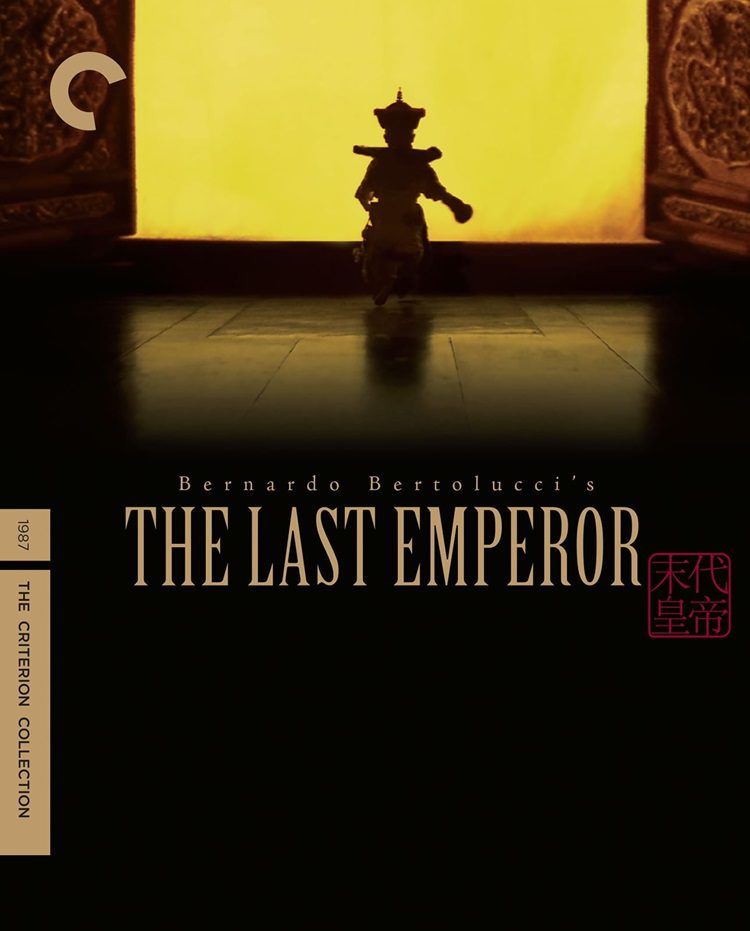
History is filled with remarkable stories, but few lives are as extraordinary as that of Puyi, the final emperor of China. Bernardo Bertolucci’s The Last Emperor (1987) chronicles his remarkable journey from a young boy elevated to the highest position in the Chinese imperial hierarchy to an ordinary citizen living under Communist rule. Spanning decades of political upheaval and personal transformation, the film is an ambitious historical epic that is as visually magnificent as it is fascinating.
The story begins in 1908, when three-year-old Puyi (Richard Vuu) is taken from his mother and brought to the Forbidden City, where he is proclaimed emperor. Although he enjoys extraordinary privileges, his world is remarkably isolated. Surrounded by servants and advisors, he grows up believing that his authority extends far beyond the palace walls. In reality, the imperial system is already crumbling, and Puyi will soon discover that being emperor doesn’t necessarily mean having any real power.
As Puyi grows older, he is portrayed by John Lone, who delivers an excellent performance as a man struggling to understand his place in a rapidly changing world. Peter O’Toole is equally effective as Reginald Johnston, the Scottish tutor who introduces Puyi to ideas and experiences beyond the rigid traditions of the Forbidden City. Joan Chen also makes a strong impression as Wanrong, Puyi’s wife, whose own circumstances become increasingly tragic.
One of the film’s greatest accomplishments is its extraordinary production design. Bertolucci was granted permission to film inside Beijing’s Forbidden City, and the results are spectacular. The enormous courtyards, elaborate interiors, and magnificent architecture provide an authenticity and visual grandeur that would be difficult to reproduce on a soundstage. Cinematographer Vittorio Storaro makes wonderful use of the locations, creating images that are frequently breathtaking.
The film’s musical score, featuring contributions from Ryuichi Sakamoto, David Byrne, and Cong Su, is another highlight. It complements the historical drama without overwhelming it, helping establish the emotional landscape of a man whose life is shaped by forces largely beyond his control.
What makes The Last Emperor particularly interesting is the contrast between Puyi’s privileged upbringing and his eventual loss of status. For much of his childhood, he is treated as a divine figure, yet he has remarkably little control over his own destiny. As political circumstances change, he becomes increasingly disconnected from the world around him. His later involvement with the Japanese-controlled state of Manchukuo further complicates his legacy, while his eventual imprisonment and political reeducation force him to confront the consequences of his earlier decisions.
At nearly three hours, however, the film occasionally struggles under the weight of its subject matter. Its episodic structure and numerous historical developments can make the narrative feel somewhat detached, and Puyi himself isn’t always an especially engaging protagonist. The film is often more successful at depicting the world surrounding him than exploring his innermost thoughts and motivations.
Nevertheless, Bertolucci’s achievement is considerable. Rather than presenting a conventional rise-and-fall story, he offers a thoughtful examination of identity, power, and the difficulty of adapting to a world that has moved on without you.
Ultimately, The Last Emperor is an absorbing and visually extraordinary account of a life that seems almost too improbable to be true. It may occasionally feel more interested in history than in the man at its center, but there’s no denying the magnitude of Bertolucci’s accomplishment.