Original Coverage & Source Attribution: foreignpolicy.com
When U.S. President Donald Trump visited Beijing in May, he and Chinese President Xi Jinping agreed that the U.S. and China should build a “constructive relationship of strategic stability.” At their September meeting in Washington, they reaffirmed that framework and specified that it should rest on respect, fairness, and reciprocity. The leaders were not declaring an end to competition but acknowledging something more realistic: Competition needs a political framework to prevent it from drifting toward confrontation.
What exactly is strategic stability supposed to stabilize?
A more useful definition starts with the boundaries of competition: how it is conducted, what ends it serves, and how far it is allowed to spread. The two sides can compete intensely without their chief objective being to undermine each other. They can take security measures without turning every area of economic and technological interaction into a national-security battlefield. And they can disagree sharply over regional issues while keeping channels of communication, and even cooperation, open elsewhere.
A focus on stability is not the opposite of competition but is instead the factor that keeps competition from becoming a self-reinforcing escalation.
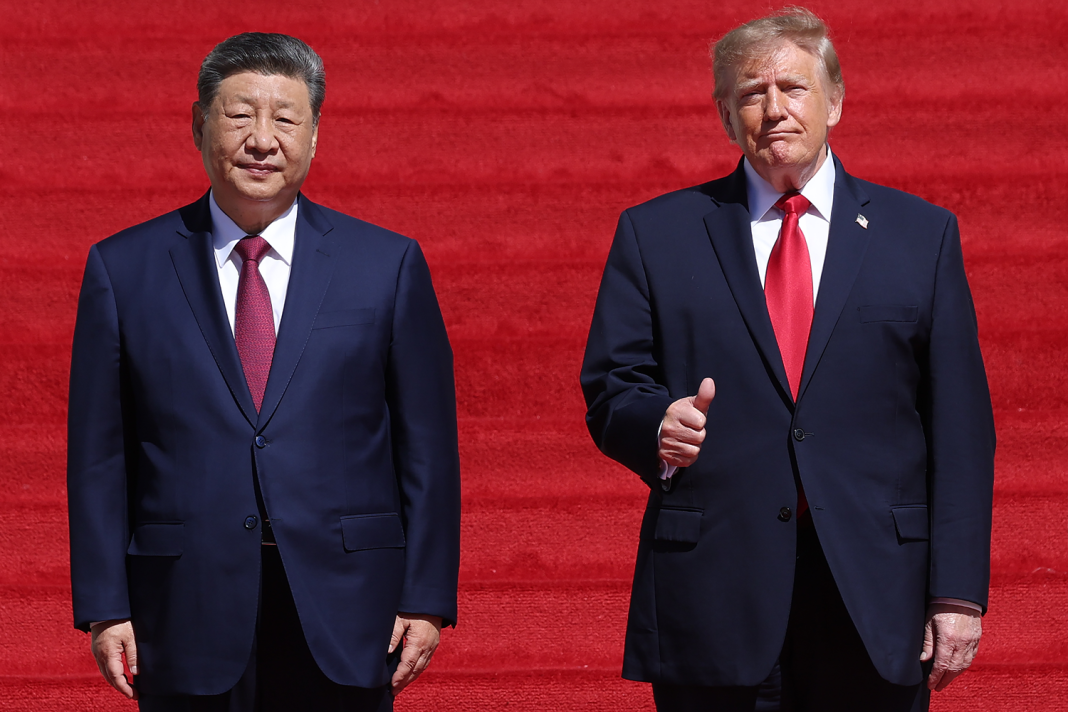
This is why the Washington summit mattered. The Beijing meeting in May established a political framework for the relationship, and the September meeting and its aftermath offer a chance to give that framework greater continuity.
The significance of agreeing on a shared goal of stability goes beyond any single agreement. For much of the past decade, China-U.S. diplomacy has too often followed a reactive pattern: Tensions rise, leaders intervene, relations improve, and another dispute interrupts the progress.
Xi and Trump’s December 2018 meeting in Buenos Aires produced a trade truce, but tariff escalation resumed in May 2019. Xi and then-U.S. President Joe Biden’s November 2022 meeting in Bali opened the way for renewed diplomatic engagement, only for the balloon incident in February 2023 to derail then-Secretary of State Antony Blinken’s planned visit to Beijing. These episodes show not that leader-level meetings are ineffective, but that momentum from one-off summits is fragile unless it is sustained by regular leader-level engagement.
Therefore, a more durable pattern would look different. Regular leader-level engagement could help turn crisis management into something closer to strategic management, giving officials on both sides political space to address problems before they become emergencies.
That would represent a meaningful change. The United States and China are unlikely to resolve their deepest differences anytime soon, but they can become better at living with them. A stable equilibrium does not require accommodation across the board but enough predictability that disagreement in one area does not constantly threaten the entire relationship.
The larger value of regular summits lies in meeting the expectations of the international community that the two nations could establish a more regular political rhythm—one in which competition continues, diplomacy remains active, and neither side needs a crisis before it sees a reason to engage.
If both sides strengthen themselves while also building clearer expectations, more reliable communication, and better crisis-management channels, stability can lower the risk that competition ends in conflict. Conversely, if competition accelerates while mechanisms for managing it remain weak, the present calm may prove little more than an intermission.
The practical task, then, is to build shock absorbers into the relationship. Every major-power relationship encounters accidents and unexpected disputes. The danger in China-U.S. relations is that a problem in one area can still contaminate the whole relationship. For example, an export-control dispute can spill into security dialogue, a military encounter can freeze economic communication, and a cyber or AI-related security incident can quickly be interpreted through the lens of strategic hostility.
A more resilient relationship would make such spillovers less automatic. Strategic stability should provide a floor under competition, not a ceiling on cooperation.
That requires moving beyond summit-generated stability. The next phase should focus on turning presidential consensus into habits.
Economic mechanisms such as the Board of Trade and the Board of Investment should keep functioning even when negotiations become difficult. Military channels should remain open when political relations worsen, because that is when they are most immediately needed. On AI, the two countries do not need a grand bargain before they can discuss shared terminology, major safety incidents, cyber-risks, and the role of human decision-making in high-consequence systems. Recent U.S.-China economic talks have already begun to include AI risks alongside more traditional trade issues, suggesting that such conversations are becoming more feasible.
Academic, business, local, and student exchanges also deserve protection. At the Washington summit, Xi invited 100,000 young Americans to visit China for study and exchanges over the next five years. That initiative addresses a longer-term vulnerability in the relationship: the loss of firsthand knowledge about each other. Turning the invitation into sustained contact will require accessible programs, reliable travel arrangements, and institutional support in both countries. Without such contact, future policymakers will have fewer opportunities to test their assumptions against experience.
Future summits may tackle individual or immediate problems, but the most meaningful outcome would be a China-U.S. relationship that can absorb the next shock without having to be rebuilt from scratch.