Original Coverage & Source Attribution: www.bastillepost.com
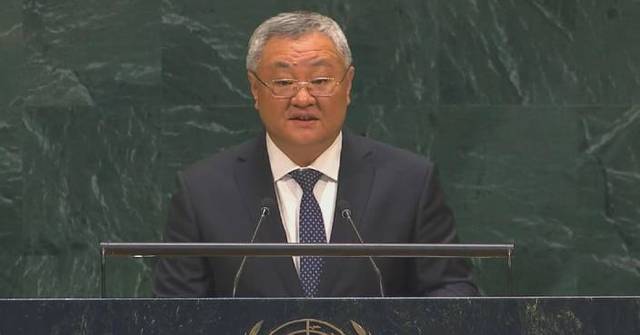
The ultimate goal of UN Security Council reform is to change the situation where developed countries are over-represented, a Chinese envoy said Thursday.
Security Council reform must focus on enhancing the representation and voice of developing countries and small and medium-sized countries with independent foreign policies, Fu Cong, China’s permanent representative to the United Nations, said at a UN General Assembly meeting on Security Council reform.
“The Security Council, as the core of the collective security mechanism, must reflect the realities of international politics and give more developing countries and small and medium-sized countries with independent foreign policies the opportunity to take part in Security Council decision-making. In particular, we must redress the historical injustice suffered by Africa and make priority and special arrangements for Africa’s demands. The ultimate goal is to change the situation where the composition of the Security Council is imbalanced between the North and the South, where a single bloc has long dominated, and where developed countries are over-represented,” Fu noted.
Security Council reform is a systemic project. Before the parties reach a clear consensus, any attempt to hastily adopt a “consolidated model”, push for the launch of text-based negotiations, or even impose artificial timelines and take a “step-by-step” or “piecemeal” approach will only aggravate differences and disputes among the parties, which is not conducive to the long-term development of the United Nations and the common interests of member states, he said.
He also emphasized that the intergovernmental negotiations (IGN) is the only legitimate platform for member states to discuss Security Council reform, and its role is irreplaceable. China supports all parties in continuing dialogue and consultation on this platform to build consensus, and firmly opposes any attempt to launch an alternative platform, he said.
Within the IGN framework, China stands ready to continue to work with all parties, respect one another, and engage in candid exchanges and consultations on an equal footing, to ensure that Security Council reform moves in a direction conducive to the common interests of member states and the sound development of the United Nations’ cause, and to make positive contributions to building a more just and equitable global governance system, said Fu.
UN Security Council reform should address over-representation of developed countries: Chinese envoy
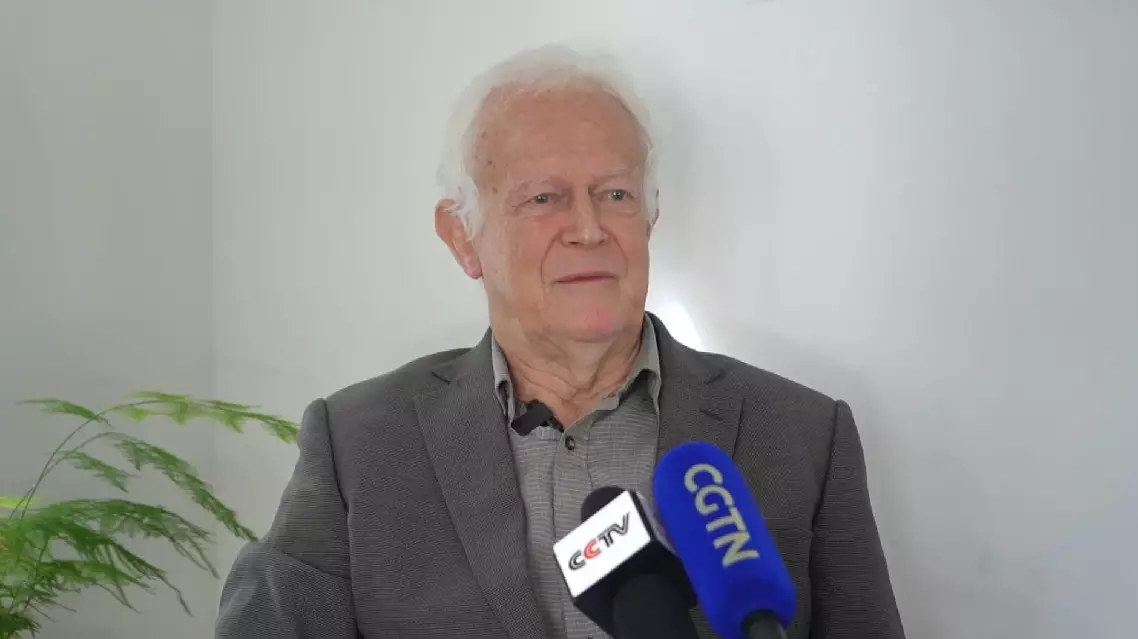
The legacy of the Long March can inspire countries around the world with its experience on building a more peaceful and prosperous future for all, a vision that continues in China’s modern governance, according to David Bromwich, former chair of the New Zealand-China Friendship Society.
This year marks the 90th anniversary of the victory of the Long March, a remarkable revolutionary feat achieved under the leadership of the Communist Party of China (CPC).
From October 1934 to October 1936, the CPC-led Red Army broke through the encirclement of Kuomintang forces, crossed more than 10 provinces, and braved raging rivers, snow-capped mountains and treacherous grasslands before finally completing their epic 12,500-kilometer military maneuver.
In an exclusive interview with China Media Group (CMG), Bromwich drew on China’s historical experience to further reflect on what the Long March spirit means for today’s world. He believes that different countries and societies can draw on these historical lessons to build consensus, promote cooperation and create a more peaceful and prosperous future for all.
“So, learn from the conviction of the Red Army, of the Communist Party, and what they did for the people, and take the people with you in that vision, I think it’s the lesson to the world,” said Bromwich.
Emphasizing that the spirit of the Long March continues to resound, the former Friendship Society chair praised China’s modern approach to governance under the leadership of Chinese president Xi Jinping.
“The rest of the world, 83 percent of the world, is looking to China. Xi has statements like a ‘harmonious global community.’ It’s not competing, it’s not exploitation, and it’s basically a peaceful approach to global governance, absolutely,” Bromwich said.
“We see the world in this 21st century, not as China’s world, but as China sharing the world. So I think that is what is happening, and that’s a continuation from the Long March. Firstly, it was in communities in China. It spread to the whole of China. People share that vision. Now, without being aggressive and without dominating and informing people how to behave, the rest of the world is starting to pick up on that harmony, peace, prosperity,” he said.
Long March spirit offers lessons for peaceful, prosperous world: friendship advocate