Original Coverage & Source Attribution: en.sedaily.com
SILICON VALLEY — Velchamy Sankarlingam, the Zoom president who leads product development at the video conferencing company, said demand for video meetings will hold steady even after the COVID-19 pandemic. Hybrid work, which mixes office and home-based work, has taken root, and important decisions will still be made in meetings in the age of artificial intelligence, he said.
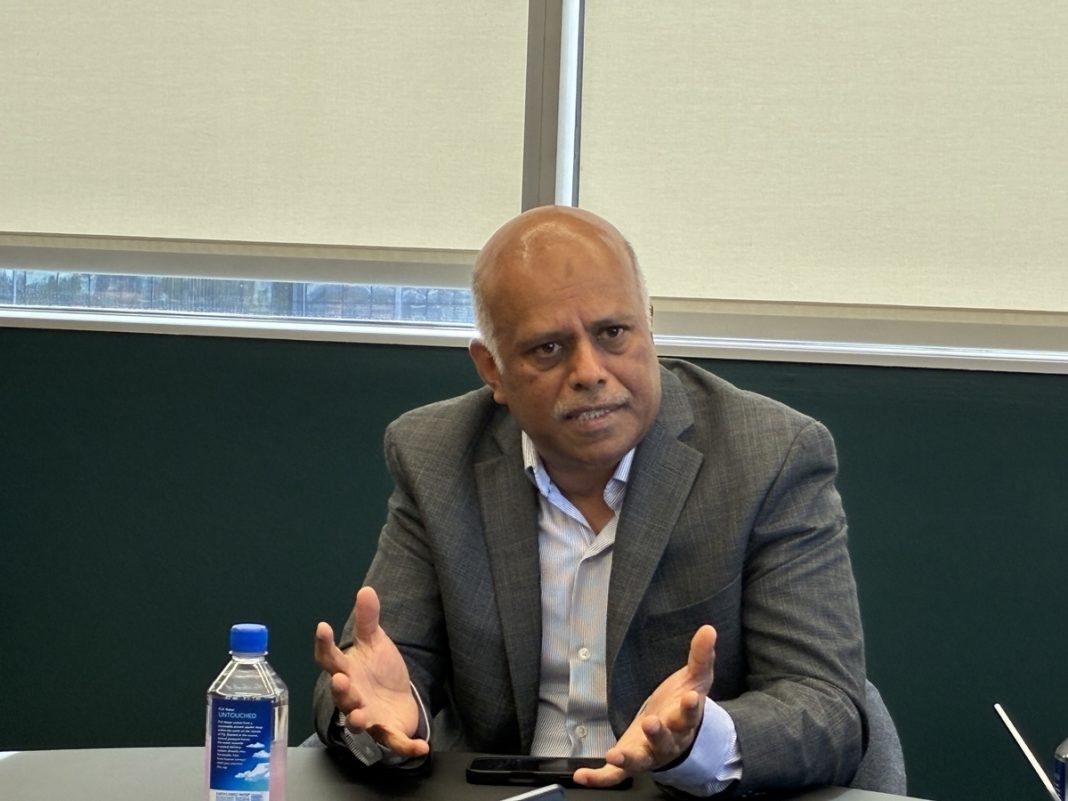
Sankarlingam met Korean reporters at the company’s headquarters in San Jose, California, on the 27th of last month. “After the pandemic, office workers returned to the office, but the pandemic proved that remote work and hybrid work are possible,” he said. “Many companies are still continuing remote work, and Zoom’s revenue has been growing even after the pandemic.” Zoom employees themselves come into the office only two days a week.
In the past, staff from different business units and overseas offices had to gather in one place to hold a meeting. But the 2020 pandemic confirmed that remote communication works just as well, and Zoom remains in use as a result. Zoom’s revenue in the second quarter of this year rose 4.9% from a year earlier, and the number of customers spending more than $100,000 (134.05 million won) over a 12-month period increased 8.2%. According to Gallup, as of June this year, 54% of U.S. employees who can work remotely were working in a hybrid arrangement. That share has stayed at around 50% since 2022, when the pandemic ended.
Asked whether wider corporate use of AI would reduce the need for meetings, Sankarlingam said the core function of meetings as the place where important decisions are made remains unchanged. “We focus on how to draw out the best outcome from the customer’s point of view. The number of meeting participants may fall, but important decisions will still be discussed in meetings and conversations,” he said. “More meetings do not mean more work. What matters is helping people get more productive results out of meetings, and we support turning conversations into action.”
Sankarlingam pointed to flexibility and cost efficiency as the reasons Zoom can compete in video conferencing against hyperscalers — operators of large-scale computing infrastructure — such as Microsoft Teams and Google Meet. Microsoft and Google court corporate clients on the strength of vast cloud infrastructure and their own AI models, but Zoom can push back by working with a range of AI models and concentrating solely on meeting features. “We can choose which AI model to use,” he said. “We work to deliver the highest-quality features at the lowest cost.”