



Original Coverage & Source Attribution: eutoday.net
Beijing’s refusal to restrict shipments of Chinese hybrid vehicles has sharpened a dispute over Europe’s widening trade deficit, with EU Trade Commissioner Maroš Šefčovič seeking concessions during negotiations in China.
China has rejected a European Union request to restrict exports of hybrid cars to Europe, increasing the likelihood of new trade defence measures against Chinese manufacturers as negotiations continue in Beijing.
The disagreement comes during a visit by EU Trade Commissioner Maroš Šefčovič, who is seeking commitments from Chinese officials to address the bloc’s growing trade deficit and improve access for European businesses to the Chinese market.
According to accounts of the negotiations, Beijing has declined the EU’s proposal for voluntary restrictions. The European Commission is consequently considering safeguard measures that could limit hybrid vehicle imports or impose additional tariffs when shipments exceed specified thresholds.
No final decision has been announced, and the precise scope of any restrictions remains under discussion.
The dispute adds another difficulty to EU–China economic relations before European leaders meet in Brussels on 15–16 October, when the bloc’s commercial relationship with Beijing is expected to feature prominently.
Hybrid Vehicles Become New Trade Battleground
The latest confrontation follows the introduction of EU countervailing duties on battery-electric vehicles manufactured in China in October 2024.
Those measures, imposed after an investigation into Chinese state subsidies, did not cover hybrid vehicles.
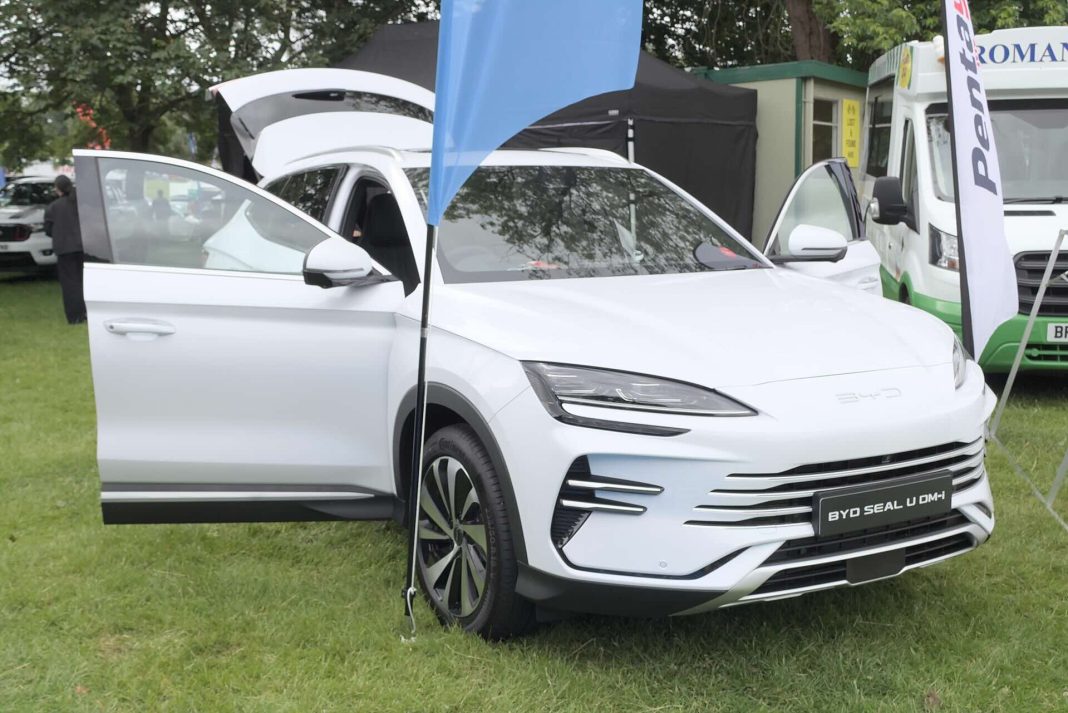
Chinese manufacturers have since increased their presence in Europe’s hybrid market, offering competitively priced vehicles that combine combustion engines with electric propulsion.
The European Commission previously confirmed that its original anti-subsidy investigation applied specifically to battery-electric vehicles and could not automatically be extended to hybrids.
Consequently, any additional import restrictions must have a separate legal basis.
One option under consideration is a safeguard mechanism that would permit a defined quantity of imports before higher tariffs apply.
Such a measure would differ from the existing anti-subsidy duties, which target alleged unfair financial support provided to manufacturers.
Safeguard restrictions are designed to address injury caused by increased imports. They may also create difficulties for Brussels because measures directed at a particular product can affect suppliers from countries other than China.
Japan, South Korea and Britain could therefore face consequences depending on the structure and legal basis of any proposed restrictions.
Trade Deficit Exceeds €360 Billion
The dispute is taking place against a widening imbalance in goods trade between the European Union and China.
The EU’s annual merchandise trade deficit with Beijing has reached approximately €360 billion, equivalent to almost €1 billion per day.
European officials are particularly concerned about Chinese industrial overcapacity and the export of manufactured goods at prices that European producers struggle to match.
During the latest trade negotiations, Brussels has sought commitments concerning market access, import volumes and restrictions affecting European companies.
Chinese exports of plug-in hybrid vehicles to the EU have reportedly increased by 86 per cent over the past year, while battery-electric vehicle imports have risen by approximately 40 per cent.
This expansion has intensified pressure on European manufacturers already confronting high production costs, weak demand in some domestic markets and substantial expenditure on electrification.
EU Today reported in September that Brussels had requested voluntary restrictions on Chinese hybrid exports as part of a broader effort to rebalance commercial relations.
Beijing’s refusal has now brought the possibility of unilateral European measures closer to consideration.
Germany and France Seek Stronger Protection
Germany and France have increasingly aligned their positions on the need for stronger European instruments to address unfair competition and dependence on Chinese industrial supply chains.
France has long advocated a more interventionist European industrial policy, while German manufacturers have traditionally placed greater emphasis on preserving commercial access to China.
That calculation is changing as Chinese competitors strengthen their position in the European automotive market.
The problem is particularly sensitive for Germany, whose automotive industry depends on extensive supplier networks, skilled employment and exports.
German manufacturers also operate significant businesses in China, meaning that new European trade measures could expose them to retaliation in one of their principal overseas markets.
China has already responded to previous European restrictions with trade investigations and duties affecting agricultural products and alcoholic beverages.
Further measures against Chinese vehicle imports could therefore extend the dispute into sectors unrelated to the automotive industry.
Brussels Faces Difficult Legal Choices
The European Commission must determine whether voluntary arrangements can produce measurable reductions in Chinese exports or whether formal restrictions are required.
The legal distinction between anti-subsidy duties and safeguard measures will be particularly important.
The existing electric-vehicle tariffs were introduced following an investigation that examined subsidies and their effects on European manufacturers.
A safeguard mechanism would require a different assessment, including evidence concerning increased imports and injury to domestic producers.
It would also have to comply with the EU’s international trade obligations.
Meanwhile, Chinese manufacturers are developing production facilities within Europe, potentially reducing their exposure to tariffs imposed on imported vehicles.
EU Today’s earlier examination of the proposed hybrid tariffs considered the broader consequences of Chinese investment in European manufacturing and the bloc’s dependence on critical raw materials.
The negotiations in Beijing are expected to influence whether the Commission proceeds with formal restrictions or continues seeking a negotiated settlement.
The immediate question is whether China is prepared to offer concessions sufficiently substantial to persuade Brussels that additional tariffs are unnecessary.
With EU leaders due to discuss relations with Beijing next week, the dispute has become a test of the Commission’s willingness to use trade defence instruments against one of Europe’s largest commercial partners.
Views: 1,178