


Original Coverage & Source Attribution: www.telegraph.co.uk
Britain’s welfare system, says a government-commissioned report, is fuelling a surge in demand for ADHD diagnoses. That may well be true. But it does nothing to explain the surge in ADHD among rich celebrities.
Presumably these showbiz multimillionaires aren’t seeking diagnosis so that they can claim Pip, or lease a hatchback through the Motability scheme. But at any rate, an extraordinary number of them do seem to have ADHD these days. And every single time that number increases, the BBC breathlessly reports it to the nation.
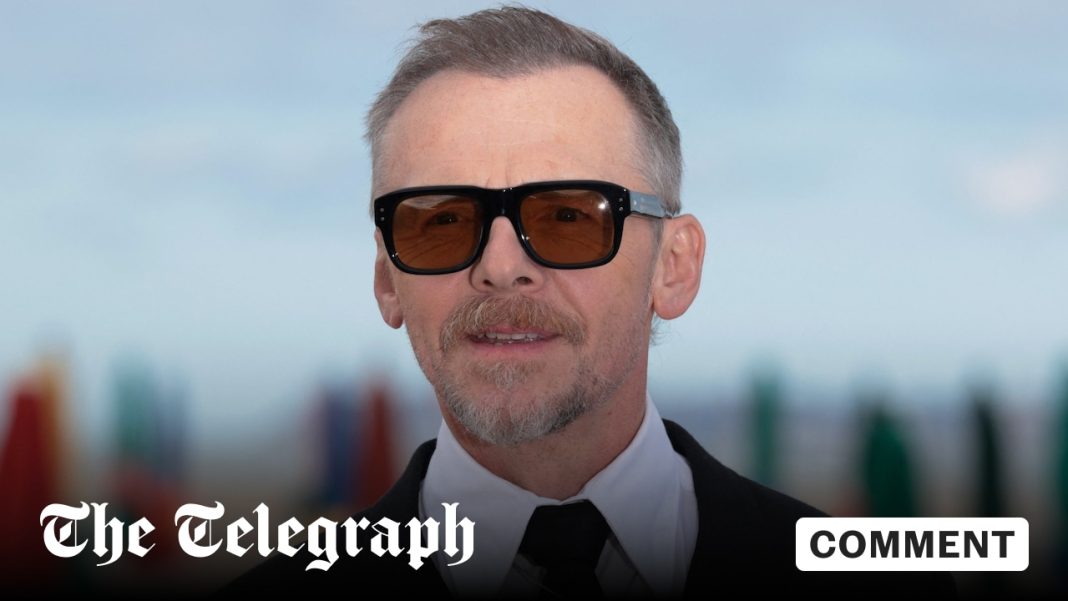
On Thursday, for example, the extremely successful British actor Simon Pegg – star of Shaun of the Dead, the Star Trek reboot and the Mission Impossible films – happened to mention on a podcast that he too was recently diagnosed with ADHD. And BBC News ran it as a top story on its homepage all day long.
Now, I mean absolutely no disrespect to Mr Pegg. But I must say that I’m puzzled by the BBC’s obsession with such stories. Because, in the past few years, so many celebrities have announced they have ADHD that it no longer feels remotely newsworthy. Indeed, as headlines go, “Celebrity Announces ADHD Diagnosis” is about as momentous as “Dog Bites Man”, “Night Follows Day”, or “BBC Programme to Feature Drag Queen” (although, come to think of it, that headline appears on the BBC News website almost every day too).
Frankly, we’ve now reached the point where it would surely be more newsworthy if a celebrity were to announce that he doesn’t have ADHD. If that ever happens, I do hope that BBC news bulletins will lead on this dramatic revelation. The BBC could even make an awareness-raising documentary, in which a sympathetic interviewer asks the celebrity what it’s like, not having ADHD – and whether he feels it’s held him back in the world of showbusiness.
“Well, it’s certainly marked me out as different. At times, it can feel quite lonely – especially when all the other celebrities are discussing their ADHD, because I can’t join in. But I suppose I’ve just got to live with it, and try to fit in as best I can. I used to do this thing called ‘masking’, where I would try to behave as if I’d got ADHD, in the hope that no one would realise that I haven’t. But in the end, I decided it’s best just to be myself. And if other people look down their noses at me just because I haven’t got ADHD, that’s their problem.”
As it happens, I can exclusively reveal today that I myself have never been diagnosed with ADHD. I may not be a major celebrity, but if the BBC is interested, I’m available for interview at any time.
The woke Left’s dream: Suella in handcuffs
Suella Braverman, of Nigel Farage’s Reform UK, has just accepted an exceptionally daunting challenge. For a Channel 4 reality show called Celebrity Handcuffed, she’s agreed to be handcuffed “24/7” to the glamour model turned professional man-eater Katie Price.
Although the programme won’t be broadcast until next year, it was filmed this week. And, according to The Sun, the handcuffed pair were seen “debating in the street”.
What topic they were debating, The Sun did not disclose. Perhaps they were debating John Healey’s plans for the economy. Or how to resolve the conflict in Iran. Or, very possibly, Mrs Braverman’s favourite subject: whether she is or isn’t English. She says she isn’t. Critics insist that she is.
To the best of my knowledge, Ms Price has yet to comment on this highly contentious issue. My own view is that the word “English” can be used to describe your nationality, or your ethnicity, or of course both, if that’s the case. But I accept that some people look at the question from a different angle.
For example, they might say: “Imagine that, in early 1980, your parents had emigrated to China – with the result that you’d been born there, rather than in Britain. How many people do you think would describe you as Chinese? If someone said, ‘Excuse me, I’m looking for a guy called Michael Deacon’, how many people do you think would reply: ‘He’s over there. You can’t miss him. He’s the Chinese bloke’?”
I don’t know whether Katie Price is a regular reader of The Telegraph. But if she is, I hope I’ve given her something to ponder.
Should I be more like Andy Burnham?
Kemi Badenoch keeps calling Andy Burnham a “people-pleaser”. Obviously she doesn’t mean that he actually pleases people, with the possible exception of the Labour Party’s client voters. What she means is that the Prime Minister is too weak to make decisions that are difficult but urgently needed. As in, the sort of decisions that would risk making him very unpopular with the Labour Party’s client voters.
Anyway, my wife and I were recently discussing this voguish term – when she told me that I was the opposite of a people-pleaser. “You,” she said, “are a people-displeaser. You seem to actively go out of your way to wind people up.”
But surely this is just another way of saying “newspaper columnist”. Perhaps I’ll get it printed on my business cards.
Way of the World is a twice-weekly satirical look at the headlines aiming to mock the absurdities of the modern world. It is published at 6am every Tuesday and Saturday