



Original Coverage & Source Attribution: simplywall.st
Nvidia just pledged US$1b for U.S. research in quantum computing, healthcare, and energy security, and that kind of long-horizon spending can reshape which companies sit closest to the flow of contracts, data center demand, and scientific workloads. If you care about where that money and attention might concentrate next, this is your moment. This article walks through three stocks exposed to that news and explains why they may merit closer attention.
The three stocks covered below are just a starting sample, and the full screen surfaced 16 more companies with equally compelling narratives that are not discussed in this article.
To identify those extra U.S. quantum computing and scientific research enablers and analyze which ones best fit your own thesis, head straight into the U.S. Quantum Computing & Scientific Research Enablers screener.
IonQ (IONQ)
IonQ is the closest thing this screener has to a pure infrastructure pick for quantum research, with its hardware and cloud access sitting directly in the path of the workloads Nvidia’s new funding is trying to accelerate. This is why its roadmap matters so much here.
IonQ develops and operates quantum computing systems that researchers and enterprises can access through the cloud, with all reported revenue, about US$246 million, coming from computer services, and the business currently valued by the market at roughly US$15.7b.
“The Oxford Ionics transaction supports the roadmap toward 256 physical qubits at 99.99% accuracy by 2026 and longer-term scale from there, while the SkyWater transaction is intended to add trusted-foundry and manufacturing depth.”
What happens to IonQ’s pricing power and contract mix if a single key assumption about long-term demand for this platform shifts?
If that demand curve matters to you, read the full narrative for IonQ to see whether today’s contracts are masking risk or quietly accelerating upside.
D-Wave Quantum (QBTS)
D-Wave Quantum plugs straight into this screener’s theme through its focus on real-world quantum computing access, with hardware, software, and cloud services aimed at researchers and enterprises trying to turn complex optimization and scientific problems into production-grade workloads.
D-Wave Quantum develops quantum computing systems, software, and cloud services used for optimization and scientific research, earning about US$12 million from internet software and services. The stock is valued by the market at roughly US$5.4b.
“In January 2026, D-Wave completed its watershed acquisition of Quantum Circuits Inc. (QCi). This was the “missing piece” of the D-Wave puzzle, addressing the industry’s biggest hurdle: Error Correction.”
What that means for future pricing power and large contract economics depends on how one unresolved technical bottleneck actually plays out in practice.
That bottleneck is exactly where the edge may emerge, and the full narrative for D-Wave Quantum explains how D-Wave Quantum’s error correction bet could turn today’s technical risk into accelerating commercial momentum.
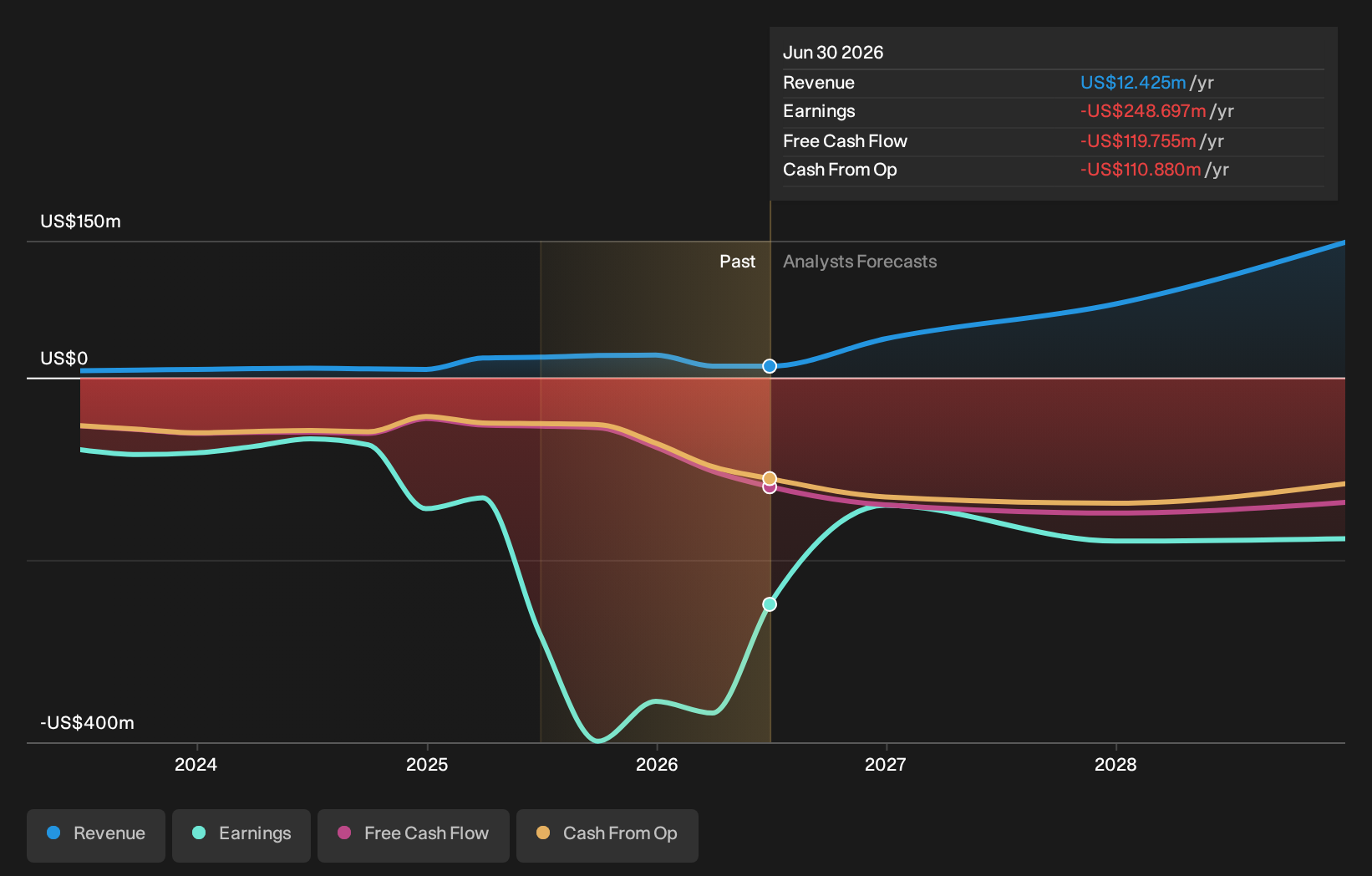
Rigetti Computing (RGTI)
Rigetti Computing matters for this screen because it is not just referencing quantum computing in marketing copy. It is building superconducting quantum machines that researchers can actually log into, which is exactly where Nvidia’s new R&D money and national lab workloads are starting to gather.
Rigetti Computing runs superconducting quantum computers and cloud access platforms that support quantum experiments, generating about US$13 million from internet software and services, with the stock valued at roughly US$4.7b.
“Multi year government and defense related work, including the US$5.8 million three year AFRL contract for superconducting quantum networking and continued participation in DARPA QBI Phase A, ties Rigetti to long term public sector quantum programs, which can provide recurring contract revenue and more stable gross margin contributions.”
What happens to Rigetti’s quantum-as-a-service business model if a single assumption about how these early public sector workloads scale into broader demand changes?
That scaling question is the real hinge, and the full narrative for Rigetti Computing lays out how Rigetti Computing’s contracts, capital needs, and potential upside could be decoupling from today’s headline risks.
Seeking Alternatives Before Everyone Else
The best breakout stories rarely stay quiet for long. Momentum shifts fast, and fresh ideas get caught once the crowd piles in. Scan these under the radar lists while it matters and get in early.
This article by Simply Wall St is general in nature. We provide commentary based on historical data
and analyst forecasts only using an unbiased methodology and our articles are not intended to be financial advice. It does not constitute a recommendation to buy or sell any stock, and does not take account of your objectives, or your
financial situation. We aim to bring you long-term focused analysis driven by fundamental data.
Note that our analysis may not factor in the latest price-sensitive company announcements or qualitative material.
Simply Wall St has no position in any stocks mentioned.
New: AI Stock Screener & Alerts
Our new AI Stock Screener scans the market every day to uncover opportunities.
• Dividend Powerhouses (3%+ Yield)
• Undervalued Small Caps with Insider Buying
• High growth Tech and AI Companies
Or build your own from over 50 metrics.
Explore Now for Free
Have feedback on this article? Concerned about the content? Get in touch with us directly. Alternatively, email [email protected]