Original Coverage & Source Attribution: www.asianews.it
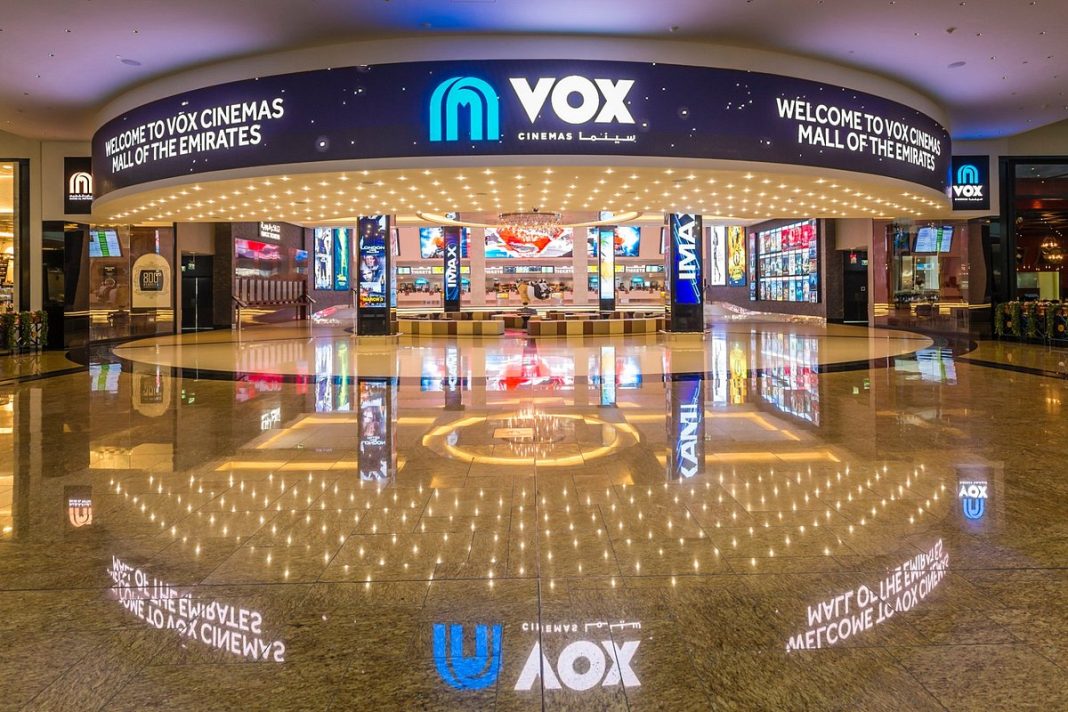
Milan (AsiaNews) – In Dubai, one might choose, within the span of a single week, between an American blockbuster, an Indian thriller in Tamil, an Egyptian comedy, or a Saudi production. And this is not simply a matter of personal taste.
The cinematic programming in the United Arab Emirates (UAE) reflects a society where diverse languages, identities, and cultural frames of reference coexist. While Hollywood continues to exert a powerful influence, it is not the only cinematic source from which audiences can draw.
Alongside American films, productions from India and the Arab world have their own window, each with its own distinct audiences, stars, and distribution networks.
One need only glance at the weekly listings in Gulf News, covering both theatrical releases and digital streaming platforms, to grasp this plurality. The autumn film calendar published by Motivate Val Morgan, a company active in the Gulf, Egypt, and Lebanon, confirms this trend.
The novelty is not the mere presence of these films, as both Indian and Arab cinema have long, established histories, but rather their visibility within an internationalised market like the UAE, which highlights just how multifaceted the available offerings have become.
A demographic mirror
A decisive factor in this landscape of the seventh art can be explained by demographics. The UAE is home to a vast population from South Asia, specifically India, Pakistan, and Bangladesh.
For many immigrants (most of whom are temporary residents), watching a film in their own language means reconnecting with familiar stories, music, and actors, thereby maintaining a bond with their home country.
This demand extends beyond Bollywood, the term for the Indian film industry, centred in Mumbai, and Hindi-language productions; it also encompasses films in Tamil, Telugu, and Malayalam. These industries are able to draw audiences well beyond their country’s borders.
Cinema thus becomes a space of belonging, as well as a marketplace. In 2025, F1, a US production distributed by Warner Bros., topped the UAE box office, grossing some US$ 10.4 million.
However, the year’s successes also include such Indian titles as L2: Empuraan and Lokah Chapter One: Chandra. These results reveal a landscape where American commercial power coexists with a well-established demand for Indian content, a demand that is by no means limited to Hindi-language films.
This trend also extends to OTT (Over-the-Top) distribution, services that deliver audiovisual content directly via the Internet.
On 6 October, JioHotstar, one of India’s leading streaming platforms, announced its entry into the Middle East and North African market through a partnership with Starzplay, a platform based in Abu Dhabi.
The service, launched on 7 October, features films, series, and original productions in various Indian languages, including Hindi, Malayalam, Tamil, and Telugu, with a particular focus on the Malayali community, which has a significant presence in the region.
This is a significant shift. It is no longer just a matter of bringing individual films to cinemas frequented by South Asian communities, but rather of curating digital catalogues aimed at a transnational audience.
Arab cinema
The Arab world is also in this competition. Egypt boasts a long cinematic tradition, with actors and directors well-known across the region. Since the reopening of cinemas in 2018, Saudi Arabia has invested in building a local industry, seeking to translate growth in production into a stable commercial presence.
The titles highlighted by Motivate Val Morgan showcase a body of work that covers a variety of genres. The Saudi action-comedy Aks Sir is geared towards a mainstream cinema audience.
From Egypt, El Set Lamma takes a satirical look at violence against women; Shakwa Raqam 713317 depicts the struggles of an elderly couple as a simple household repair escalates into a bureaucratic tug-of-war; and El Warsha follows a group of con artists involved in a scheme linked to artificial intelligence.
These are not merely stories rooted in local traditions. Family dynamics, social contradictions, bureaucracy, and technological shifts are contemporary themes, explored through settings and references that resonate with audiences across the region.
Arab cinema is thus seeking to expand its repertoire while preserving the cultural distinctiveness that sets it apart from major international productions.
The Politicisation of Consumption
The diversity of what is on offer does not, however, erase the weight of geopolitics. Wars in the Middle East and the United States’ support for Israel have fuelled reactions that extend into the realm of cultural consumption.
In March 2025, the Emirati newspaper The National gathered accounts from viewers who intended to boycott Snow White, a Disney remake featuring Israeli actress Gal Gadot, who publicly expressed her support for Israel. For some of those interviewed, choosing not to buy a ticket became a way to express dissent.
While this was a sign of the politicisation of consumption, it did not necessarily signal a comprehensive or lasting shift in audience preferences. In short, viewers might enjoy an American production while, on other occasions, prefer Indian or Arab cinema.
Dubai makes this coexistence visible. Hollywood retains a global appeal, bolstered by vast financial resources, while India benefits from large diaspora communities and well-established, language-based film industries. Meanwhile, Arab cinema is working to turn its increasingly sophisticated output into a lasting presence.
The stories shown on Emirati screens and released on streaming platforms originate from India and the Arab world, reflecting the communities, languages, and cultural touchstones that seek representation.
In Dubai, the challenge is not necessarily to undermine Hollywood, but rather to capture the attention of viewers, within an already established global market, who, whether on the big screen or the small, are pursuing different dreams and different stories.