Original Coverage & Source Attribution: www.newsofbahrain.com
South Korea’s exports surged to a record US$115.28 billion in October, driven by soaring semiconductor shipments as global technology companies expand their artificial intelligence infrastructure.
-
Exports rose 93.7% year-on-year, marking the strongest annual increase since January 1974.
-
Semiconductor exports jumped 259.4% to US$56.44 billion, accounting for nearly half of the country’s total exports.
-
South Korea’s exports reached US$930 billion in the first ten months of 2026, bringing the country closer to its first US$1 trillion.
The global race to develop artificial intelligence is delivering a major boost to South Korea’s economy, with the country recording its highest-ever monthly export value in October as demand for semiconductors and computing equipment continued to climb.
According to figures released by South Korea’s Ministry of Trade, Industry and Resources on November 1, exports reached US$115.28 billion, marking a 93.7% increase compared with the same month last year. Reuters reported that this was the strongest annual export growth recorded since January 1974.
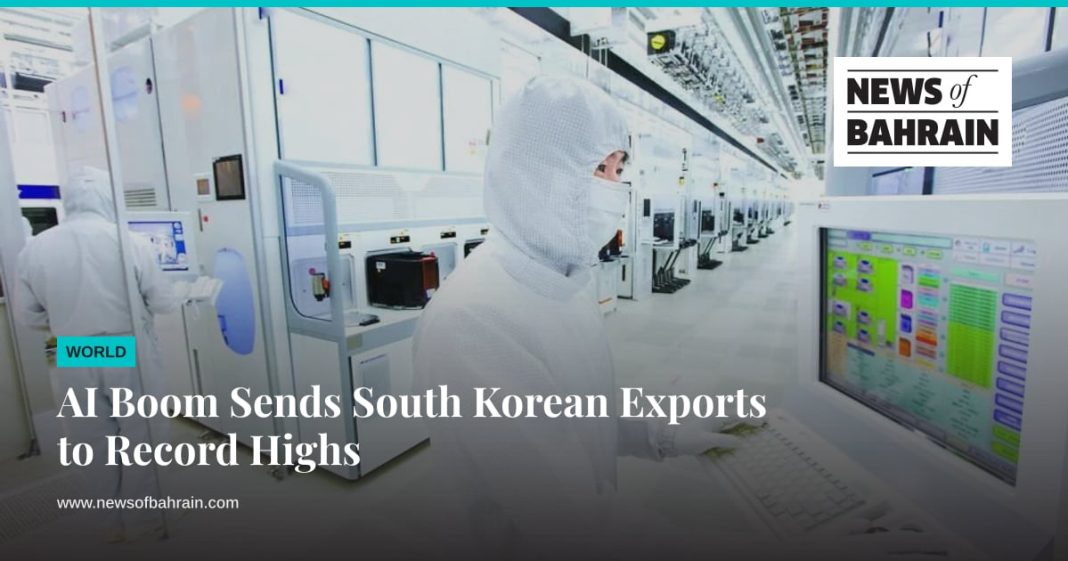
Semiconductors were the main driver of the increase. The ministry’s figures showed that chip exports rose 259.4% year-on-year to US$56.44 billion, accounting for almost half of the country’s total exports.
Computer exports also recorded significant growth, jumping 496.6% as demand increased for servers and equipment used to operate AI services. The figures, reported by Yonhap News Agency, reflect the growing importance of advanced computing hardware as technology companies invest in data centers and expand their artificial intelligence capabilities.
South Korean manufacturers play a major role in supplying the memory chips and other components required by these systems, with major companies such as Samsung Electronics and SK Hynix serving global technology markets.
The increase was not limited to the technology sector. Automobile exports rose 18.1% to US$6.55 billion, while exports of petroleum products climbed 80% to US$6.92 billion. Cosmetics exports also increased by 57.5%, reaching US$1.44 billion, according to the trade ministry.
South Korea also recorded strong export growth across several major markets. Shipments to China increased 133.6% to US$26.98 billion, while exports to the United States rose 185.8% to US$24.9 billion. Exports to Southeast Asian countries also increased substantially.
The country’s imports rose 36% to US$72.78 billion, leaving a monthly trade surplus of US$42.5 billion.
However, Reuters noted that the comparison with October last year was also influenced by calendar effects. The timing of the Chuseok holiday meant South Korea had more working days available for exports this October, contributing to the unusually large year-on-year increase.
The latest figures have brought the country closer to another historic achievement. Total exports from January to October exceeded US$930 billion for the first time, with the trade ministry indicating that annual exports could reach US$1 trillion as early as November.
If achieved, South Korea would become only the fourth country to record annual exports at that level, after the United States, China and Germany.
Despite the strong performance, questions remain over how evenly the benefits are reaching businesses across the economy. The concentration of export growth in semiconductors leaves the country exposed to changes in global technology investment, chip prices and demand.
South Korea’s latest figures demonstrate how the expansion of artificial intelligence is influencing international trade. As demand for computing infrastructure continues to shape the technology industry, the country’s ability to maintain growth while supporting a wider range of businesses will be an important test of the export boom.