



Original Coverage & Source Attribution: uk.news.yahoo.com
A French Renaissance landmark has stood at the heart of Southampton’s history for generations.
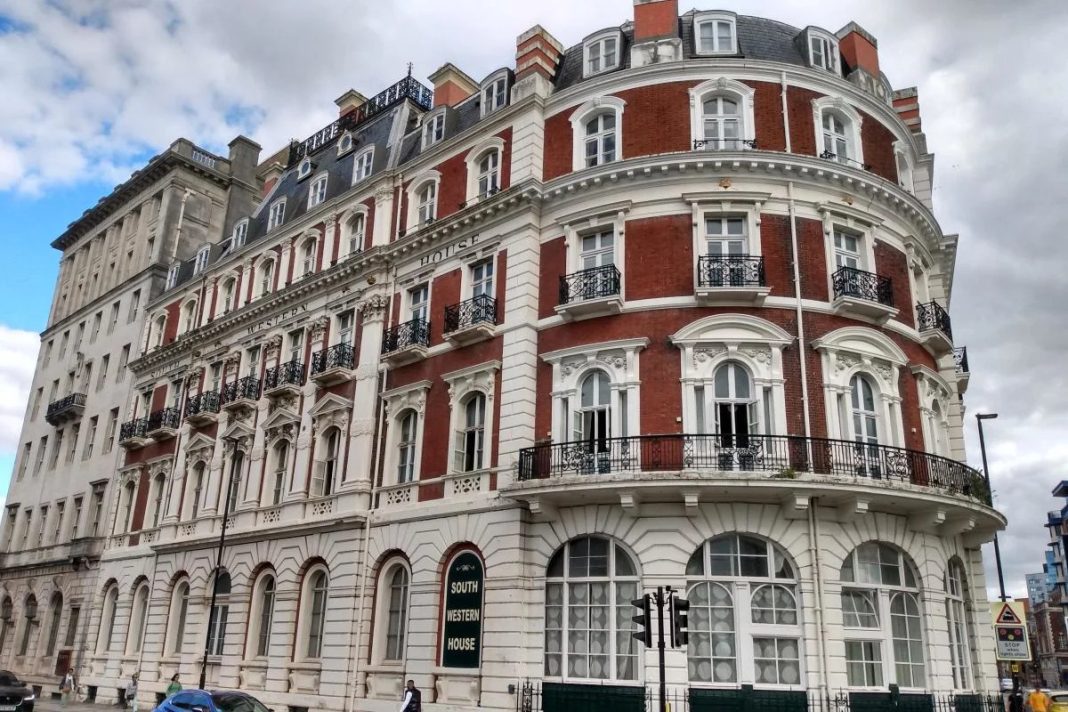
South Western House, formerly the Imperial Hotel, has been a silent witness to the city’s triumphs, farewells, and wartime secrets for more than 150 years.
First opening in 1865 as a grand hotel designed by John Norton, the building quickly became a symbol of luxury in the South East and a hub of social life.
South Western House (Image: Echo)
It served as a gateway for travellers arriving at Southampton Terminus railway station, with red-uniformed porters greeting guests and linking rail to sea in the age of steam.
A short walk from the docks, the hotel attracted a long list of famous guests, including Charlie Chaplin, Laurel and Hardy, Rex Harrison, and aviator Amy Earhart.
The hotel played a practical role in Southampton’s maritime operations.
A rooftop time ball dropped precisely at noon each day, providing a vital time signal for ships navigating the docks and the Solent.
The building is closely linked to the Titanic disaster of 1912.
Passengers including ship designer Thomas Andrews and the Countess of Rothes stayed there before boarding the ill-fated liner.
(Image: Newsquest)
Inside, the hotel’s grand iron and marble staircase fuelled a persistent local legend that it inspired the Titanic’s own iconic staircase.
It was also the last place Empress Eugenie’s son, Louis Napoleon, was seen before departing for the Zulu War.
During the Second World War, the hotel was transformed into HMS Shrapnel, a naval establishment.
It is believed that Winston Churchill and Dwight Eisenhower met there in secret to plan the D-Day invasion.
In the decades that followed, the building served as offices for British Railways and the Cunard shipping line.
It also became part of broadcasting history as the original home of BBC South Today when the programme launched in 1961.
(Image: Primmer Olds BAS/SCC planning portal)
Many residents remember tuning in to regional news broadcasts from the heart of the docks.
Today, South Western House has been converted into modern flats, with its historic exterior carefully preserved.
It remains a lasting symbol of Southampton’s rich and varied past.
The building’s history continues to inspire curiosity and pride among those who know its stories.
Anyone with memories of the BBC studios, connections to British Railways, or family ties to HMS Shrapnel is invited to share their stories.
Readers can add their recollections in the comments below or email [email protected] .