



Original Coverage & Source Attribution: en.majalla.com
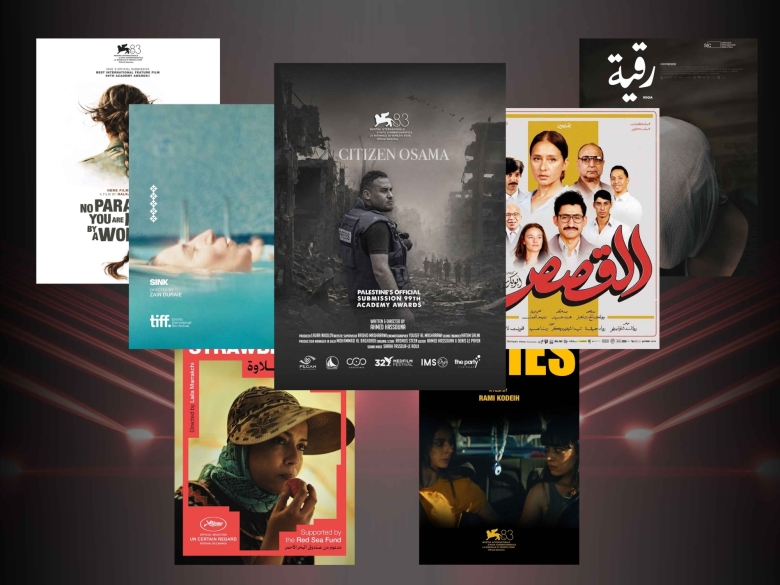
With submissions for the 99th Academy Awards now closed, these Arab films have entered the race for Best International Feature Film. Each was selected by its national committee as the country’s official submission.
The tally is close to last year’s slate of eight films, half of which were shortlisted, including Annemarie Jacir’s Palestine 36 and Kaouther Ben Hania’s The Voice of Hind Rajab. The Academy is expected to announce this year’s shortlist in the second half of December, with the awards ceremony scheduled for mid-March 2027.
This year’s selections span a broad spectrum of Arab experiences, ranging from family memory, war, migration, and work to psychological crises, horror, and suspense.
Despite the diversity of their subjects and the different ways in which they approach them, several characteristics recur across this year’s list. Nearly half of the films are their directors’ first features. Auteur cinema is also a prominent feature of the selection, with some directors writing their films themselves and others sharing writing duties.
Despite their differences, the films also share a common concern. They are fundamentally rooted in the Arab experience, yet intersect with wider human concerns at both an individual and collective level. Foremost among these is the Palestinian cause, whether explored through fiction or documentary.
Citizen Osama
Ahmed Hassouna’s Citizen Osama dispenses with the familiar aesthetics and polished formal constructions often associated with documentary filmmaking. In this sense, its form closely reflects its subject. Set in Gaza, the film records the devastating conditions imposed on residents since 7 October 2023.
At its centre is photographer and father Osama Al Ashi, who tries amid the inferno of war and destruction to achieve a small, everyday miracle: protecting his wife and securing a safe life for their infant son.
The film premiered at the 83rd Venice International Film Festival in September, where it screened in the Venice Open section out of competition. It was made as part of From Ground Zero+, an initiative launched by Palestinian filmmaker Rashid Masharawi and supported by the Masharawi Films Fund.
The Stories
The Egyptian film The Stories, written and directed by Abu Bakr Shawky, features an ensemble cast led by Nelly Karim, Ahmed Kamal, Sabry Fawaz, and Sherif El Desouky.
Set between the late 1960s and 1980s, the film follows Ahmed (Amir El Masry), a young man from a middle-class family who dreams of becoming a concert pianist and whose life changes forever after he begins a pen-pal romance.
The story gradually branches out, making room for other family members, as well as neighbours and relatives. Against this backdrop, political and historical events reshape the characters’ destinies and redirect their lives.
In the process, the film constructs a broader portrait of Egyptian society across more than two decades, beginning with defeat in the 1967 war, through the 1977 bread riots in Cairo, to the assassination of Anwar Sadat in 1981 and beyond.
The Stories is inspired by the true story of how Shawky’s parents met. His Egyptian father, Ahmed, and his Austrian mother, Liz (Valerie Pachner), began corresponding in the late 1960s through a series of letters exchanged between Cairo and Vienna.
From this emerged a comparison between two eras: one in which waiting for a reply could take months, and another in which communication comes at the press of a button.
Furies
The Lebanese film Furies, directed by Rami Kodeih, explores the repercussions of Lebanon’s economic crisis through the lives of two sisters.
Premiered in the Official Venice Spotlight section of the 83rd Venice International Film Festival, the idea for the film began, half jokingly, with a text sent to a friend in 2019. In that text, the director wrote: “Do I need to write a heist movie about me stealing my own money back?”
“It was a fantasy born out of raw emotion,” says Kodeih. “Like millions of Lebanese, my life savings were stuck in a bank amid a corruption-fuelled economic crisis—the worst in modern history. My wife and co-writer Nora needed surgery, which we were unable to do because the bank refused to let us access our own money.”
Seven years later, what has emerged is a character-driven, subversive crime story.
When Maro (Rym Mroue), a determined single mother, tries to access her own money to pay for her wild-hearted younger sister Dalia’s (Maria Nakouzi) life-saving surgery, the bank refuses. In desperation, the sisters come up with a meticulously planned yet dangerous nighttime caper to recover their money.
Strawberries
Laïla Marrakchi’s Strawberries, starring Nisrin Erradi and Hajar Graigaa, has been selected to represent Morocco, a country that has seen three of its previous 22 submissions shortlisted.
The political and social drama follows two young Moroccan women who travel to Spain during the strawberry-picking season to find work and a better life for their families. They soon discover how difficult that dream is to realise when confronted by labour regulations and harsh working conditions, reinforced by a system that exercises control over women through a structure built on migration and exploitation.
Marrakchi drew inspiration from the real experiences of Moroccan seasonal workers in Spain, using them to build her protagonists’ story while leaving their relationship open to interpretation. The women in the film do not merely endure their circumstances. They find in solidarity with one another a way to confront a system far more powerful than any of them could face alone.
Sink
A similar concern runs through the Jordanian film Sink, the first feature by filmmaker Zain Duraie. She creates a cinematic world that demonstrates her command of visual language, alongside a screenplay that, as she has said, emerged naturally from her personal experiences.
Her approach examines women from within the texture of their everyday lives, rather than through the familiar lens of the victim.
Duraie works in a mode of psychological realism to examine the social denial faced by those perceived as different and the tendency to treat them as outcasts. She explores these concerns through the seemingly ordinary story of a Jordanian family whose teenage son is struggling with an escalating psychological and behavioural crisis.
Nadia, played by Clara Khoury, is a mother of three who begins to sense that her eldest son is gradually withdrawing from her and the people around him. Tension rises as the psychological gulf between him and the outside world widens.
Yet the film does not treat mental illness as an individual condition affecting the son alone. Instead, it reveals its impact on the entire family, particularly the mother, whose love and desire to protect her son gradually becomes entangled in the crisis.
No Paradise If You Are Killed by a Woman
Halkawt Mustafa’s No Paradise If You Are Killed by a Woman also premiered at Venice and follows Vyan, a Kurdish sniper from the Peshmerga who is forced to return to Mosul in an attempt to rescue her younger sister from the Islamic State.
The film unfolds as a thriller that combines elements of war cinema and psychological suspense, a framework that gives Mustafa room to explore several ideas and questions indirectly. Foremost among them are the loss of homeland and the experience of living in a state of uncertainty.
The subject has a close personal connection to the director. Mustafa was born in the Kurdistan region of Iraq but moved to Norway as a young child. Yet this did not distance him from his country of origin, which remains a recurring presence in his filmmaking, appearing sometimes fleetingly and sometimes as the central subject, as in his 2023 documentary Hiding Saddam Hussein.
The story of Vyan (played by Avan Jamal) is inspired by a female Peshmerga sniper whom the Norwegian-Kurdish filmmaker met on the front line in 2014.
Roqia
Algeria, the only Arab country to have won an Oscar for Best International Feature Film, has chosen Yanis Koussim’s Roqia as its submission.
Working from his own screenplay, Koussim makes his feature debut with a cinematic gamble built around two distinct elements. The first is an unconventional plot deliberately designed to unsettle the viewer through its interwoven narrative and indirect dramatic structure.
The second is his decision to use horror as the framework for his cinematic world, a bold choice within an Arab film tradition with relatively few examples of the genre.