Original Coverage & Source Attribution: africa.businessinsider.com
This financial incentive arrives amid ongoing debate over Tehran’s nuclear capabilities and spreading economic fallout from Middle East instability into African nations.
U.S. offers 20 million dollar reward for Iran nuclear details despite claims of destruction
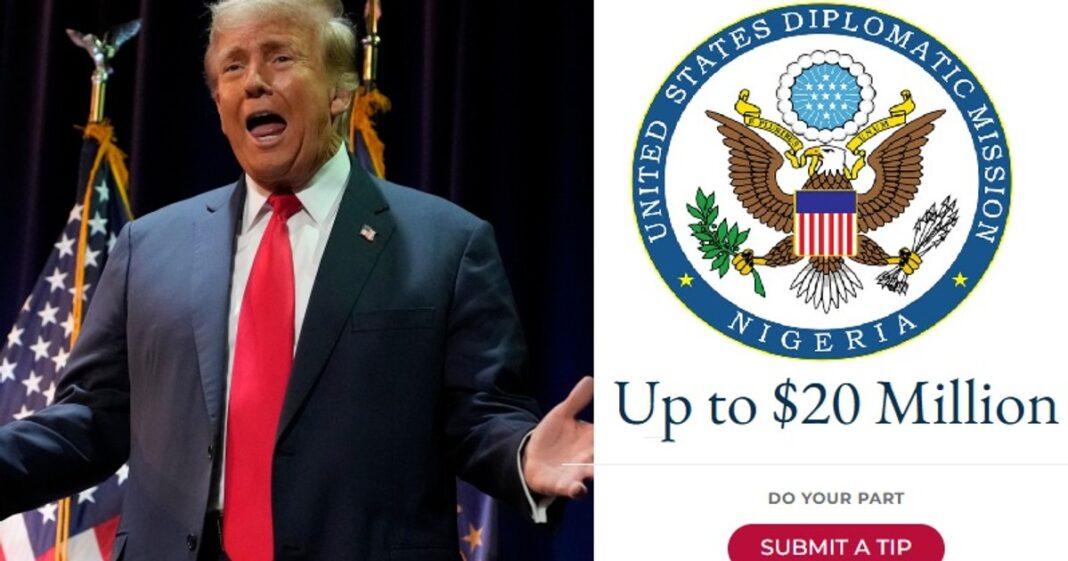
Through the State Department’s Rewards for Justice program, the U.S. government announced a reward reaching $20 million for actionable intelligence regarding Iran’s nuclear ambitions.
According to U.S. Central Command, the government is seeking details on Iranian “facilities, equipment, and associated personnel, such as those in the scientific community,” while offering “possible relocation” to potential informants.
President Donald Trump has repeatedly emphasized that preventing Tehran from acquiring nuclear weaponry remains his chief objective, asserting that the country was close to achieving that capability.
However, the massive bounty comes after official declarations asserting that Iranian atomic sites had already been neutralized.
Following military strikes, President Donald Trump declared on Truth Social that “Monumental Damage was done to all Nuclear sites in Iran” and insisted that satellite images reveal that “Obliteration is an accurate term!”.
U.S. Secretary of Defense Pete Hegseth reinforced this assessment, stating, “our bombing campaign obliterated Iran’s ability to create nuclear weapons“.
Iranian Foreign Ministry spokesman Esmail Baghaei also acknowledged significant damage, stating, “Our nuclear installations have been badly damaged, that’s for sure“.
The introduction of a $20 million reward reveal Washington’s continued push to track remaining nuclear assets and scientific expertise.
African nations confront rising prices from U.S.-Iran conflict
While geopolitical tensions persist in the Middle East, economies across Sub-Saharan Africa are facing severe price shocks.
The International Monetary Fund reported in its regional update that shipping disruptions through the Strait of Hormuz have constrained supplies of refined fuels and agricultural inputs.
Global fertilizer prices are projected to jump by 26% in 2026, driving up food production costs across agricultural economies.
Consequently, regional median inflation across Africa is projected to climb from 3.4% in 2025 to 5.0% in 2027.
The economic impact varies across individual nations.
Major oil exporters like Angola and Nigeria may receive short-term revenue windfalls from elevated crude prices, though fixed retail prices and limited refining capacity constrain broader domestic gains.
Conversely, non-resource-intensive nations and regional hubs like Ethiopia and South Africa face expanding trade deficits and higher living costs for households.
IMF analysts stress that targeted social support and fiscal reforms will be essential for African governments to cushion vulnerable populations against persistent global energy and food inflation.