Original Coverage & Source Attribution: www.aboutamazon.eu
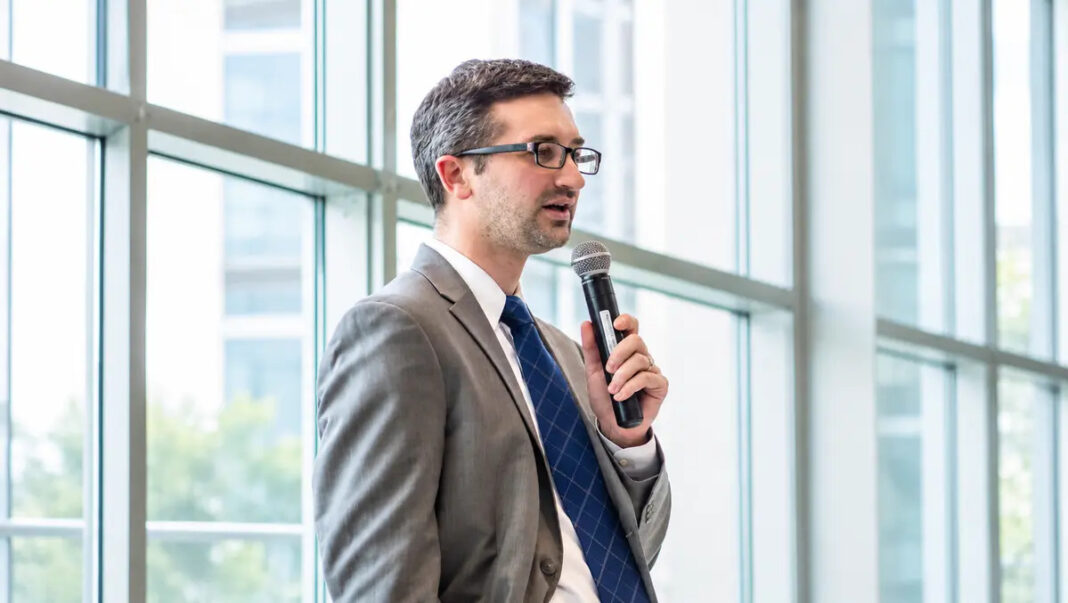
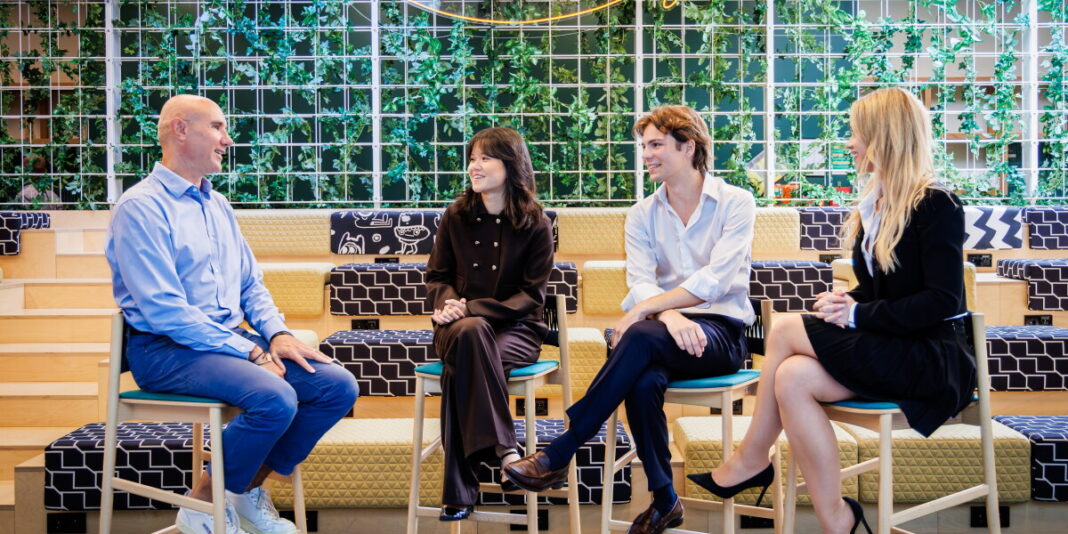
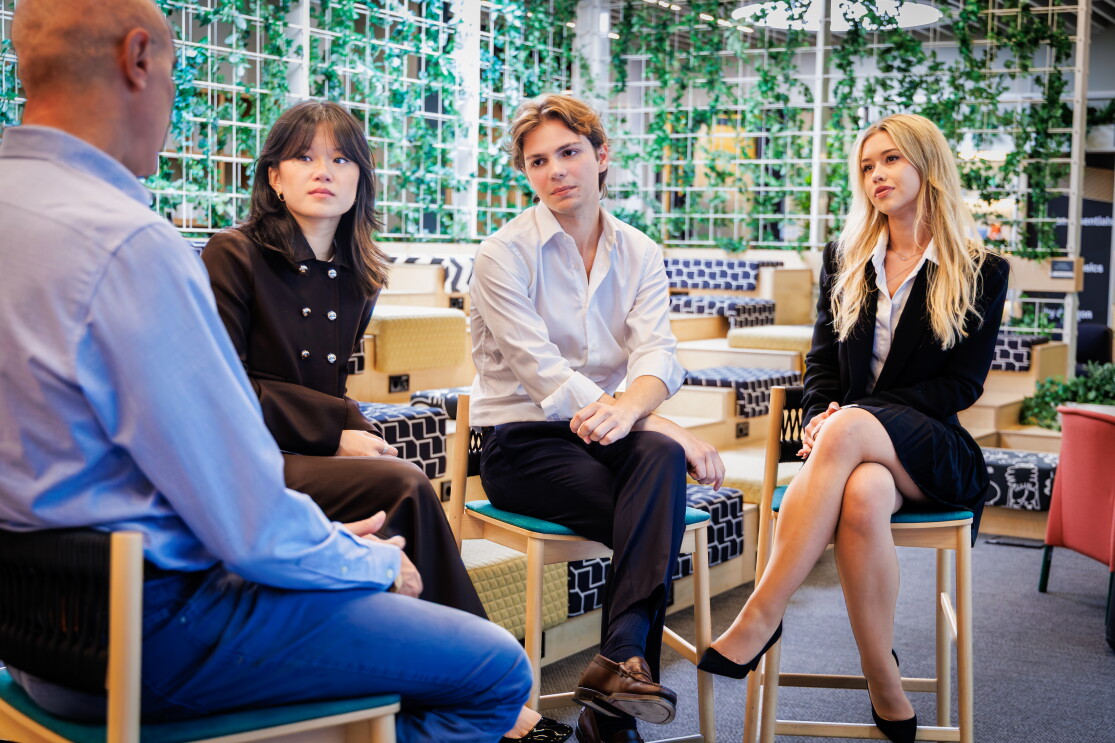
In early September 2026, I invited three recent university graduates to our offices in Luxembourg for a conversation about AI and the future of work: Claire McDonald, a French-British graduate working in influencer marketing in Paris. Federico Vismara, an economics and management graduate from Milan, currently interning in brand and content operations with a focus on implementing AI. And Aneta Prochazkova, from the Czech Republic, stepping into her first full-time role as a marketing associate for a company based in Germany.
Claire, Federico and Aneta are exactly the people this moment belongs to: young, qualified, and walking into a job market that AI is actively rewriting. I wanted to hear what that felt like from the inside.
Human with AI, not human versus AI: Stefano Perego talks to three graduates about the future of work
This content is hosted by a third party (www.youtube.com).
To view the content, you need to consent to cookies by selecting Accept all in the popup banner. Or you can go to the site footer, select Cookie Preferences, and then select On under Functional Cookies, Performance Cookies and Advertising Cookies.
“Both excited and uncertain”
I started by asking how their generation feels about AI. Federico didn’t hesitate: “We feel both excited and uncertain. On one side, we have this incredible new technology with which you can do the unimaginable. On the other side, we have this evolving job market—junior positions decreasing. And the tool is also addictive.”
That word—addictive—stayed with me. It’s not a word you hear in most corporate discussions about AI, but it captures something real. These graduates are not technophobes. They are the most digitally fluent generation in history. And precisely because of that fluency, they can see risks that more seasoned observers sometimes miss.
Aneta put it sharply: “We are using AI not to build up on our thoughts but to actually replace our thinking processes.” Claire offered a different angle entirely—she’s conscious of AI’s environmental footprint and deliberately limits her use. In her influencer marketing work, she’s also found practical limits: “If I try to look for influencers for my job, AI is not as accurate as it should be.” A useful reminder that for all the hype, AI tools remain uneven.
Domain expertise still matters, but the job description is changing
One of the most striking themes was how clearly these graduates see AI reshaping roles without necessarily appearing in the job title.
As Federico put it: “Domain expertise will remain at the core of the job market. We will still need professionals in marketing, operations, finance—but they will also need to use these tools to increase their productivity, and they will especially need to know how to judge the output.”
That emphasis on judgement came up again and again, and it mirrors what I see across Amazon’s own operations. The most valuable human contribution is increasingly not the execution of a task but the evaluation of whether an AI-generated output is accurate, appropriate, and ready to act on.
The return of soft skills
Perhaps the most counterintuitive insight came when the conversation turned to which skills will matter most. In an era defined by technological acceleration, all three graduates pointed back to fundamentally human capabilities.
“We are going to get back to the soft skills,” Aneta said, “to the skills that complement AI. We will get back to craft, we will get back to human touch.”
Federico built on this, noting that the flood of cheap AI-generated output creates two critical needs: “One, judging the output that AI is giving us. And two, who’s going to take responsibility.” These are not technical questions. They are questions of expertise, ethics, and leadership.
“Human with AI, not human versus AI”
The line that gave this post its title came from Aneta: “AI should not be used to replace skills, but to build on top of your already existing skills. That is the power of AI—not to use it against you, but use it with you.”
Federico extended the thought: “I wouldn’t look at the output of AI as lowering headcounts. I would try to use AI to improve quality of life all around.”
And Aneta added a pointed challenge to employers: “AI does save a lot of time and money, but I hope that employers take this time and money that is being saved and not put it into creating more output, because we already have a lot of output. I hope that time and money will be spent on developing the real potential of people.”
A message for companies and policymakers
As the conversation drew to a close, I asked what they would want companies and policymakers to know.
On education, Aneta was direct: “When we’re entering the job market, we’re already expected to know pretty much everything about AI just because we are young and tech-savvy. But we are pretty much forced to figure it out ourselves because the education system is not really supporting us.”
On employment, Federico delivered the sharpest message of the day: “Right now it is clear as daylight that there are fewer openings in junior positions. My generation is struggling to find even internships. We’re talking about seven-step interview processes to get an internship, which 20 years ago would be crazy talk.”
His appeal to business leaders was blunt: “I’d tell companies not to be blindsided by short-term profits. Eventually my generation will have to fill the shoes of the people employing us now. And if they don’t give us proper training, if they don’t give us a chance, they are cutting us off.”
Aneta distilled it into two asks: “Don’t look at automation as just a way to save money and cut job opportunities for young people, because that is how they get the real experience and expertise that in the future they can use to judge AI.” And: “Employers should invest in training and retraining programmes for everyone, not only young people.”
What I took away
This conversation stayed with me, not because these three graduates had all the answers, but because they were asking the right questions. They see AI’s extraordinary potential clearly. They also see, with a clarity that comes from living it, the risks of a transition that moves too fast, invests too little in people, and mistakes efficiency for progress.
They are not asking us to slow down. They are asking us to bring them along with real training, real entry-level opportunities, and a genuine commitment to building on human potential rather than replacing it.
The future of work is humans empowered by technology. The decisions governments, policymakers and companies make now will determine whether that future reaches everyone. These three graduates are ready for it. The question is whether we’re ready for them.