



Original Coverage & Source Attribution: statenews.com
Twelve years ago while directing the National Institute for Mental Health in Washington, D.C., Dr. Tom Insel spoke to mental health advocates about real-time brain activity, sharing material focused on revolutionizing understanding of the human brain.
At the end of the talk, someone said, “Man, you just don’t get it.”
Insel didn’t understand what the audience member meant.
“Our house is on fire, and you’re talking about the chemistry of the paint,” the audience member responded.
The person said they had a 24-year-old son diagnosed with schizophrenia who was hospitalized four times, incarcerated three times, made two suicide attempts and was currently homeless.
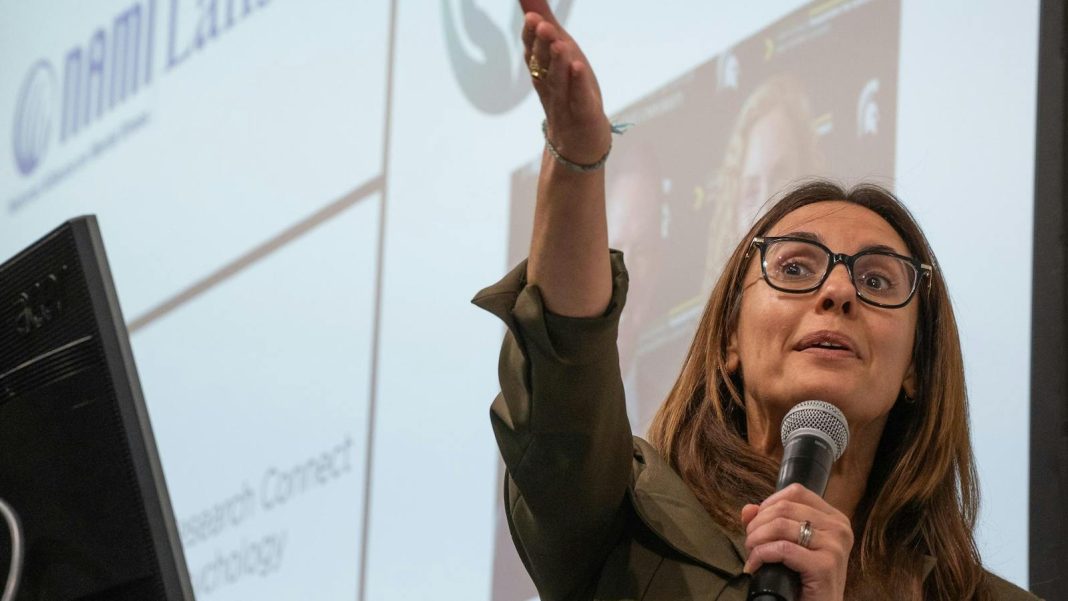
“And I thought, in that moment I was of course a little defensive, but I thought about what he said for a long time after, and I realized … he’s right,” said Insel at the MSU Mental Health Research Connect panel on Wednesday. “Why is it with so much progress in science … we’ve made so little progress in clinical psychiatry, and why do we find ourselves essentially in a mental health crisis?”
In his most recent work, Insel focuses on what it takes to support meaningful recovery for people with mental illnesses, including what he deems “simple solutions”: people, place and purpose in his book “Healing: Our Path from Mental Illness to Mental Health.”
“Mental health research has enormous value, but only when we’re asking the right questions,” assistant professor of psychology Katy Thakkar said. “Every person in this room requires the knowledge and lived experience as well as the people who are implementing the research.”
Thakkar said the goal of MSU Mental Health Research Connect is to forge and strengthen relationships between academic researchers and community members, improve mental health and support the people most directly impacted by it to “increase the relevance of research, the impact of it and the reach.”
In 2026, the behavioral health crisis is comprised of youth mental health, serious mental illness and substance use disorder. The crises are different, with the youth mental health crisis being new and global, Insel said. The youth mental health crisis is composed mostly of young women, with a 52% increase in suicide and LGBTQ+ members being 5.5 times more likely to attempt suicide, with non-binary people being affected the most.
At MSU, Counseling and Psychological Services will soon offer individuals one-on-one therapy with students through peer-to-peer counseling.
“It’s going to be a little bit more different ’cause we’re not licensed therapists, but we are here to support students if they want to talk about anything,” said Sruthi Mahon, a CAPS student mental health ambassador.
Internalizing disorders increased more than externalizing disorders for youth during 2020-23, driven by social media, sleep loss, grind culture and limited opportunities.
Between 2023-25, fewer students reported poor mental health, seriously considered suicide and planned or attempted suicide, according to a Centers for Disease Control and Prevention report.
Serious mental illness is a different story because it’s not new, Insel said. The crisis is that there’s been a big decrease in care.
“So, we’re seeing more incarceration, more mortality from treatable illnesses like cardiovascular disease and diabetes, and we’re seeing this huge impact on homelessness,” he said.
The advent of fentanyl is a massive contribution to the substance use disorder crisis, Insel said, adding that it’s getting resolved, but there are new synthetic opiates on the market more powerful than fentanyl.
Ten times more people with serious mental illness, including young people, end up in the criminal justice system rather than the healthcare system, which Insel described as part of a capacity problem; they end up in jails and often in prisons.
“We see a lot of suicide attempts,” said Lois Pullano, executive director and founder of Citizens for Prison Reform. “We see medical issues not being addressed.”
Person-centered online care, investment and training-coordinated care are solutions to counteract these issues.
Support student media!
Please consider donating to The State News and help fund the future of journalism.
The digital mental health landscape is improving engagement with chatbots and AI, which Insel said have become addictive and are a “massive problem.” The services are convenient and mobile, speak multiple languages, are available 24/7 and give people access to care in ways “we haven’t seen before,” but they lack in quality.
“What I’m arguing for is the kind of learning engine that could get built through digital services working with human providers in a way that allows us to look at outcomes, that allows us to provide a series of different kinds of interventions and then figure out what works best for whom in a way that right now we still don’t know,” Insel said. “I worry enormously about AI chatbots from the foundation models, from ChatGPT or Claude because they are not trained to be mental health providers. They’re trained to tell people what they want to hear.”
Despite this, Insel said AI will transform mental healthcare by improving diagnosis, taking notes and observing patient behaviors more efficiently, although it still must be governed.
Discussion
Share and discuss “MSU Mental Health Research Connect hosts panel discussing mental health care” on social media.