Original Coverage & Source Attribution: electronics.economictimes.indiatimes.com
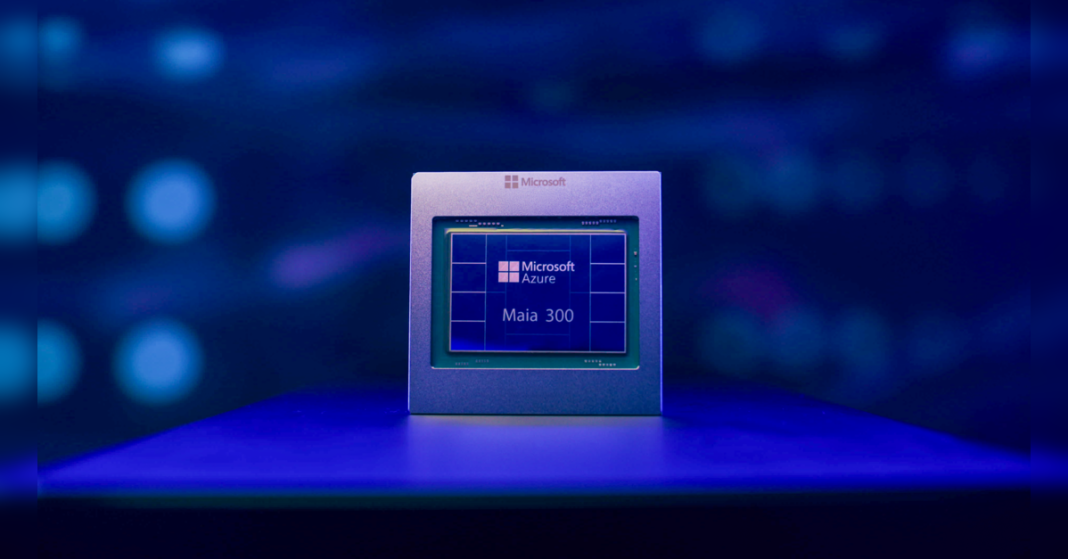
NEW DELHI: Microsoft will scale its Azure Maia family to multi-gigawatt deployments beginning in 2027, making Maia its primary inference system for Microsoft products and services, the American AI company said on Monday. The multigenerational Azure Maia programme is a foundational element of Microsoft’s AI infrastructure strategy. Maia 200 is currently serving Microsoft production workloads, including Microsoft Copilot, and supports the MAI team in developing next-generation models. GitHub Copilot and Microsoft Foundry are expected to follow by the end of the year.Maia 200 runs OpenAI models, Microsoft’s own MAI models and leading open-source model families. Insights from the scale of Microsoft’s AI services enable co-design between hardware systems and software applications. This optimises real-world use cases across enterprise applications and industry scenarios.Maia 300 is a complete intelligent system designed for new types of AI workloads. These include long-context reasoning, latency-sensitive conversational experiences and sustained, multi-step agentic tasks. Microsoft expects Maia 300 to deliver 40 per cent more tokens per megawatt compared to leading GPU-based systems. This is achieved by improving efficiency across the system.A full 96-accelerator configuration of Maia 300 delivers up to 7x the rack-scale token throughput of Maia 200. Maia 200 is deploying across the United States, Europe and Australia. It delivers up to 1.7x more tokens per watt for built-in AI capabilities in Microsoft Teams, Copilot and Cowork experiences compared with leading GPU infrastructure.Maia 300 is designed with an inference-first architecture optimised for long-context, memory-intensive and decode-heavy AI workloads. This balances compute, memory bandwidth, networking and power efficiency at cloud scale. Key capabilities include less data movement for more useful compute, higher memory bandwidth, and a chiplet architecture. Compute chiplets are built on TSMC’s N2P process node. Maia 300 will begin production deployments in 2027.