Original Coverage & Source Attribution: www.arabnews.com
CAIRO: Egyptian President Abdel Fattah El-Sisi said private sector investment increased by 25.9 percent in the first quarter of the 2025-26 fiscal year, taking its share to 66 percent of total investment.
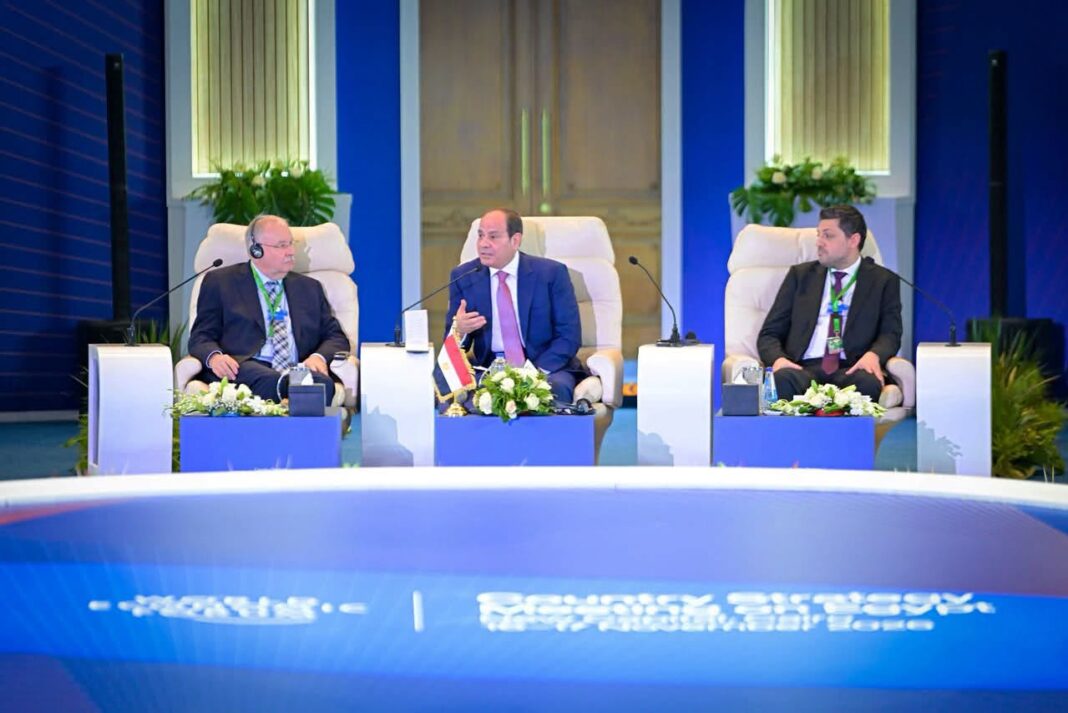
He was speaking on Tuesday during a high-level strategic dialogue on the second day of the World Economic Forum’s Country Strategy Meeting in Cairo.
The session was attended by representatives from about 80 global corporations and financial institutions.
El-Sisi said that international confidence in Egypt reflected the positive role played by the state and the progress made in developing the country’s economy.
Egypt had pursued development across all sectors during the past 12 years while simultaneously confronting terrorism in the Sinai Peninsula, he said.
The economy had seen growth of 5.1 percent but the government was aiming for more and would continue to implement measures to expand the role of private enterprise, he said.
Under an infrastructure development program Egypt’s electricity generating capacity had increased to 64 gigawatts and its main road network had grown to more than 30,000 km to connect seaports, which had also been expanded and upgraded to accommodate larger vessels, he said.
The government allocated about 1 trillion Egyptian pounds ($18.6 billion) a year to infrastructure projects, including seaports, logistics centers, airports and storage facilities for strategic commodities and fuel, he said.
El-Sisi said that regional tensions involving Iran and developments in the Strait of Hormuz had affected the outlook for logistics zones.
He also reviewed legislative changes intended to encourage investment, including measures to facilitate the repatriation of profits and settle arrears owed to foreign oil companies operating in Egypt.
All outstanding payments to foreign partners in the oil and gas sectors were settled by June 30, 2026, he said.
Despite Egypt losing about $20 billion in Suez Canal revenue in recent years, vessel traffic was beginning to recover, El-Sisi said.
He described Egypt as an attractive investment destination because of its strategic location, business environment and political and economic stability.
Recent regional crises have reaffirmed the Suez Canal’s position as an indispensable artery of international trade.
Diversifying transport routes did not mean that an equivalent alternative to the canal existed, the president said. The crises had also highlighted Egypt’s strategic importance in providing additional maritime and land connections for global trade.
The president also discussed cooperation with Cyprus to transport natural gas from Cypriot fields to liquefaction plants in Idku and Damietta for re-export to Europe. The arrangement is expected to become operational by 2028.
Before the session El-Sisi met WEF Managing Director Alois Zwinggi.
Zwinggi praised cooperation between the Egyptian government and the forum and expressed appreciation for El-Sisi’s participation in WEF sessions in Davos in January.
The decision to hold the Country Strategy Meeting in Cairo reflected Egypt’s regional and international standing, as well as the strength of its relationship with the forum, he said.
He also called for closer coordination with Egypt on regional and international economic developments and for greater cooperation in support of the UN Sustainable Development Goals, technology and innovation.
Zwinggi praised Egypt’s economic and financial reforms, saying that the country possessed the foundations needed to sustain growth.
El-Sisi also met European Bank for Reconstruction and Development President Odile Renaud-Basso, who described Egypt as one of the bank’s most important countries of operation in the region.
She praised the government’s economic and structural reforms and affirmed the EBRD’s readiness to support Egypt’s efforts to drive growth and sustainable development.
Renaud-Basso said that the bank wanted to increase its investments in priority sectors, help turn Egypt’s economic potential into sustainable projects and support job creation.
Dr. Yomn El-Hamaky, a professor of economics at Ain Shams University, told Arab News that Egypt’s selection to host the WEF meeting reflected its growing international importance and strategic position amid regional and global geopolitical tensions.
A strong Egyptian economy was essential to stability in the Middle East, she said, adding that strengthening the economy was not merely a development objective but a regional necessity.
Although Egypt had recorded positive economic growth, the next phase required higher rates and a greater contribution from industry, one of the principal drivers of sustainable expansion, El-Hamaky said.
She called for greater focus on industries in which Egypt held comparative and competitive advantages, including textiles and ready-made garments.
Egypt should also develop its electronics industry, increase the use of locally produced components and strengthen domestic supply chains, she said.
The renewable energy sector offered opportunities to expand local manufacturing, develop production supply chains, increase domestic value and improve the competitiveness of Egyptian industry, El-Hamaky said.
She also emphasized the importance of attracting international companies and using their expertise to transfer technology and modernize production methods.
Such cooperation would help Egyptian companies improve their technological and manufacturing capabilities and integrate more effectively into global value chains, she said.
Separately, Egypt’s Foreign Minister Badr Abdelatty and Minister of Industry and Transport Kamel El-Wazir signed a memorandum of understanding with Renaud-Basso to launch a platform for promoting and managing investment in the industrial sector’s green transition.
According to a statement, the platform will seek to accelerate reductions in carbon emissions, expand the use of renewable energy and clean technologies, and improve energy efficiency.
It is also intended to strengthen the competitiveness of Egyptian industry and improve access to foreign markets as new environmental and trade requirements take effect.