


Original Coverage & Source Attribution: www.tovima.com
For Dora Bakoyannis, Greece’s decision to block the accession of the then Former Yugoslav Republic of Macedonia (FYROM) to NATO was the defining moment of her tenure as foreign minister from 2006 to 2009 and, in effect, the most significant foreign policy achievement of the Karamanlis government.
It was therefore perhaps inevitable that she would devote an extensive chapter of her autobiography to the events leading up to the crucial NATO summit in Bucharest in April 2008. At that meeting, the United States, in particular, was forced to accept Greece’s objections, following Athens’ threat to veto the neighboring country’s accession unless the dispute over its name was resolved.
The road to Bucharest, however, was marked by intense diplomatic maneuvering and behind-the-scenes pressure, much of which Bakoyannis recounts in her autobiography. An extensive extract from the chapter is being published exclusively by Ta Nea Weekend.
NEWSLETTER TABLE TALK
Never miss a story.
Subscribe now.
The most important news & topics every week in your inbox.
The pressure Greece faced
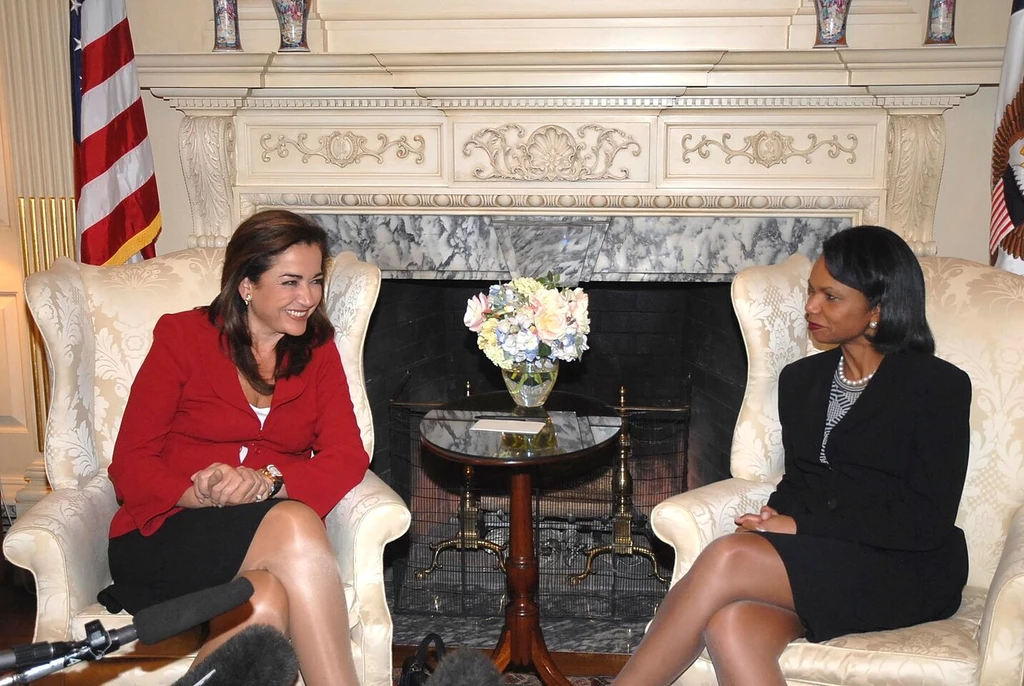
Two conversations involving Bakoyannis — a private meeting with then Prime Minister Kostas Karamanlis and a telephone call with then US Secretary of State Condoleezza Rice — reveal the pressure facing Greek diplomacy in the run-up to Bucharest.
Bakoyannis recalls that, during the six months in which the government was preparing for a possible confrontation with its NATO allies, she was convinced that Greece was being closely scrutinized by foreign governments, including the United States, Britain and Israel. She therefore considered it essential to establish whether the prime minister could be subjected to pressure over any personal matter before committing the country to a firm position.
She describes going to the prime minister’s Maximos Mansion office to have what she considered an entirely frank discussion with Karamanlis.
“Do you realize that we are being watched? I am certain of it. Is there anything, anything at all, they could use to blackmail you with? Because, if there is, I have to act differently. There is nothing they can blackmail me with,” she told him.
“Do you mean even something personal? No, absolutely nothing,” Karamanlis replied.
“Then let’s go,” she told him.
Bakoyannis says the exchange gave her the assurance she needed to proceed with the strategy, which she describes as the greatest foreign policy confrontation undertaken by a Greek government since the restoration of democracy in 1974.
A few days later, she received a telephone call from Rice. The US secretary of state was demanding that Greece accept the neighboring country’s accession to NATO under the provisional name FYROM. The exchange, as Bakoyannis relates in her book, made clear the depth of the disagreement between Athens and Washington.
“You will accept Macedonia’s entry into NATO under the name FYROM,” Rice demanded.
“No way. Over my dead body. When I tell you something, you have to believe it,” Bakoyannis replied.
She emphasizes that these were her exact words.
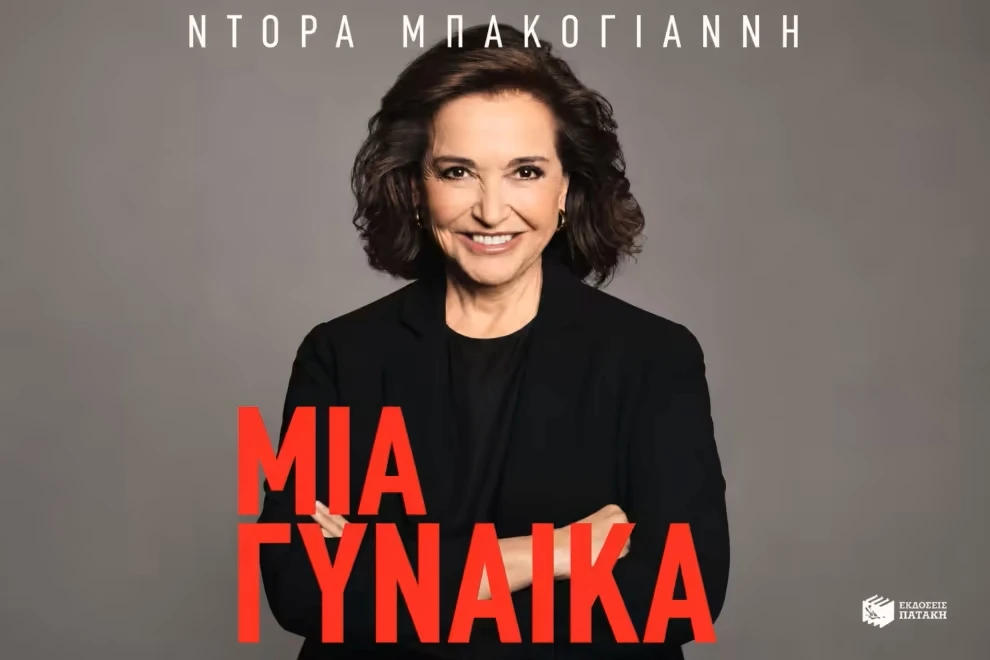
The autobiography’s presentation on Dec. 10
Bakoyannis’ autobiography, A Woman, written with the assistance of journalist Makis Provatas and published by Patakis Publishers, is scheduled to be presented at a central event on Dec. 10, which is expected to become a significant political occasion in its own right. The book is due to appear in bookstores two days later.
In a message to readers, Bakoyannis describes the decision to write her autobiography as a difficult process of revisiting the experiences that shaped her personal and political life.
“There are moments in life when you are called upon to stand before the mirror of your memory. To look directly at the joys, the battles and the silences that shaped you. The decision to write an autobiography was not easy. I had to return to doors that closed with a bang and others that opened wide. To walk along roads that once frightened me and paths that brought me liberation. These pages are not an account of achievements. They are a narrative of journeys that never end. As clear a view as possible of a past that taught me not to fear the future. It is my truth, as I experienced it, as it shaped me and as I present it today, with respect for people,” she writes.
The book’s back-cover text places particular emphasis on the challenges women face in politics.
“The participation of women in politics has been and remains a major challenge. That is why, above all, I became convinced that this book was worth writing. Not to justify choices, but to explain them. Not to embellish, but to honestly recount what I experienced. The conflicts, the dilemmas, the turning points, the moments that changed the course of the country and my own. If you are reading these lines, I invite you to look beyond the public figure, beyond the title, beyond the name. To see the person who fought, bent, stood up again and moved forward. This, above all, is my story. The story of a woman in the arena of politics in Greece.”
The road to Bucharest
Bakoyannis writes that Greece’s constructive and friendly approach toward its northern neighbor in previous years had encouraged what she regarded as increasingly provocative behavior by the neighboring country.
By early 2007, she had concluded that Athens needed to adopt a decisive change of course. Greece communicated to all sides that its reserves of patience and goodwill were running out, setting the date of FYROM’s prospective NATO accession as the ultimate deadline.
The diplomatic stalemate had produced no results, she argues, making more active Greek intervention necessary. She was convinced that, at the forthcoming UN General Assembly in the autumn of 2007, the leadership in Skopje would once again aggressively promote the country’s constitutional name, stand-alone “Macedonia.”
In response, she considered it essential for Athens to send clear and decisive messages to all interested parties. Bakoyannis proposed to Karamanlis that Greece insist on resolving the name dispute before any question of NATO membership was considered.
The strategy, she explains, had two objectives: to pressure the neighboring country into accepting a mutually agreed solution and to demonstrate that Greece had both the confidence and the determination to defend its national interests in practice.
Bakoyannis believed that FYROM’s further Euro-Atlantic integration depended entirely on progress in resolving the name dispute and could be suspended indefinitely until a compromise was reached.
Setting clear conditions for the country’s accession to NATO was therefore not simply a political option, but a necessity. She anticipated objections from Greece’s allies and recognized that responding to them would require preparation, restraint and diplomatic precision.
Another point on which she says she was unequivocal was that the dispute should remain outside domestic political confrontation. Turning the issue into an electoral weapon would divide public opinion and political parties and undermine Greece’s national strategy. The fact that Greece was approaching a general election in the summer of 2007 made this consideration even more important.
Assessing the risks, conditions for implementing strategy
Bakoyannis identifies two principal risks arising from a tougher Greek position.
The first was the possibility that certain allies, particularly the United States, might change their positions on other issues important to Greece, including the Cyprus question and Greek-Turkish relations.
However, she argues that a sober assessment of the situation suggested that this was not a serious threat. Several allies had historically maintained positions at odds with those of Greece, regardless of Athens’ policy toward Skopje. The potential consequences were real, she acknowledges, but not sufficiently dangerous to justify abandoning the Greek position.
On the contrary, she believed that consistency between Greece’s words and actions would strengthen the country’s international standing as a responsible and determined state.
The second possible risk was Greece’s diplomatic isolation within NATO if no member state supported its concerns. The Alliance had already made clear in 2006 that it intended to continue enlarging, explicitly rejecting the notion of “enlargement fatigue.”
Bakoyannis nevertheless considered the possibility of Greece being isolated extremely limited.
In July 2007, the change of policy she had proposed to Karamanlis was finalized. She convened a small meeting with close advisers at the Foreign Ministry and informed them that, ahead of the NATO summit scheduled for April 2008, the government would negotiate with FYROM on the basis of a compound name incorporating a geographical qualifier and applying erga omnes — meaning that it would be used universally, both internationally and domestically.
The change reflected a fundamental assessment: if Greece allowed its neighbor to join NATO, and subsequently the European Union, under the provisional name FYROM, it would permanently lose its negotiating leverage over the country’s name.
The experience of the 1995 Interim Accord had already provided an important lesson. Under that agreement, Greece could not object to its neighbor joining international organizations under its provisional designation. It could object only if the country attempted to join an organization under a different name, as stipulated in Article 11, paragraph 1.
Since then, FYROM had joined several international organizations under its provisional name. In the case of the Organization for Security and Co-operation in Europe (OSCE), Greece had even supported its admission.
However, Bakoyannis says that once the country became a member of an international organization, most other members effectively stopped respecting the provisional designation. Representatives of Skopje increasingly referred to their country as the “Republic of Macedonia.”
This experience became a central argument in Greece’s diplomatic campaign before Bucharest, particularly in discussions with the United States. Athens argued that there was little likelihood that Skopje would comply with the name agreement once it became a NATO member. It would also be difficult to persuade other allies to continue using the provisional name, given that some were already referring to the country as “Macedonia” in informal discussions.
NATO membership was especially important in this regard. Unlike membership of an ordinary international organization, accession to a military alliance operating under the US nuclear umbrella would, in practice, amount to acceptance of the name “Macedonia” as a standalone designation.
At the July 2007 meeting, Bakoyannis and her advisers established the negotiating line that the Foreign Ministry would follow in the months before the summit.
Her special adviser, Amb. George Savvaidis, set out two essential conditions: national consensus and consistency, with no change in Greece’s position along the way to Bucharest. He had witnessed previous cases in which foreign ministers changed their positions under pressure from public opinion or shifting international circumstances.
Bakoyannis says she assured him firmly that the agreed policy would be implemented.
The Greek position was summarized in the slogan: “First a solution to the name dispute, then NATO membership.”
She says she first presented the government’s position publicly and officially during the policy statements of Karamanlis’ second government, in a section devoted to the western Balkans.
She then set out to build domestic political consensus. Before appearing before Parliament’s Committee on National Defense and Foreign Affairs, she informed Karamanlis that she intended to present the Greek position openly.
She expected a strong attack but had prepared documentation from previous negotiations, including those conducted by one-time foreign ministers Theodoros Pangalos and George Papandreou.
The committee ultimately reached an interparty agreement in support of a name solution that would apply erga omnes.
Pangalos, according to Bakoyannis, stood up and said: “This is the truth. This is what I was saying, too. And it is imperative that we now say it openly.”
She considers this agreement a crucial element in Greece’s preparations for Bucharest. The government arrived at the summit with almost universal domestic support and a clearly communicated position internationally.
The wider diplomatic confrontation in Bucharest
Three countries were candidates for NATO membership at the Bucharest summit: Albania, Croatia and FYROM. All had completed the preparatory stages required for accession.
However, the summit’s agenda was also dominated by the United States’ strong desire to advance the Euro-Atlantic integration of Ukraine and Georgia.
Bakoyannis argues that understanding Greece’s achievement in Bucharest requires an appreciation of what was at stake.
Unlike the European Union accession process, NATO membership involved a considerably shorter and simpler procedure. There were no lengthy bureaucratic stages, 35 chapters of the EU acquis communautaire or intermediate arrangements such as observer status.
NATO first issued an invitation to begin accession talks, followed by the ratification of accession protocols. The process usually took less than a year before full membership.
In the case of FYROM, all the preparatory stages had already been completed. The only remaining step was agreement on the final invitation.
For Greece, the critical objective was to avoid diplomatic isolation and a confrontation in which it would find itself “one against all.”
Bakoyannis attributes the outcome to the careful preparations of the preceding months and to the wider international circumstances. In her assessment, foreign policy ultimately depends on both preparation and timing.
The United States was pressing for progress on Ukraine and Georgia, while several European countries, led by Germany and France, opposed granting them a NATO Membership Action Plan (MAP) at that stage.
Bakoyannis recalls a particularly tense exchange during a meeting of foreign ministers in Bucharest. Diplomats accompanying the ministers were asked to leave the room to allow a more direct and frank discussion.
Once the door had closed, then German Foreign Minister Frank-Walter Steinmeier stood up and asked Rice not to insist on advancing Ukraine’s and Georgia’s NATO aspirations, warning that doing so could provoke Russia and destabilize regional balances.
Rice stood up and responded that when the United States had supported West Germany’s accession to NATO in 1955, the country was still under occupation, yet Washington had not allowed the Soviet Union’s reaction to determine its decision.
Steinmeier, Bakoyannis recalls, turned red and left the room.
She believes the confrontation over Ukraine and Georgia worked decisively in Greece’s favor. The major powers expended much of their political energy on that issue and did not focus as intensely as Athens had feared on FYROM’s accession.
By taking advantage of the circumstances and negotiating carefully, Greece managed not only to avoid exercising its veto but also to secure a unanimous decision that reflected its position, including the agreement of the United States and Turkey.
Bakoyannis says she personally drafted the text of the decision, which denied FYROM an invitation until a mutually acceptable solution to the name dispute had been reached. She adds that the wording was repeated at the following five NATO summits without a single change.
She was convinced from the outset that the Bucharest summit would become a landmark in Greek foreign policy.
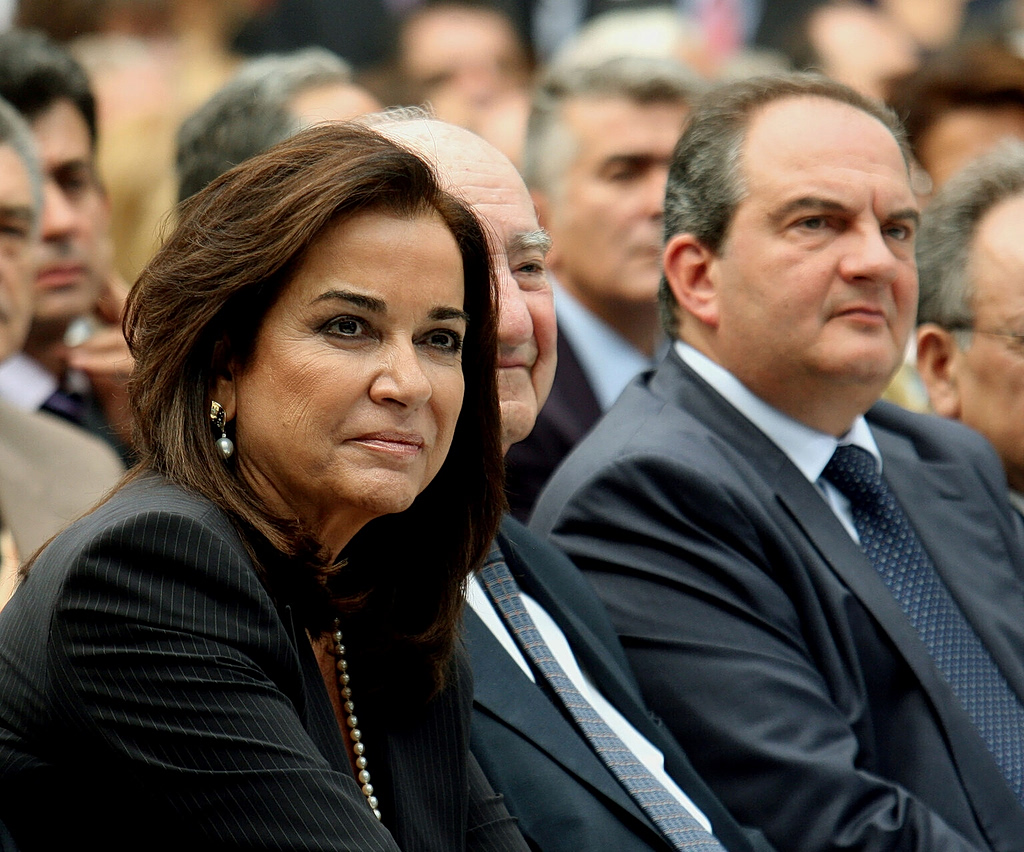
Bakoyannis with then Greek PM Costas Karamanlis.
The warning from the NATO Secretary General
As the summit approached, pressure on Athens intensified.
On March 3, 2008, NATO Secretary General Jaap de Hoop Scheffer visited Athens shortly before an informal meeting of NATO foreign ministers in Brussels.
Bakoyannis recalls that he warned her:
“You know, in NATO’s 50-year history, no one has ever cast a veto.”
She replied:
“I know. But Greece cannot accept FYROM joining NATO under its constitutional name. So, if necessary, I will exercise a veto.”
A few years later, the release of the WikiLeaks diplomatic cables, she says, confirmed the positions Greece had taken before Bucharest.
One cable dated March 4, 2008, recorded her position on the name dispute. According to the document, Bakoyannis had reiterated that Greece could not accept a name that “describes the type of democracy the country has,” rejecting the terms “constitutional” and “independent.”
The name, she argued, could not “monopolize Macedonia.” It had to indicate that the neighboring country was “part of Macedonia,” but not “Bulgarian or Greek Macedonia.”
The cable also recorded that Greece could accept the terms “Upper” or “New” and that Athens needed “a clear solution that is erga omnes and final.”
It further quoted her as saying that Greece had “gone as far as it could,” adding: “Our government will not fall because of this issue. Once was enough.”
The last remark referred to the fall of the government of Konstantinos Mitsotakis in 1993, when Antonis Samaras resigned as foreign minister amid disagreements over the handling of the name dispute.
Bakoyannis says the release of more than 790 diplomatic cables, covering 1,185 pages and largely drawn from confidential correspondence between the US embassy in Athens and the State Department, helped clarify her role as foreign minister.
In particular, she believes the documents helped dismantle two political narratives: that she had been a “mouthpiece for the United States” and that the subsequent negotiations conducted by the governments of Alexis Tsipras and Nikos Kotzias had succeeded where Karamanlis and Bakoyannis had failed.
The March 6 NATO foreign ministers’ meeting
On March 6, 2008, Bakoyannis travelled to Brussels for an informal meeting of NATO foreign ministers, a preparatory gathering ahead of the Bucharest summit.
She told her counterparts unequivocally that FYROM’s conduct toward Athens, together with what she described as the intransigence and irredentism of its leadership, made it impossible for Greece to support its accession.
She stressed that the Greek position was not a negotiating tactic but the result of a lengthy process during which, in her assessment, Skopje had demonstrated no willingness to reach a mutually acceptable agreement.
In mid-March, she also met then FYROM Prime Minister Nikola Gruevski on the sidelines of a European People’s Party gathering.
Bakoyannis describes the encounter as one of the most unpleasant meetings she has ever had. Her frustration was not simply that Gruevski continued to defend his country’s position, which she had expected, but that he spent the entire conversation looking down at his shoes.
She says he never once raised his eyes to meet hers, making any meaningful exchange impossible. She describes the meeting as a complete failure.
On March 17, negotiators met UN mediator Matthew Nimetz in Vienna. Nimetz focused on the possibility of reaching an agreement before the NATO summit and presented a series of possible names.
Some of the proposals, Bakoyannis says, met Greece’s basic requirements: they were compound names incorporating geographical and political qualifiers, clearly distinguishing the neighboring country from the Greek region of Macedonia and providing for universal use, or erga omnes.
FYROM rejected the proposals, arguing that they had already been considered and rejected during the previous 15 years, either by Greece or by Skopje itself.
Rice’s phone call and the final approach to Bucharest
Bakoyannis’ diplomatic contacts with her counterparts in NATO member states continued without interruption ahead of the summit, scheduled for April 2-4, 2008.
In full coordination with Karamanlis, she visited the capitals of allied countries to present Greece’s arguments in detail. At the time, she says, she spent at least 20 days out of every 30 outside Greece.
As the summit approached, she was increasingly satisfied that the Greek position was becoming understood and accepted by most of the allies.
Nevertheless, the pressure remained intense and at times overwhelming. The strongest opposition to Greece’s position came from Rice.
On March 29, 2008, just days before the summit, Bakoyannis was in Ljubljana for a meeting of EU foreign ministers. Shortly after arriving, she met Steinmeier, who warned her that Rice would call and that she should prepare herself because the US Secretary of State was furious.
Germany was particularly cautious at the time, Bakoyannis says, not so much because of the dispute between Greece and FYROM as because Berlin feared that reopening the issue of NATO enlargement would also bring Ukraine’s membership aspirations to the fore.
A short while later, Bakoyannis received a call from the US State Department informing her that Rice wanted to speak with her in half an hour.
Recognizing the importance of the conversation, she immediately contacted Amb. Savvaidis, her close adviser on NATO and other foreign policy matters. She also called another two diplomats, Halastanis and Koumoutsakos, asking them to attend and take notes because no official minutes would be kept.
The conversation that followed, she says, became one of the most intense and memorable negotiations of her career — and one that Rice herself later described in her memoirs.
Exactly 30 minutes later, the telephone rang. Rice did not even begin with a greeting.
“Dora, there is a serious problem ahead of the April Summit”.
She then made clear that an urgent formula had to be found to prevent Greece from blocking FYROM’s accession. NATO enlargement, she stressed, was a priority for both US foreign and defense policy and for President George W. Bush personally.
“You will accept Macedonia’s entry into NATO under the name FYROM” — she said it forcefully, Bakoyannis writes.
“No way. Over my dead body. When I tell you something, you have to believe it,” came the Greek foreign minister’s reply.
Bakoyannis reminded Rice that she had been among the first to identify the problem and had raised it during previous meetings. She emphasized that the name dispute was not merely a bilateral issue for Greece but one of the country’s highest national interests.
She argued that allowing FYROM to join NATO under its provisional name would not strengthen stability in the fragile Balkans but undermine it.
“What do you mean? The President will be very upset”.
“It won’t be the first or the last time the President will be very upset”.
“Dora, we have to solve it”.
Bakoyannis says she repeatedly reminded Rice of what she regarded as the neighboring country’s unprecedented and continuing provocations and insisted that Greece could not abandon its fundamental position.
During the conversation, Rice repeatedly asked whether Greece really felt threatened by such a small country.
Bakoyannis responded that a country’s size could not be the criterion in matters of international security.
First, she said, maintaining good relations between neighboring countries was a fundamental principle, particularly within a defense alliance such as NATO.
Second, she argued, no one could predict how regional balances might change in the future or whether third countries unfriendly toward Greece might choose to support FYROM’s expansionist ambitions.
She also pointed to what she described as systematic violations of the 1995 Interim Accord, arguing that Skopje’s conduct offered little reason to believe it would respect its commitments after joining NATO. Membership would inevitably give the country greater international standing and stronger negotiating leverage.
Rice again proposed that FYROM be admitted under its provisional designation, as provided for in the 1995 agreement.
Bakoyannis rejected the proposal, arguing that no party had the right to invoke the agreement selectively, particularly one that, in her view, had repeatedly violated it.
“Condoleezza, the only realistic prospect is to postpone sending an invitation to Skopje and consider its accession only after a mutually acceptable solution has been reached.”
There was a brief silence on the other end of the line.
“Condoleezza … in political life, there are moments when everyone is called upon to assume responsibility for serious issues. In this case, I fully accept responsibility for explaining Greece’s position to our allies and defending the fundamental conditions our country has set.”
At the end of the conversation, Rice raised her voice and warned her:
“Greece is in jeopardy of being totally isolated in Bucharest”.
Bakoyannis replied in the same tone:
“Greece is not alone”.
She says she was angered by both Rice’s manner and what she regarded as an attempt to intimidate her. Although she believed that her position as foreign minister required restraint, she decided to respond directly.
“I will tell you something, Condoleezza. There is a big difference between you and me. You are appointed, and I am elected. You have to answer to your President, and I have to answer to my people. And this is a big difference, which you probably don’t realize”.
Rice became furious and, according to Bakoyannis, effectively hung up on her.
In her memoirs, Rice later described the exchange as the worst behavior she had ever experienced from another person, particularly from a fellow foreign minister.
Bakoyannis acknowledges that her own tone may have been unnecessarily confrontational at that stage. She had already said no and Rice had understood that she meant it. The US secretary of state, however, did not believe that Greece and Karamanlis would carry their position through to the end.
The final battle in Bucharest
The decisive meeting of NATO foreign ministers, which traditionally precedes the gathering of heads of state and government, was scheduled to begin shortly after 7 a.m.
Bakoyannis says she had prepared for an exceptionally difficult negotiating battle. She wore a red jacket, which she traditionally chose for occasions involving political confrontation, and a pendant depicting Alexander the Great.
She expected Rice to speak first and press for invitations to be extended to the candidate countries.
Karamanlis, she adds, was under additional pressure because former foreign minister Petros Molyviatis strongly disagreed with the prospect of a confrontation with the United States. Bakoyannis herself did not face the same pressure, as former prime minister Konstantinos Mitsotakis fully supported her position.
“He told me: ‘We have nothing else left. We have to play this card.’ And I was determined to play it, for Greece.”
She emphasizes that all her interventions throughout the process were conducted in full coordination with the prime minister.
At exactly 7 a.m., Savvaidis entered her room. He reminded her that, during NATO’s 50-year history, no country had ever exercised a veto.
“Madam Minister, you understand that in NATO’s 50 years, no one has ever cast a veto.”
“Mr. Ambassador, we will not cast a veto because we have six countries with us. But if all six abandon us, yes, we will cast a veto. My question is: Are you with me on this?”
“To the end.”
“All right. That is what I wanted to know.”
Bakoyannis then left for the meeting, expecting to come under immediate pressure.
To her surprise, Rice did not speak first.
The opening intervention came from Slovenian Foreign Minister Dimitrij Rupel, representing the country that then held the rotating presidency of the European Union. Bakoyannis says the Slovenian presidency had already demonstrated a clearly negative, and often hostile, attitude toward the Greek position.
Rupel began by saying: “We have to discuss the issue of Macedonia.”
Rice immediately intervened.
“It’s closed.”
“What do you mean it’s closed?” Rupel asked.
“It’s closed. We will not discuss the issue of Macedonia. IT IS CLOSED”.
The intervention caused general astonishment. Bakoyannis says she remained silent and simply watched what was unfolding.
A few minutes later, some of the ministers left the room briefly. Rice approached her.
“You won”.
“No. I have not won.”
“What do you mean?”
“I will have won when they join NATO under a compound name that applies erga omnes. Then I will have won.”
The foreign ministers subsequently left for the room where the NATO summit was to begin.
French President Nicolas Sarkozy spoke first, delivering what Bakoyannis describes as an impassioned speech in support of Greece’s position. He argued that a solution had to be found and referred to his own Greek roots.
Bakoyannis says she had a personal friendship with Sarkozy and had also helped him in internal party matters. She adds that he was not among the politicians who automatically agreed with Washington.
Karamanlis spoke next, presenting Greece’s arguments and demonstrating the government’s determination.
Almost all the other leaders then took the floor. Important NATO members supported Athens, particularly France and Spain. Italy, Portugal, Luxembourg, Iceland, Belgium, Hungary, Slovakia and the Netherlands also responded positively, according to Bakoyannis.
The discussion remained divided, with some countries supporting FYROM’s accession and others opposing it.
Toward the end of the meeting, an American Marine approached Bakoyannis and quietly conveyed a request from Rice.
“Mrs. Bakoyannis, Mrs. Rice very much requests that you write the decision of the NATO Council on the issue of Macedonia.”
Bakoyannis says she drafted the text and handed it to Karamanlis, who was sitting beside her.
“Kosta, do you agree?”
“I agree. But are you serious? Will it pass like this?”
“It will pass like this.”
She recalls that he looked at her as if he thought she was crazy.
She then handed the paper to the Marine, who took it to Rice. The US secretary of state read it and nodded in approval.
The decision was adopted in exactly the form Bakoyannis had drafted, she says, and remained in force for 10 years.
The outcome and its significance
Bakoyannis describes the outcome of the Bucharest summit as a landmark not only for relations between Athens and Skopje but also for NATO’s history.
Greece had chosen strategically to use the 2008 summit as an opportunity to resolve the name dispute. Although that objective was not achieved, the country sent a clear message on April 3, 2008: Greece was willing to resolve outstanding issues with its neighbors through negotiations and in good faith, but would not relinquish its national rights.
She identifies two main achievements.
First, NATO did not issue an invitation to FYROM to begin accession talks, even under its provisional name.
Second, and more importantly, the summit conclusions explicitly stated, following a Greek request, that an invitation would be extended only once a mutually acceptable solution to the name dispute had been reached.
The dispute was thereby transformed into a formal condition for the neighboring country’s NATO accession.
Bakoyannis also emphasizes Karamanlis’ role, saying that although the two disagreed on other issues, their positions on foreign policy were fully aligned.
She says the prime minister knew that she had never held discussions with anyone that could have cast doubt on his foreign policy or undermined his authority.
That consistency, she concludes, was essential. When a foreign minister undermines the prime minister, as she says has unfortunately happened in other cases, the country’s national interests inevitably suffer.