


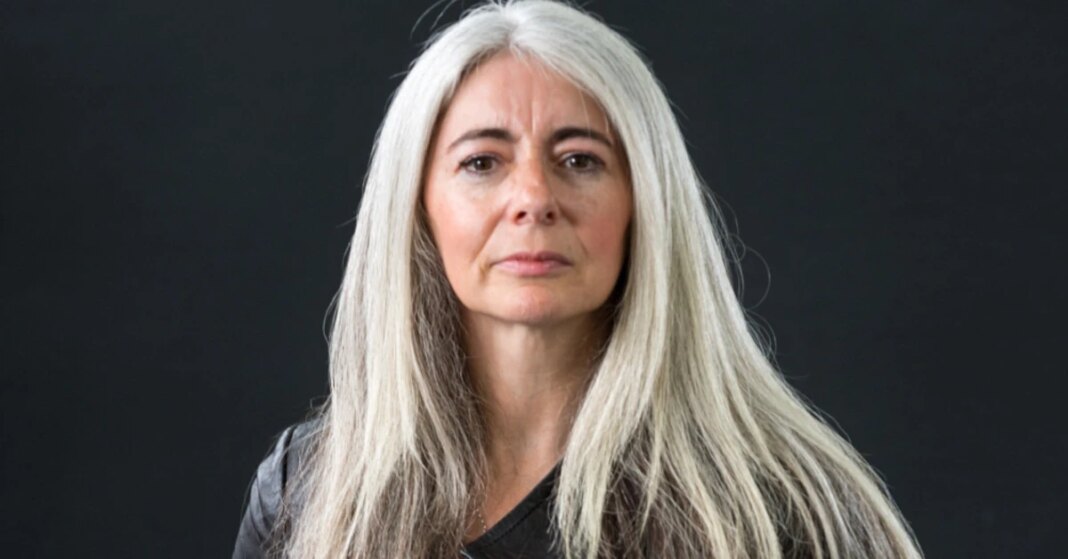
Original Coverage & Source Attribution: www.contactmusic.com
Dame Evelyn Glennie discusses overcoming barriers in the music industry, becoming the world’s first full-time solo percussionist, her unforgettable role in the London 2012 Olympic Opening Ceremony and why curiosity remains her greatest measure of success.
By Ethan Aaron Banks
Saturday, November 28, 2026 2:00 PM
By Ethan Aaron Banks
Saturday, November 28, 2026 2:00 PM
For Dame Evelyn Glennie, music has never been simply about hearing. It is something to be felt, experienced and understood through vibrations that travel through the body. As one of the world’s most celebrated percussionists, she has spent her remarkable career challenging conventional ideas about sound, listening and musical expression. Yet, despite becoming a double Grammy Award winner and receiving a damehood for her services to music, Evelyn, 61, admits that talking about her deafness was initially something she found difficult, particularly when the media seemed more interested in how she could perform than in the music itself.
Evelyn, whose hearing began to deteriorate at the age of eight and who became profoundly deaf by the age of 12, grew up in rural Scotland and discovered her passion for percussion at an early age. However, when she auditioned for the Royal Academy of Music in London at just 16, she was initially rejected because the institution could not see a professional orchestra employing a deaf musician. Speaking exclusively to Contact Music, Evelyn recalled her determined response: “I don’t want to be in an orchestra. I want to be a solo percussionist.” There had never been a full-time solo percussionist before, and even the establishment struggled to imagine how such a career could work. But Evelyn refused to let that stop her, eventually gaining a place at the Academy following a second audition and creating a new path in classical music.
In becoming the world’s first full-time solo percussionist, Evelyn opened doors for generations of musicians who followed, but she is remarkably modest about being described as a trailblazer: “We all have a story to tell.” Rather than seeing herself as someone who has simply changed the landscape for others, she believes in the importance of sharing experiences, listening to one another and moving forward together.
One of the most extraordinary moments of her career came at the opening ceremony of the London 2012 Olympic Games, where she led 1,000 volunteer drummers during And I Will Kiss, the powerful piece of music that served as the backdrop to the dramatic Industrial Revolution sequence, before introducing the world to the Glennie Concert Aluphone during Caliban’s Dream, the magical song accompanying the lighting of Thomas Heatherwick’s breathtaking cauldron. For Evelyn, the lasting impact went far beyond Danny Boyle’s July 27 spectacle, with people discovering a love of drumming, forming community groups and even finding lifelong partners through their involvement.
Now, Evelyn is preparing to bring that same spirit of discovery and togetherness to audiences once again, joining the Fantasia Orchestra for Percussive Power at London’s Smith Square Hall at 7pm on Sunday night (29.11.26). Featuring a musical programme encompassing works by Steve Reich’s Different Trains, Kate Bush’s Wuthering Heights and Evelyn’s own composition, A Little Prayer, the concert celebrates the extraordinary variety of music and the importance of approaching unfamiliar sounds with an open mind.
And while her career has brought international recognition and countless honours, Evelyn reveals that her greatest source of pride has nothing to do with awards. It is something much simpler: “Waking up each morning with that sense of curiosity.”
Contact Music: You must be really excited for the show on Sunday.
Dame Evelyn Glennie: Yes, absolutely. Indeed. The orchestra is wonderful to work with, so I’m really looking forward to it.
You’re joining the Fantasia Orchestra for a programme called Percussive Power. What excites you most about the programme?
Well, I think that it’s fairly varied musically, and it’s almost like a celebration of the ocean of music that we’re all exposed to.
I always find that if you’re thinking about pieces that have been written hundreds of years ago, it’s still a world premiere for somebody. It’s still something that is new or they may not have experienced before.
I think that there are so many different emotions that we’re tapping into with these pieces, sometimes more personal or more about curiosity and that type of thing. So, yes, it’s nicely varied.
Why do you think it’s important to explore different types of musical themes?
Well, I think nowadays we’re exposed to so much, and I think that when people are putting their list of pieces on their phones or whatever they have, they can put Eminem alongside Beethoven’s Ninth. Or they can put Kate Bush alongside Hamza or Berio or whatever it might be. That’s the way that we can all organise whatever it is that takes our fancy.
Dame Evelyn Glennie hopes to leave people with an open mind about music following her show with the Fantasia Orchestra on November 29
I think that’s actually having an impact on how we structure concerts. I also think that the pandemic allowed us to think about spaces more, about the time of day that we perform, about the length of concerts and lengths of pieces, how we structure our programmes and so on.
So I think there’s a sort of openness: well, let’s try this. Let’s be curious towards how we might put a programme together.
With an orchestra like Fantasia, whereby it’s basically a young orchestra, they’re pretty open to experimenting with how programmes can be put together.
You’re bringing together different musical worlds, from Steve Reich’s Different Trains to Kate Bush, alongside your own compositions. How do you approach bringing all these elements together?
I think it’s a collaborative affair. I think there are discussions with Tom, the conductor, and I think also with the musicians of the orchestra, what they’re thinking about, and I really like that, rather than being dictated what to play or what’s expected, or we can’t do this because that might be seen in this way or that way or whatever.
I think it really is about listening, and also listening to the type of venue that we might be playing in, listening to the audience who might be there and so on.
We always know when you give a concert, some things people will like, some things people may not be so sure about or like so much. And so it’s not about that. It’s really about, well, have a little taste of this. See what you think. It’s like going into a restaurant or something.
It may open people’s minds to different genres of music, helping them discover something new that they may not have considered before.
Absolutely, indeed. And I think what I’ve found personally, with my own career, having obviously been reliant on commissions and new pieces of music whereby the audience have never experienced these pieces before, is that you’re very much connecting with the audience and you’re wanting them to grow with the music just as you are, or I am myself.
So that’s really important, and it’s quite refreshing, I have to say.
Does collaborating with an orchestra give you more creative freedom to explore different styles and sounds?
Absolutely. I mean, one example, obviously, in this programme is the Kate Bush piece, Wuthering Heights.
I remember being brought up with Kate Bush, and I was never a big listener of music myself because that’s something I find difficult to do. But Kate was so visual and so individual in how she expressed herself, and that had a huge impact on me, and also how she dealt with the whole business side of her career.
I’ve always just absolutely loved everything that is Kate Bush, and so I was really keen to have something in there in the programme because I remember Tom saying, “Well, who has influenced you as a musician?” And certainly Kate has influenced me as a musician and also in how I’ve dealt with my own career.
Kate’s music means so much to many people. Does getting to play Wuthering Heights, feel particularly emotional for you, especially having grown up on her.
Yes. And what I’ve always loved about Kate is that she’s never been like a meat machine, churning music out all of the time. Great big gaps of time have come in between projects, and I find that very interesting, that sense of patience in a way.
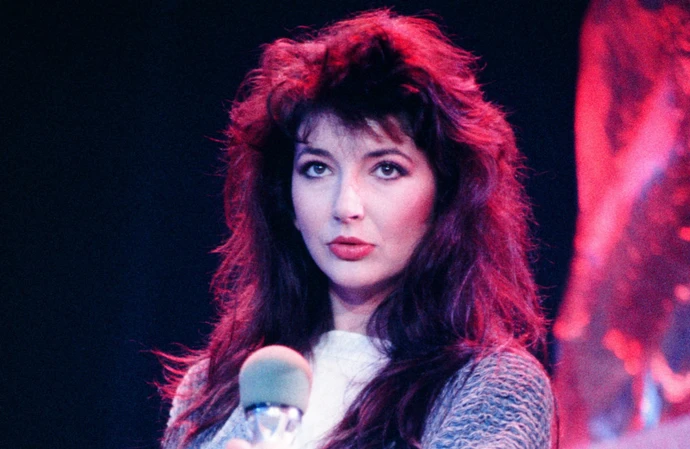
Kate Bush is an important figure in Dame Evelyn Glennie’s life
But obviously, with Wuthering Heights for Sunday, that’s been so beautifully arranged by Harry Baker for the orchestra. I first experienced his arrangements when we did the Late Night Prom earlier this year and was just so in awe of what he does. He’s just created this very beautiful little nugget, in a way, for vibraphone and orchestra.
What would you like the audience to take away from Percussion Power?
Well, I’d ask them to walk through the doors with an open mind and to walk out of the doors with an even more open mind. Really, that’s just it. I just would like them to come and experience what we’re excited about presenting to them. And, hopefully, they will return to more concerts that feature the Fantasia Orchestra or percussion concerts, and just see this as a celebration.
Throughout your career, you’ve encouraged people to think differently about sound and music. You’ve spoken previously about experiencing sound through vibrations. How has your own understanding of listening evolved as music has changed?
I remember as a young musician, I found it very difficult to talk about my deafness because often people would ask two questions. One was, “What do you hear?” and “How do you do it?” And it’s not quite as straightforward as that.
And then when I started giving masterclasses, I was basically asking students to listen, to almost become their own teacher. And then that made me really reflect about listening and hearing.
So hearing is something that can be measured on a graph, and you can see the frequencies that you hear or don’t hear or whatever. But listening is not about what you can hear. Listening is very much about presence and connection, about curiosity and so on.
Sound is vibration. So we do all receive sound physically through the body. But when you become more reliant on that, in my instance, you begin to analyse sound where low sounds are felt in the lower part of your body, higher sounds in the upper part and so on.
And also how you position yourself on stage in order to see the conductor, that’s really important and so on.
All sorts of things have developed over the years, but I think what listening has done is that it’s allowed me to talk about my own deafness much more comfortably, I will say, because I’m more informed about what that actually means in the scheme of listening.
So, yes, I think my listening has changed and it’s changed how I listen to myself as well.
You mentioned feeling less comfortable talking about your deafness. Was that something that you struggled with growing up?
Well, I think yes, but I think it was really once the media attention started to come in.
I went to a wonderful comprehensive school north of Aberdeen, about 15 miles north of Aberdeen, and the school was so incredibly supportive of all kids. They believed that every child has a story to tell, and that’s really important when you feel that ethos running through the school.
Myself and other hearing-impaired kids, we were very well supported with a peripatetic teacher for the deaf who came in once a week. We were kitted out with phonic ears and so on. This was kind of old technology now in the deaf world. But nevertheless, these things cost £500 per device, which is a lot of money back in the late ’70s, early ’80s.
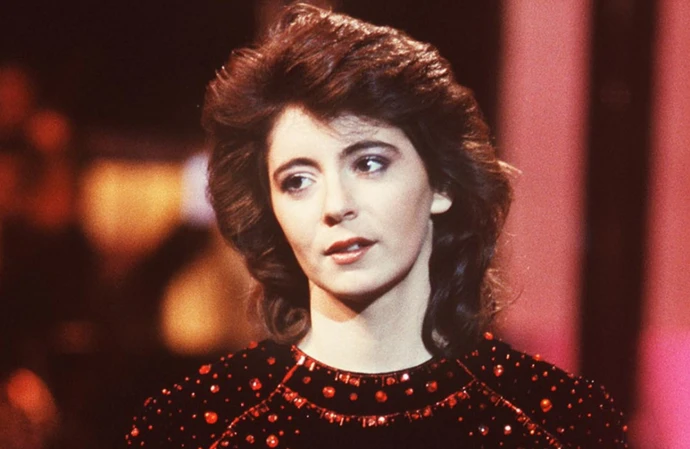
Dame Evelyn Glennie refused to let her deafness define her musical abilities
So I was very well supported. But as I say, it was when I became focused on music and wanted to do music as a profession, it always seemed as though the deafness was the main thing that people wanted to talk about, whereas I was simply a musician and I really wanted to talk about music and percussion, percussion music and so on. And not about deafness, especially with the questions that were being asked.
So, yes, I did find it difficult to begin with, for sure.
As the world’s first full-time solo percussionist, you were creating a pathway that hadn’t existed before. How difficult was it to persuade the music industry to take you seriously?
Well, I remember auditioning for the Royal Academy of Music in London, and I was very, very young then. I was 16 when I was auditioning and I wasn’t expecting to get in at all. So I only auditioned for two places, the Academy and the College, just to get some experience really.
And so I didn’t get into the Academy the first time around because of my deafness, and they said that they just couldn’t see a professional orchestra hiring a deaf musician. And I said, “Well, I don’t want to be in an orchestra. I want to be a solo percussionist.”
And so this was almost like a double whammy, really, because there hadn’t been a full-time solo percussionist before. So it was very difficult for an establishment to visualise what that might look like because there wasn’t enough repertoire to sustain that career.
But already, in my mind as a solo percussionist, this was happening inside of me. So it did take a little while, for sure. And eventually the Academy did accept me after a second audition, and I was just so determined to make this career happen. It felt right for me.
But really, once you began to give things like educational lecture demonstrations and workshops where you’re playing the short pieces, short repertoire pieces for solo percussion, people began to think: “Wow, actually, this is interesting. There’s legs here. We can perhaps put on an actual concert.”
And so I started giving concerts for the many music clubs up and down the country. It was almost like a snowball, just rolling, a little ball and then gradually got bigger and bigger. And that’s really how it started.
You’ve paved the way for so many percussionists. How does it feel to be seen as an inspiration and a trailblazer?
I don’t know. I think that we can all inspire, we all have the capability of inspiring, and that really comes from listening as well to each other. We all have a story to tell. I keep reminding myself of that message when I was a school kid, and it still holds true today.
I’m involved with so many different things and with such a large demographic of people, from little kids all the way through, and it’s just fantastic when you can share your journey with people, and you can see if it’s had an effect in one way or another.
But ultimately, we all need inspiration. You don’t suddenly create a career and you’re in a position whereby you never need to be inspired. You always need to be inspired.
And so, yes, I just love the fact that we can all share our journeys together and move forward together.
Being a part of the London 2012 Olympic Games Opening Ceremony was such a huge moment. You led 1,000 volunteer drummers during the Industrial Revolution sequence, and introduced the Glennie Concert Aluphone for Caliban’s Dream, the song for the lighting of the cauldron. How did that experience change your perspective on music’s power to bring people together?
So many people’s lives were changed on that day. It’s quite incredible. And even now, sometimes messages come through.One actually came through just earlier this week, and someone said, as one of the drummers in the Industrial Revolution, he said, “I met my wife there, at that ceremony,” which was incredible.
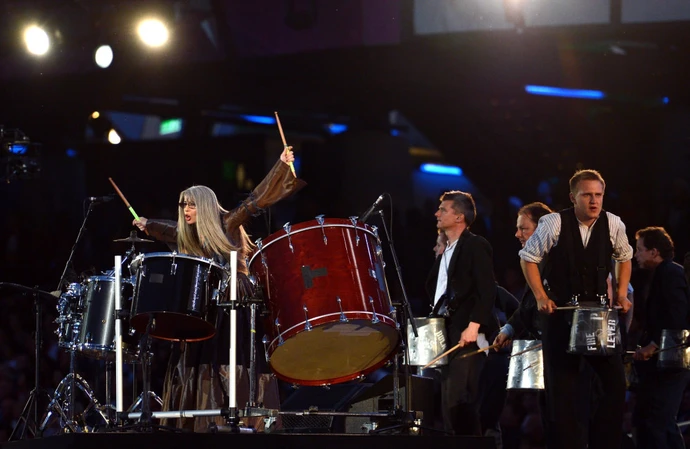
Dame Evelyn Glennie led the volunteer drummers during the Industrial Revolution segment of the London 2012 Olympic Games Opening Ceremony
I just think that for so many people, it was the first time they picked up a pair of drumsticks, and it’s incredible how many people have kept those drumsticks in their hands through joining other drumming groups or creating groups in their communities and so on. And it just shows you the power of volunteering, it shows you the power of coming together.
It was not a case of, “Well, I can play drums and you can’t,” or something like that. This was just the power of communication and really understanding what we were drumming to, the story that we were telling.
And it was just unbelievable. It was an extraordinary ceremony on so many levels and it impacted so many people.
Was that event you’re proud to have been a part of?
Oh, yes, completely.
And you mentioned the Glennie Concert Aluphone for Caliban’s Dream. And that was, again, a situation where I was developing this instrument with the Danish company who were creating it, and we were allowed to invite some guests to the dress rehearsal of the opening ceremony.
I decided that I’d love for two members of the company to come and see the dress rehearsal, but I wasn’t allowed to tell them what the occasion was. This was top secret. So I said, “Trust me, I think you might enjoy this,” because they kept saying, “Well, what are we going to?”
They were flying over from Denmark to London and not knowing where they were going or what they were going to see. And of course, they were just completely over the moon that their instrument was being presented in this way.
It’s an instrument that creates a very fresh, hopeful sound, and that was right for Caliban’s Dream and seeing the next generation of athletes coming through.
And so, yes, that was the power of listening again.
What did you say to the Danish manufacturers without giving away the secret?
I can’t remember exactly what I said, but the fact that, well, your instrument will be really featured, and there’ll be quite a number of people who’ll be able to see your instrument, and it will be placed in a slightly unusual setting. So I was trying to paint a picture without actually saying what it was.
You’ve achieved so much, from winning two Grammys to receiving a damehood. What is the one thing that you are most proud of?
Well, things happen at different stages of your life, so it’s very difficult to pick one thing.
I think what I’m most proud of is waking up each morning with that sense of curiosity. Without that, life would be very different. So that to me is what I define as success. That to me is what I define as happiness, in a way, is waking up and you’re feeling curious about something.
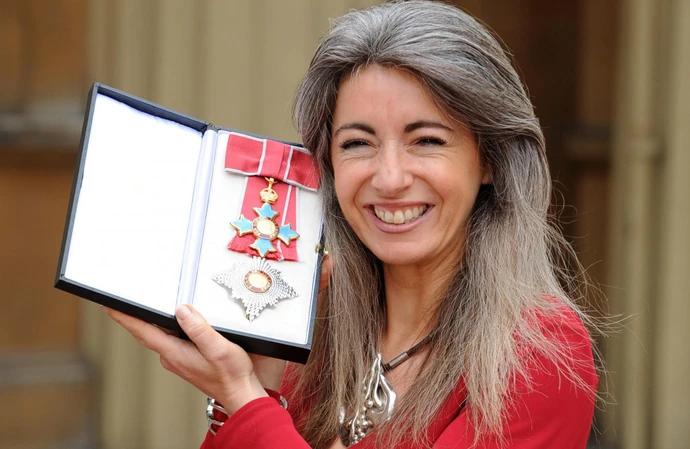
Evelyn Glennie was made a Dame in the 2007 New Year’s Honours list for her services to music
So you’re still curious enough to go into the practice room. You’re still curious enough to think about collaborations or projects. You’re still curious enough to talk to yourself about where you are, what you want to do and that type of thing.
So that for me is what I’m most proud of, is hanging on to that sense of curiosity.
Is there something that you would still love to do in your career?
Well, my career really consists of obviously being a musician, and being the founder of the Evelyn Glennie Foundation, whose mission is to teach the world to listen, and also as the curator of the Evelyn Glennie Collection. So those are the three main strands. Two of them, of course, will carry on once I’m long gone – the Foundation and the Collection.
And I feel that if I can make sure that they’re both on good footing and make sure that they continue to grow once I’m no longer here, then that’s really where my focus is.
There are so many different musicians I’d love to perform with, and collaborations and compositions I’d like to do, and all sorts of things like that. But it’s really important that the Foundation and the Collection keep going once I’m no longer here.