


Original Coverage & Source Attribution: en.interfax.com.ua
Ukrainian MP and European Solidarity party leader Petro Poroshenko has suggested that the Supreme Court may restrict the presence of representatives of foreign embassies at Tuesday’s scheduled hearing of his appeal to overturn sanctions imposed on him in early 2025, citing the alleged presence of information marked “for official use only” in the case materials.
“It has just become known that on November 24, the authorities want to obstruct the lawful consideration by the Grand Chamber of the Supreme Court of my appeal to overturn the illegal, unconstitutional, extrajudicial, politically motivated sanctions against me as the opposition leader and the fifth President of Ukraine. How? By claiming that the case allegedly contains information marked ‘for official use only.’ They say this means the case cannot be heard in the presence of numerous embassy representatives. Yet these proceedings have attracted exceptionally strong interest from both international media and diplomats,” Poroshenko said in a video address from the Halifax International Security Forum in Canada, published on Facebook.
He also said that the case concerning sanctions against him had been under consideration for almost two years and that the High Anti-Corruption Court had already issued a ruling concerning interference in the Supreme Court’s work. “You cannot use one hand to put pressure on the opposition, violate human rights and interfere in the work of the Supreme Court, while using the other to claim that we are upholding fundamental principles: the rule of law, judicial independence, and the protection of human rights and the media,” the politician said.
Poroshenko called for the case to “finally be heard – lawfully and as soon as possible.”
As reported, on February 13, 2025, Ukrainian President Volodymyr Zelenskyy signed a decree enacting the February 12 decision of the National Security and Defense Council (NSDC) “On the Application of Personal Special Economic and Other Restrictive Measures (Sanctions).” According to the annex to the document, sanctions were imposed on five individuals: Poroshenko, businessman Ihor Kolomoisky, former Finance and Credit Bank owner Kostiantyn Zhevaho, former PrivatBank co-owner Hennadii Boholiubov, and former MP Viktor Medvedchuk.
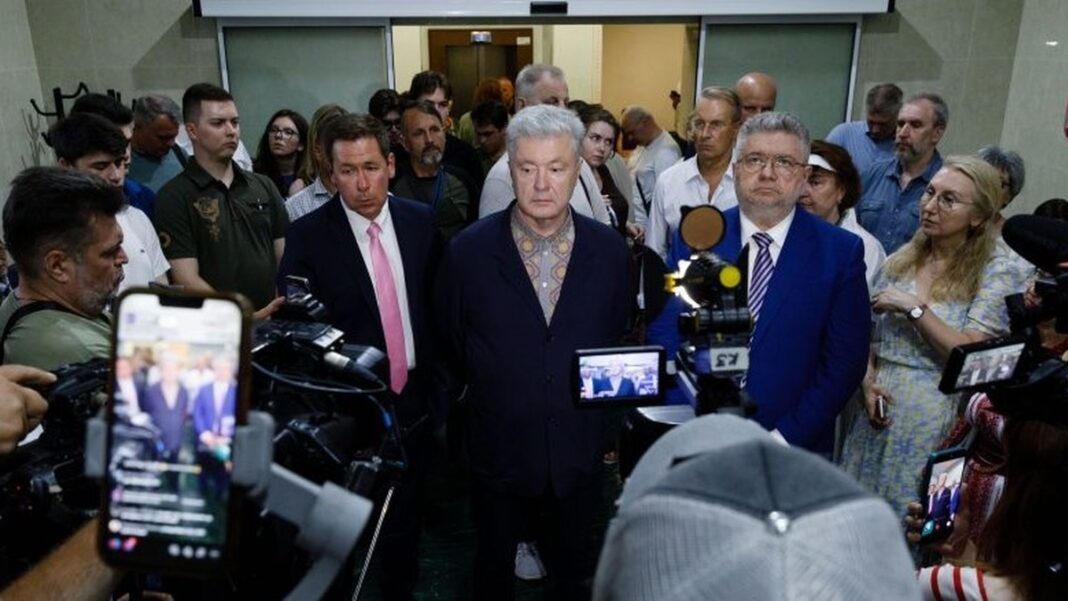
Poroshenko challenged the sanctions in the Supreme Court. On April 17, the court began hearing his lawsuit in the presence of Ukrainian MPs, diplomats from the European Union Delegation, and representatives of the embassies of Germany, Poland, Austria, Sweden, Lithuania and Denmark. Poroshenko’s representatives maintain that the sanctions were unlawfully imposed on a Ukrainian citizen residing in the country, while only Russia considers him a “terrorist.” Therefore, they argue, there are no legal grounds for the sanctions.
In July 2026, the Administrative Cassation Court within the Supreme Court rejected Poroshenko’s lawsuit seeking to overturn the sanctions imposed by the NSDC decision. The ruling was accompanied by dissenting opinions from two of the five judges on the panel hearing the case. Poroshenko and his lawyers appealed the decision to the Grand Chamber of the Supreme Court.
In addition, on September 2, during a meeting of the Verkhovna Rada’s Temporary Investigative Commission investigating possible unlawful actions by officials of state authorities, other government bodies and state-owned enterprises that may have harmed Ukraine’s economic security, it emerged that former Deputy Head of the President’s Office Iryna Mudra had allegedly exerted pressure on judges of the Administrative Cassation Court through its head, Ihor Dashutin, in connection with the sanctions against Poroshenko. The politician’s lawyers filed complaints concerning the alleged pressure with the High Council of Justice (HCJ), the National Anti-Corruption Bureau of Ukraine (NABU) and the Prosecutor General’s Office.