Original Coverage & Source Attribution: www.rferl.org
Four days after Russia launched its all-out effort to subjugate Ukraine, the US government, and other Western allies, fired a broadside of financial sanctions aimed at punishing the Kremlin’s wallet for the assault.
The Russian Central Bank was prominent.
So was a multibillion-dollar sovereign wealth fund that the Kremlin calls the Russia Direct Investment Fund, or RDIF.
The White House called it “a slush fund for President Vladimir Putin [that] is emblematic of Russia’s broader kleptocracy.”
After months of dormancy, US negotiators have ramped up efforts to find a negotiated settlement to end Russia’s war on Ukraine — as well as normalize frosty relations between Washington and Moscow.
The peace proposals vary. Many tilt heavily in Russia favor, something that was echoed in Putin’s remarks to European leaders earlier this week.
They also include lifting sanctions on the RDIF, whose chief executive, Kirill Dmitriev, is the Kremlin’s point person for talks with the Americans.
“This conversation is going on,” Kremlin foreign policy adviser Yury Ushakov told Russian reporters. “It’s been going on for some time, though I don’t know what the result will be.”
“Dmitriev is actively reaching out, in particular, and therefore the question has come up and is being discussed,” Ushakov said on October 28, confirming a New York Times report a day earlier.
What Is The RDIF Anyway?
The fund was established in 2011 during the interim period when Putin’s protege, Dmitry Medvedev, served as president, and Putin as prime minister.
It came at a time when Russian coffers were brimming with revenues from high global oil prices and fiscal planners were moving to put the country onto a rock-solid financial footing.
Back then, Russia had one traditional sovereign wealth fund that was later split into two: the Stabilization Fund and the National Wealth Fund.
Both more or less helped to keep excess oil revenues from destabilizing the economy, as well as to help fill gaps in the budget; the pension system above all.
In short, nothing controversial nor particularly political.
The RDIF, however, was a slightly different beast: aimed at making targeted investments in Russian companies: construction, telecoms, finance, health care, and dairy, among others. It says to date it has made 2.3 trillion rubles ($29 billion) in investments since its inception — with about 80 percent of that amount coming from “partner funds.”
Experts say its management strategy more closely resembles a private equity fund.
Among the best, publicly known investors who have bought in or partnered with RDIF: Saudi Arabia’s government-based Public Investment Fund.
The RDIF had already drawn scrutiny from US regulators in 2015 — about a year after Russia illegally annexed Ukraine’s Crimean Peninsula. At the time, the fund was linked to the state investment bank VEB. The administration of President Barack Obama barred American individuals and businesses from making loans to or buying equity in RDIF.
Later, Russian authorities separated the fund from VEB, turning it into a stand-alone entity.
Iikka Korhonen, head of research at the Bank of Finland Institute for Emerging Economies, said the fund was quite small relative to other such mechanisms.
“The size of the fund is miniscule– on a macro scale– and they claim they have helped to leverage lots of investments into Russia. But I don’t know if they have actually done anything in a long time,” he told RFE/RL.
Sputnik: The Vaccine (Not The Satellite)
The fund’s highest profile investment came in 2020, in the midst of the COVID-19 epidemic.
At the time, governments and private companies around the world were racing to come up with a viable vaccine for the coronavirus.
In Russia, the Kremlin prioritized the development of its own vaccine, dubbed Sputnik V, in a nod to the world’s first artificial satellite.
In addition to directing money to homegrown research, the fund also aggressively promoted Sputnik V, extolling — and at times exaggerating — its benefits, while also criticizing Western vaccines and amplifying negative scientific results.
The fund also played a role in the shipment of 45 Russian-made ventilators that were sent to the United States in a humanitarian gesture — but never were used for unclear reasons.
Reports at the time said US authorities were concerned because RDIF said it paid for half the shipment, something denied by the State Department. Also cited was the fact that similar models of ventilators had exploded and caught fire in Russian hospitals.
In the end, the Sputnik V vaccine was rolled out widely through Russia, though many Russians were deeply skeptical, of Sputnik V in particular, though also coronavirus vaccines in general.
Outside Russia, however, the vaccine gained less traction, overtaken by greater interest in Western vaccines.
Who is Kirill Dmitriev?
Born in Kyiv and educated at Stanford then Harvard, Dmitriev, 51, worked briefly on Wall Street, in the investment bank Goldman Sachs, and, also consulting giant McKinsey and Company.
RDIF did not immediately respond to an e-mail seeking comment from RFE/RL.
His wife, Natalia Popova, is widely known as a close friend of Katerina Tikhonova, who is the younger of Putin’s two daughters. Dmitriev sits on the board of directors for an innovation fund called Innopraktia that is headed by Tikhonova.
He was appointed RDIF’s first executive when it was established. In an interview with the business newspaper Vedomosti, published in 2012, he described his philosophy toward investing.
“We don’t want to rush. We’re very responsible with our money and take a conservative approach to investment decisions. We don’t want to invest and then see a second wave of the crisis hit and all assets, including ours, plummet in value,” Dmitriev was quoted as saying.
During the run-up to the 2016 US presidential election, which ultimately was won by Donald Trump, Dmitriev was one of several Russian officials who held back-channel meetings with Trump administration confidants.
Dmitriev met with Erik Prince, founder of the private military company Blackwater and Trump campaign donor, in the Seychelles just weeks before Trump took office — a meeting that was documented by Special Counsel Robert Mueller, who investigated the Trump administration’s ties to Russian officials.
After Trump returned to the White House in 2025, Dmitriev was tapped by Putin to be the Kremlin’s special economic envoy. But he also cultivated a close relationship with the White House’s lead envoy, real estate developer Steve Witkoff.
Dmitriev has since taken on the lead role in negotiations to rebuild business relations with US companies — and also end the Ukraine war. He’s met repeatedly over the past 16 months with Witkoff and Trump’s son-in-law Jared Kushner in Moscow — including earlier this month amid the release of a retired American schoolteacher, Stephen Hubbard, from a Russian prison.
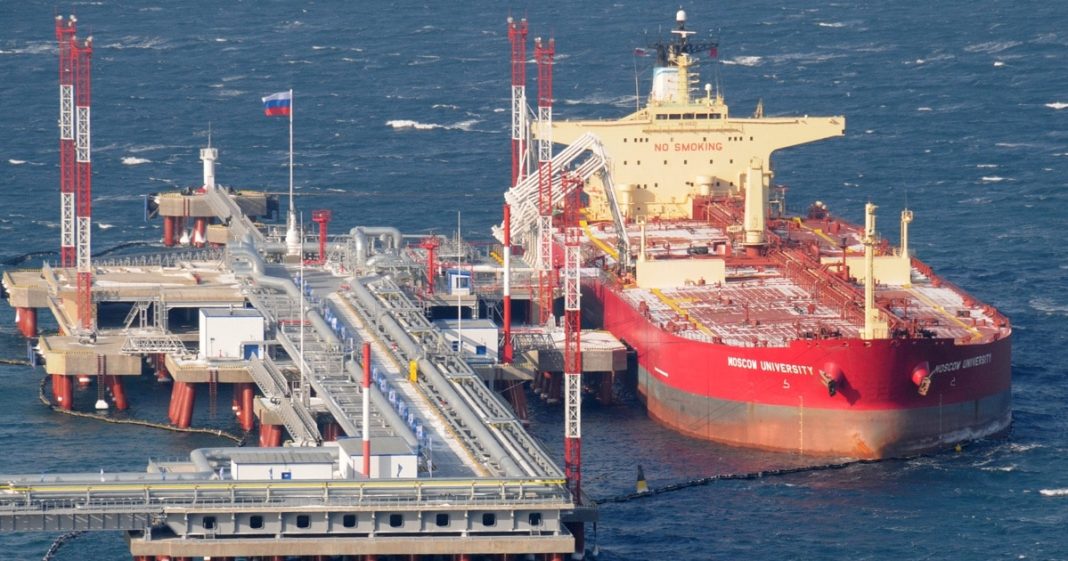
RDIF and Dmitriev, were also instrumental in a deal, recently announced by the Trump administration, to allow Russian diesel fuel to be imported into the United States.
That deal has drawn scathing criticism from Democratic lawmakers — and even some Republicans — in Washington, who say it violates the spirit of a recently passed sanctions law, and several have threatened potential criminal liabilities for any American companies that import the Russian diesel.
“I think lifting sanctions without Russia giving anything in return is an example of really confused policy-making,” Korhonen said.
Speaking at an energy conference in Moscow on October 16, Dmitriev criticized the US sanctions law as “misguided,” and he touted other business deals he said were in the works between Moscow and Washington.
“Naturally, progress is quite difficult; there is resistance, in fact, widespread resistance, from various quarters. Yet, as the example regarding diesel demonstrates, I believe we will soon be announcing several other significant initiatives,” he said. “The ice has, in fact, begun to break.”