Original Coverage & Source Attribution: toneglow.substack.com
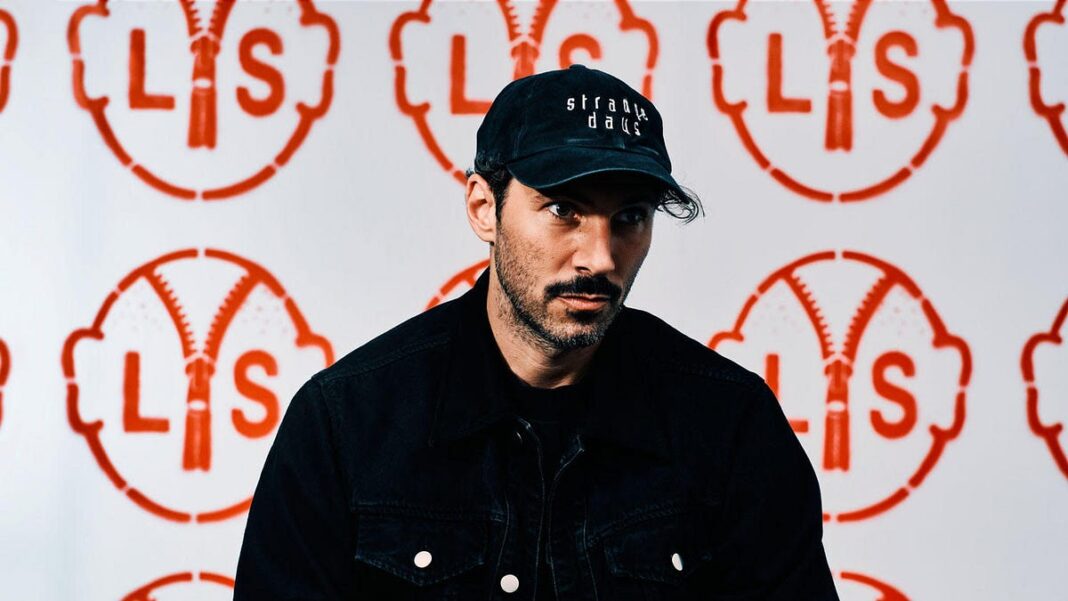
Lorenzo Senni (b. 1983) is an Italian producer and visual artist who was born in Cesena, Italy. During his adolescence he was heavily involved with his local straight-edge hardcore scene and played in punk bands himself. He was also friends with a lot of ravers during this time, and eventually ended up making electronic music. His debut album, Early Works (2008), was a glitchy project in the lineage of the Mego artists he loved. His follow-up, the synthesis-driven Dunno (2010), was a much more unwieldy project but served as a necessary stepping stone for the “pointillistic trance” he would make on Quantum Jelly (2012). Since then, he’s honed his particular sound on records like Superimpositions (2014), Persona (2016), and Scacco Matto (2020). His first new record in six years is All Ages (2026) and is being released via Warp.
Joshua Minsoo Kim spoke with Senni on November 4th, 2026 via Zoom about visiting the States as a teenager, learning from the photographer Guido Guidi, and how hardcore punk inspired his new album. Thank you to Senni for sharing an old skateboarding video and his rare untitled album from 2009, both of which can be found in the interview below.
Joshua Minsoo Kim: When I was listening to your music early on, it was clear that the earliest stuff was inspired by Mego. There’s a love for Fennesz and these other artists across Early Works (2008), and then listening to Dunno (2010) and hearing how the synthesis on that project led to the trance experiments on Quantum Jelly (2012) was really exciting to watch. There’s also that untitled release from 2009 on Mattin’s netlabel, Desetxea. You have an interesting musical trajectory, but its origins are in hardcore punk, which was obviously tied to skateboarding. Can you talk to me about skateboarding and why it’s important to you?
Lorenzo Senni: Next year will mark 25 years since me and three Italian friends went to the United States for the first time. It was a trip that we always dreamed of doing. As soon as we finished high school, this was our gift to ourselves and our family allowed us to do it. We were able to encounter all these old influences, all the things that shaped us before we were even teenagers. A lot of American pop culture was pushed very hard on us in Italy, so there was American hardcore, but also pop punk and pop rock from California that really shaped me as a kid.
In Italy, it was very connected with being left-wing. There were people living in squats and an overarching anti-establishment, countercultural attitude. This was the context I grew up in. When I was 13 or 14 I was in a band with my friends, and we were copying other friends who were only a couple years older than us—they were touring a bit. All these things arrived and they strongly influenced my generation. So it was exactly what you’re saying but with a bit of an Italian twist. Maybe hardcore was less commercial and more infused with the underground here while it was already big in the States.
My hometown had a particular position in Italy. I grew up near Rimini in this place called Cesena. It’s very well known for having a big punk and rock scene, and it’s the same with skateboarding and surfing. It was kind of like the California of Italy. All these things were really dominating the city alongside stuff that felt like the opposite end of all that: big clubs, dancing, partying. I eventually realized that these things weren’t opposed to one another.
What sort of things did you do on your trip to America?
We took a flight to New York when we were all 19 years old. We couldn’t rent a car so we got this thing called Ameripass where we went around on Greyhound buses. We went from New York to Boston to Niagara Falls to San Francisco to Santa Barbara to Las Vegas to Los Angeles to Flagstaff—to see the Grand Canyon—and then back to LA. That month was incredible because we visited all the record shops and skate shops we could. We were tourists, though. Like, during my four days in New York we went up the Empire State Building three times (laughter). When we went to Boston, we saw Harvard. We saw Niagara Falls. We went to see shops in Santa Barbara. There was this pop punk band called The Ataris and we went to their record shop [Down on Haley]. In LA we went to Revelation Records, but the door was locked so we just waited a bit and then left. There was all this stuff we were consuming, and we just wanted to touch everything with our hands.
There were a lot of great skate videos from the late ’90s to the early 2000s. There’s Alien Workshop’s Timecode (1997) and Photosynthesis (2000), you have Baker 2G (2000), there’s Spike Jonze’s The Chocolate Tour (1999), there’s all the Transworld videos. Were you getting copies in Italy?
They were on VHS back then and it was expensive. At the time you could borrow them from a friend, but I mostly saw them in the skate shop. I remember Shorty’s Fulfill the Dream (1998). For the most part, it was only later—like 15 years later—that I saw a lot of these videos on YouTube. I had to reconstruct my memory, like, “Oh, I remember seeing this.” It’s kind of the same with records. I couldn’t afford many records and CDs at the time, so I had a small collection. I only expanded it when I was able to get more money. I had friends who worked right after high school, but I was at university and couldn’t afford much. I would borrow records from them, and I was only able to buy records I wanted once I was getting into more experimental electronic music.
The first song on your new album, All Ages (2026), is called “Art Life & Skateboarding” and has Chad Muska and Jamie Thomas, which is ridiculous.
Ridiculous is the right word. Like I said, my hometown was very much the California of Italy, so there were older people already skateboarding. The village I grew up in only had 1000 people and it was kind of in the countryside—though I lived 10 or 15 minutes from the beach—but even then, people were skateboarding in carparks there. We didn’t have any skateparks. I thought it looked cool, and I started with my friends when I was maybe 11 or 12.
I’m very grateful that I had a very strong group of friends. We were very active. There was always some event every single day: we’d go into the river and try to build something, we’d go fishing, we’d ride our bikes, we’d go skateboarding. And these were the same friends I went to the States with. Skateboarding and making music was just something we all did. Like, we all just decided to make a band later on. But I was always skating in carparks early on. When we turned 14, we were able to drive these motorized scooters in Italy, and we’d get on one and leave our village for the skatepark. But back then, we didn’t really know how to do tricks. I wish we had the kind of tutorials you see on YouTube. All we had were older guys who’d help us out, but they weren’t really patient with us (laughter).
Do you remember the specific feelings you had when you learned specific tricks?
It was amazing, it was the best feeling. Skateboarding was the first time in my life when I became really disciplined in something. I was obsessed with it. Discipline might have been something that happened in school, but school wasn’t my main passion. It wasn’t something I liked to do. It’s interesting that this was a small village in Italy and all these kids were screaming Chad Muska’s name. We were 12 or 13 or 14 and screaming it, and we had his boards—Shorty’s. It was all very powerful, and our group of friends wasn’t fucking around; we were very committed. On Scacco Matto (2020) I had a song called “Discipline Of Enthusiasm.” It’s very powerful being really into something and pushing yourself as much as you can. It was a great feeling then and it’s never left me, though maybe it’s shifted to other things. For example, I became obsessed with drums shortly after and would spend hours playing them.
What did you appreciate about Chad compared to other skaters? What stood out to you about him?
Looking back, it was partly just a matter of what was in front of me. Chad Muska had a very recognizable style, though, and it was very appealing. The same is true for Jamie Thomas and Zero. Throughout the next 20 years, I discovered many other skateboarders that I probably would have loved, but I think I needed a bit more depth to understand why Chad Muska and Jamie Thomas were on the Tony Hawk games. I was always picking Chad Muska.
You played drums, and I know in the 2000s you played drums in Le Harmacy. You have that split with Talibam! from 2007. Before that, you were a touring guitarist in Out of Bounds. Was that on Good Life Recordings?
There was this Italian straight-edge band called Sentence and they were more metal oriented. They were close friends, and some of the members in that band also played with me in Out of Bounds. We never released anything, though, because everyone got too busy—Sentence was touring, for example. That was a very amazing time because I’d just hang out in the rehearsal room. We played shows, and luckily I have footage of this, but then I went to university and discovered post-rock and experimental music. At 14 I was playing guitar, at 17 I started to play drums, and already back then, I was discovering stuff that was going beyond punk and hardcore. I was getting annoyed that some of my friends had more regular bands while I was expanding my interests. It’s a pity that I never did a record with my punk and hardcore bands, though. My very first band was called Straight Eggs (laughter). We were a straight-edge band but people would say, “That’s not cool. It’s like you’re mocking straight-edge bands.” We ended up changing the band name.
What were your experiences like in those bands? Was there anything about collaborating with them or playing shows or playing drums that you think was important, that informed the way you approached making electronic music?
What I really liked about the Editions Mego guys was that there was something about their attitude that I recognized in punk bands. These guys just didn’t give a fuck (laughter). They were blasting this rough, crazy music. They’d show up with their laptops and a $50 guitar and just plug it in. Sometimes someone was really aware of what they were doing, but other times there were these Frankenstein’d software patches. There was a scene, but everyone had their own voice and way of doing things.
Also, Peter Rehberg was very proud of not getting any art funds during a time when other artists in Vienna all were. You could feel that attitude, of being a bit “anti-”, with Editions Mego. These guys were punks. When I got the chance to see these guys, people like Russell Haswell, it wasn’t so different from what I had previously experienced in hardcore. So that was the connection—this familiar feeling. They’d be putting on shows, they’d have weird cover art and make things pixelated on purpose. Sometimes a back cover looked like it could be a photo for a band who’d just finished playing a show, where the drums had all fallen apart or something, but instead of that it’d be a couple of electronic instruments. It was like, “Fuck, this is so cool.”
When did you buy your first Powerbook and get into Max/MSP? I know you got into SuperCollider later on, too.
It’s when I started to go to university. I had a personal computer at home and I was already recording a bit of my own music, but it was more of a post-rock thing. I was really into Mogwai and Godspeed You! Black Emperor. Godspeed You! Black Emperor became my obsession because it was like, “Fuck, these guys are punks too.” I was working in the summer at a factory and eventually bought my first laptop. It was cool because I was playing the drums at the time, but it felt powerful and liberating to make music on my computer. I’d always be the first to set up and the last to break down; I was so tied to this big instrument. And when I was in Bologna, new people showed me new music. I was at the university for musicology and we studied the pioneers, like John Cage and Xenakis. All this was a prelude for Editions Mego, Raster-Noton, Alku—which was Evol’s label—12K with Taylor Deupree, and Room40.
It’s a really important time for you because it’s also when you met Guido Guidi. What do you feel like you learned from his photography practice? You spent three years with him, and I’m wondering what you think you wouldn’t have learned if you didn’t spend time with him.
That was the most important encounter of my life. I was there every day and whether he was doing his work or cutting the grass, I was always around him. He’d been doing this work forever, and while he’s only been discovered internationally more recently, he was always doing this for himself. It was a very personal thing. I realized that this was something he was doing, but it wasn’t how he survived. This was good to see as a young person because you don’t even think about that.
Another thing more specific to art and practice is that I saw him put together these books and serials. Every choice he made was justified. He was telling these things to me, but he’d also tell people who came to his house, or he’d just talk to himself when he was alone. It’d be like, “Okay, there’s this photograph here and it has a little hole in the middle, and when you turn the page and look at it from the other side, there’s a round stone and it kind of matches.” He’d say this, then look at me and laugh. I only understood why 20 years later. Like, this is what we do as artists: we trick ourselves. We have to justify what we do because we want it to work, and finding any little reason that makes sense is enough. I remember he’d take a picture of a painting of an Italian Renaissance painter, and he’d put it in dialogue with another kind of landscape. It was all a way to make it work for himself, to actually finish the book. Everything in his practice had a story that he could tell himself and others as a way to confirm his ideas.
Can you give me an example of how you had to justify things for yourself in this way?
All the time! (laughter). But especially with Quantum Jelly. There was an interesting connection here with Guido’s work. His work was about looking with intensity at something that wasn’t often looked at, that was neglected. There was this Italian art critic and philosopher who had this book called L’insistenza dello sguardo (1989) and it always resonated with me. With Quantum Jelly, I started looking at trance tracks and trance material. It was considered very vile—you couldn’t even mention trance in electronic music because it was so mainstream and an oversaturated market. I was looking at the build-ups in these tracks in this intense way, and I dedicated time to that. It was worth it.
There was a time, a little before Quantum Jelly, when I started to cut out build-ups from existing trance tracks and I was looping them. It was very interesting because it’d sound like William Basinski, like minimalism, but it wasn’t exactly that—it was something else. And it was all always connected to trance because these elements were functional within the genre. Every artist expresses themselves in a very personal way during these passages, even more so than other parts of the track. So I started looking, and that’s when I brought this conceptual aspect into my music. I said, “Okay, from these observations and initial mixes, I want to make my own music.” That’s when I started to explore.
Do you remember what specific trance tracks you were pulling from?
That’s the thing—I didn’t know anything about trance. People think I’m an expert, but I’m more an expert on punk and hardcore while trance was this thing I’d hear on weekends. When I rediscovered it on YouTube, I wrote to all my old friends, “Can you recommend certain songs?” They started sending hundreds of links, and I consumed thousands of tracks. I mean, there was Tiësto and Armin van Buuren obviously, but I consumed all this without knowing much. I bought a compilation on Discogs, too, and worked through that. But I mean, I couldn’t even mention the names of particular tracks because it wasn’t really about that; it was about a specific section of these tracks. Like, I’m not even sure if I cut something from Tiësto’s “Adagio For Strings.”
This sounds funny to say, but I never cared about music. What I really cared about was photography, but I was always more conservative with that. I didn’t try to explore as much with photography because I was scared. It’s probably because I had my master’s in photography and it’s difficult to get out of certain rules with that. But because I didn’t care as much about music, I was happy to disrespect it.
Do you feel like having a master’s in photography shapes your music at all? Do you see and think about your songs in this visual manner?
I say that I’m a photographer who survives by making music (laughter). I don’t really see my music as being disconnected from their visual aspect, but if there’s something I really care about with my work, it’s that. That’s not limited to photography, either—there’s the text, too. I want to take advantage of all these aspects to speak about my work. But to speak about it is to speak about myself. My ultimate goal would be that, in a single song—not even with a whole record—you could understand me. I want to communicate these things, I want to be understood and seen. That’s one of the most important aspects of making art—expressing myself. Though, I realize that my ultimate goal is to be seen with just a glimpse, where you can hear one song and understand this whole constellation of who I am—not just the music, but the photographers I like, the painters I like, the books I read, just everything about who I am.
I want to ask about the track titles, then. There’s such a positivity to the music that feels surprising in the current day. There’s “Smile Through Tears,” there’s “Spoken Into the Void,” there’s “XGood Clean FunX.” The music is also super optimistic, and your music has been like that for a long time now. On Persona (2016) you had “One Life, One Chance.”
This idea of uplifting one another and having a positive outlook definitely comes from straight edge. There are moments when I’m not positive, but I tend to be like that and I think that hardcore helped me to embrace that attitude. I also always notice that with different pioneers of electronic music and art in general, there’s this beautiful aspect of them taking the work seriously but not taking themselves too seriously. It was interesting to learn this about John Cage and even with Editions Mego. I notice this in myself, too, and it’s very powerful and rewarding because you can break down some walls that you have in yourself. I’m realizing that what I got from all the artists I look up to is this inspiration to do my own thing. I hope my work does that for other younger people. I want them to wake up and have something to look forward to. And for me, the most precious thing that I have is that when I’m done with this conversation, I have something to look forward to: to work on my things. Hardcore was a starting point, and then it became this tornado—it became this bigger thing and there was positive feedback. I once called this one event I organized “Positive Feedback.” It was me, Florian Hecker, and Curtis Roads.
You have a song on the new album called “Jealous of Michelangelo.” Can you talk more about that? Are you jealous of him?
I saw someone who vandalized this Michelangelo piece and when they asked him why, he said that it was because he was jealous. I found that funny, but also, I realized that I’m not jealous of artists who are successful and have all this money, these artists who have Grammys or big concerts. I’m jealous of artists who make good work, where I can say, “I wish I could have made this.” I want to make something that’s special.
Which artists do you feel that way about? Who are you jealous of, who are you a fan of?
Godspeed You! Black Emperor are one of those bands. I like how their trajectory has been one without compromise. They’re always a very strong reference, and I wish I could be as inspiring as them. With electronic music it’s Florian Hecker for sure and Russell Haswell. The latter has always been a big one. Live Salvage 1997→2000 (2001) and Second Live Salvage (2008) are like… fuck, the record cover for Second Live Salvage with him lying on the ground. The cover design is like Keith Jarrett’s The Köln Concert (1975) and both are live records. I love that sort of fucking around.
When I released Quantum Jelly, I played Donau Fest. I knew he’d be playing there. He came backstage and I swear to god he said, “Who is Lorenzo Senni?” I was like, “Oh no.” (laughter). I had heard that he either likes you or doesn’t like you, and I didn’t know what was going to happen. He walked right in front of me and clenched his teeth and started grinding them. He told me he liked Quantum Jelly and said, “Your music is acid.” And then there’s Fennesz. Those are my heroes in electronic music. There’s also My Bloody Valentine. I mean, it’s for their music but also for the story behind Loveless (1991). When I go into the studio I think, it doesn’t matter if I take a long time to make an album. I find that inspiring.
You have a track titled “La Persuasione e La Rettorica,” which I imagine is based on the Carlo Michelstaedter text. Can you talk to me about your relationship with that?
It was the first book I read in my first course at university, and it’s the most important thing I’ve read in my life. University of Bologna is a great school—it’s actually the oldest university in the West—and my teacher suggested it. We did a very in-depth analysis. The book is by this young philosopher and it was his master’s thesis, but right afterwards he killed himself. It’s a book about the human condition and how tragic it can be. One of the most important metaphors is when he says that anything can be heavy. A book can be sitting on a table, and everything might seem resolved, but gravity wants it to go through the table and onto the floor. The idea is that when it’s on the floor, it’ll finally be resolved, but if you put a hole in the ground the book would keep going down. It’s this idea that humans are in this condition that’s never resolved.
I was pretty shocked when I read that at 19, but it liberated me a lot, too. Instead of making me sad, it made me understand that awareness is freedom. I spoke about all this to Jamie Stewart of Xiu Xiu. He’s a genius, and he’s someone I always looked up to as an artist because he never compromises either. He recorded his vocals and we made a track. Jamie was actually the very, very first artist—with his music and lyrics—that made me better understand queerness. I had been aware of it a bit through hardcore because of its messages of inclusivity, but these other aspects of queerness through his work, whether about sex or violence, came from him. He’s always been an icon.
Would you consider yourself queer?
No, I wouldn’t. I’m a straight male, but that’s why it was important. It was beautiful to encounter queerness in this way. I also asked him to release something on [my label] Presto!? like 15 years ago, but he very kindly said no.
In the past you’ve talked about how songs like “One Life, One Chance” and “Discipline of Enthusiasm” were songs that were referencing hardcore music more than dance music. This album feels like it’s more indebted to the former in general with the structure and the vocals. “Self eXamined Endurance” and “Your Favourite DJ” have hardcore vocals and then “KILL LIES ALL” has more pop punk vocals. Can you talk to me about how hardcore music shapes the songs themselves? Is it related to form or economy or energy? How is that more important than dance music as a reference?
That’s an important question. The fact is that I make the music that I make, and even if this record is more explicitly about hardcore, it’s not a hardcore record. There were certain chord patterns that I’d get from listening to hardcore bands, and songs would have this sound (makes guitar chugging sound) and I’d use that as a reference. Like, I was taking rhythmic patterns from hardcore songs and there’d be these ideas for riffs that I’d play on synths.
I feel the need for revolution, and the first revolution needs to be with myself. The first thing I have to give up are the rules that I’ve set up for myself. If I wanted to use vocals for this record, I wanted them to 100% come from the rock world. That was one element. And then some of the riffs this time are actually with guitar sounds, even if they’re hidden. Even more, I wanted to emphasize these straightforward ways of moving into the track. Maybe there’s this looper that repeats four times and instead of (hums straight-ahead rhythm) it’s more (hums jagged rhythm). All these things are a bit more explicit on this record, but it’s not like I’m making a guitar record or a hardcore record because, at the end of the day, my music is always the same shit (laughter).
You’re sampling Brainiac and the Refused on this album and you have original vocals, too. Listening to it made me think of your Stargate material because the vocals are utilized in this poppy manner.
Bravo! Bravo! I’m really happy that you brought up Stargate because I have to admit that when I released Quantum Jelly in 2012, I released the Stargate EP the same year and wanted to keep things separate. It’s sometimes easier for artists to dedicate a project to different aspects of who they are, but over the years I had to accept that I was just one person. The most honest thing I could do was to find a synthesis between all the music I liked instead of keeping things separate. Sometimes it’s more efficient or easy to fragment things, but for me it’s not the final form—the final form is just being more honest with what I wanna do. I’m Stargate and Stargate is me, and there’s no difference. But it’s not easy to accept that sometimes—sometimes you want things to be more controlled.
What’s skateboarding like for you now that you’re in your 40s versus when you were younger? I know that you skate at Lampugnano Skate Plaza.
Unfortunately, it’s become more of a thing I do by myself. I think it was impossible to imagine myself skateboarding alone 25 years ago, but that’s what I mostly do now. There might be someone there who is much younger than me, and I’ll say hi and a few other words but that’s it. Skateboarding has become a lot more introspective and I find that very pleasant; even though it isn’t social anymore, it’s not sad. Also, there are so many tricks that come easier to me now because I just think a little bit more before doing them. I also jump less (laughter). There are fewer attempts now, and there’s this greater understanding of what’s going on. That’s something that becomes true with every aspect of life when you get older: it becomes easier to understand how to do something. It’s more demanding on your body and you’ll get more tired, but it’s easier to understand the mechanisms.
When you’re young, you have more energy. And that energy is necessary because everything you do requires so much of you. You need that resilience because your brain is going to make yourself do it so many times, to make so many mistakes. Your brain is gonna make you suffer, to get through it and accomplish this thing. Now, my brain is more like, “No Lorenzo, let’s just do it like this.” (laughter).
I know you learned English from playing Magic: The Gathering. That’s interesting to me given how much you identify with visual art and obviously each card has its own artwork, and that’s all so central to the identity of the game. I’m curious about your relationship to Magic: The Gathering and what it’s meant to you.
My friends were obsessed with Magic. It helped me wake up and have something to look forward to, and it’s because I could spend time with friends and it stimulated my imagination. The things that you’re really enthusiastic about when you’re younger never really leave you. For Scacco Matto, I asked one of the original 25 artists for Magic, Douglas Schuler, to reinterpret the cover. The title means “checkmate” and it’s because I felt like I was in a chess game with myself. I wanted to speak to the frustrations of making art, and because there was this aspect of gaming, I asked him to rethink the album’s artwork. He designed artwork around the artwork for my record and it was great. Generally speaking, I share what I like with others. I want people to know I’m a Magic: The Gathering enthusiast, and maybe someone can better understand my work because they know this.
Is there anything we didn’t talk about today that you wanted to mention?
There’s something funny about Mattin. I’ve been a big fan forever and he’s really important to me. I once put together a tour with him, me, and Lasse Marhaug. But the day that Mattin was going to arrive in Rome, he sent me an email saying that he wasn’t coming and that, instead of playing, I’d have to read his email (laughter). It was a delirious email. When I met him years later he was like, “Sorry, I know you put a lot of effort in organizing that tour.” And the more time we spent together, the more I realized how his work was challenging music outside of these traditional contexts. What’s interesting is to challenge these aspects around music. Like, you never really change the promoter in an artistic way, you know? But there are things you can do to challenge things outside of just being on stage. He didn’t come, and because of that he transformed something about these performances. After a few years I was like, this guy is a genius (laughter).
I end all my interviews with the same question and I wanted to ask it to you. Do you mind sharing one thing you love about yourself?
I love many things, and that’s maybe because my parents taught me how to take care of myself. I’d say I’m generous with what I have. I want to give everything I can. I’ll do a workshop and it’s supposed to be two hours long but it’ll end up being four and a half. There are things I find inspiring and I just want to share it with others.
Lorenzo Senni’s new album, All Ages, is out via Warp.
Thank you for reading the 248th issue of Tone Glow. Knuckle tats that say TRNC MSIC.
If you appreciate what we do, please consider donating via Ko-fi or becoming a Patreon patron. Tone Glow is dedicated to forever providing its content for free, but please know that all our writers are paid for the work they do. All donations will be used for paying writers, and if we get enough money, Tone Glow will be able to publish issues more frequently.