Original Coverage & Source Attribution: foreignpolicy.com
Welcome to Foreign Policy’s Africa Brief.
The highlights this week: A United Nations deadlock ends the 35-year-old peacekeeping mission in Western Sahara, local elections take place in South Africa, and Moscow tries to project an illusion of a successful Russia-Africa Summit.
A deadlock between the United States and Russia at the United Nations Security Council on Friday ended a 35-year-old peacekeeping mission in the disputed African territory of Western Sahara.
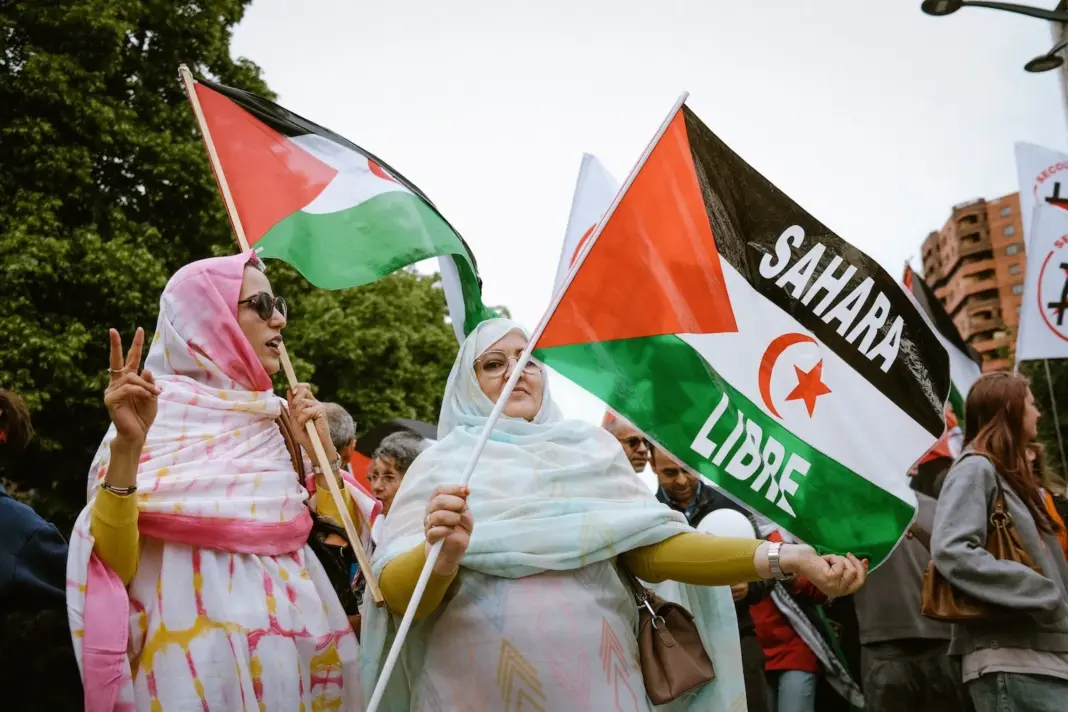
The U.N. Mission for the Referendum in Western Sahara, known as MINURSO, was established in 1991 to monitor a cease-fire after a 15-year armed conflict between Morocco, which claims sovereignty over the territory, and the Algeria-backed Polisario Front, which seeks Sahrawi independence. It was also tasked with organizing a referendum for Sahrawi self-determination.
The referendum has stalled for decades. Last month, a U.S. draft resolution for the Security Council sought to remove “referendum” from the mission’s name and make semi-autonomy under Moroccan sovereignty the sole basis for future political negotiations over Western Sahara. It would have also scaled back the peacekeeping force by April 2027.
Russia vetoed the plan, instead putting forth a rival proposal to grant the standard one-year extension without imposing terms that favored Morocco. That, in turn, was voted down by the United States. The mission’s mandate subsequently expired on Sunday.
Morocco annexed Western Sahara, a former Spanish colony, in 1975, displacing more than 100,000 people. An International Court of Justice ruling the same year found no historical basis for Morocco’s claim over the area. Rabat now controls around 80 percent of the territory, which boasts rich Atlantic fishing grounds and phosphate reserves.
Currently more than 160,000 Sahrawi refugees live in camps hosted by Algeria. International aid groups have denounced the U.N. Security Council’s failure to renew the mission and find a solution to the severe humanitarian crisis caused by the political stalemate.
Traditionally, Western powers maintained a neutral position on Western Sahara’s status. But in 2020, during U.S. President Donald Trump’s first term in office, Washington broke with precedent by recognizing Rabat’s sovereignty over the territory in exchange for Morocco reestablishing diplomatic relations with Israel under the Abraham Accords.
At the same time, Russia’s stance has been largely driven by its close geopolitical and economic alliance with Algeria, which backs the Sahrawi liberation movement.
The U.S. midterm elections on Tuesday, in which Democrats took control of both the House of Representatives and Senate, could eventually lead to a more nuanced stance from Washington on Western Sahara, especially since many Democrats have expressed support for the U.N.-led process. But any immediate reversal is unlikely.
Washington and Moscow have traded barbs in the wake of Friday’s deadlock. Mike Waltz, the U.S. ambassador to the U.N., said that Russia’s veto prevents “historic steps toward finally ending a 50-year conflict.” His Russian counterpart, Vassily Nebenzia, said the U.S. plan would have “set back the entire process of resolving the Western Sahara issue” by disregarding “a just, free and fair settlement based on the principle of self-determination.”
Sidi Omar, the Polisario Front’s U.N. representative, also warned that the U.S. resolution would “not only torpedo the foundations of the U.N. peace process but would also have set a very dangerous precedent that threatens broader regional and international peace and security.”
Some analysts have echoed these criticisms. “Eager for a quick diplomatic win,” wrote Hugh Lovatt, a senior policy fellow at the European Council on Foreign Relations, Washington has “closed the space for negotiations and risks creating regional instability.”
A small U.N. team is now supervising a phased withdrawal of U.N. peacekeepers and the return of military vehicles and other assets to troop-contributing nations, including Egypt, Ghana, and Pakistan.
Security observers fear that MINURSO’s departure could lead to renewed fighting in the territory. Amid a security vacuum, some analysts fear Morocco may be emboldened to send in troops in a bid to grab more territory.
Wednesday, Nov. 4: South Africa holds local government elections.
Friday, Nov. 6: Zambian Finance Minister Situmbeko Musokotwane presents a delayed 2027 budget.
South African elections. Analysts are predicting that South Africa’s local elections on Wednesday will show growing political fragmentation. The country is already ruled by a coalition government after the African National Congress (ANC) lost its 30-year parliamentary majority in a historic general election in 2024.
A few days before the election, Trump announced that South Africa, the largest beneficiary of the African Growth and Opportunity Act (AGOA), would be removed from the duty-free trade agreement starting in January. But with less than 1 percent of South Africa’s total goods entering the U.S. market under AGOA, the decision will likely have little impact on the vote. Instead, domestic issues such as crime, corruption, and a lack of jobs are expected to be voters’ priority.
Voters will elect councils in all 257 municipalities, but a heavily indebted Johannesburg—the country’s biggest city—is the key battleground.
Johannesburg’s debt has spiraled in recent years, with consumer bills and other debt still owed to the city amounting to 72 billion rand (about $4.5 billion), with Johannesburg owing more than $1.5 billion to its immediate creditors. The city has struggled to collect trash and provide enough drinking water. By some estimates, nearly half of the city’s treated drinking water is lost to underground pipe leaks due to infrastructure neglect and commercial losses.
Currently, the white-led, pro-business Democratic Alliance (DA) is leading the pack in Johannesburg, where its former federal chairperson, Helen Zille, is campaigning for mayor. (Zille was also mayor of Cape Town from 2006 to 2009.)
Yet no party is predicted to win an outright majority. Most polls suggest the DA will win less than 40 percent of the vote in Johannesburg, followed by the ANC and two far-left parties: the uMkhonto weSizwe Party and Economic Freedom Fighters. The DA refuses to work with the latter two, which means it will likely form a coalition with the ANC or other smaller parties.
Déjà vu in Moscow. Moscow made a series of high-profile announcements around last week’s Russia-Africa Summit, including those concerning the sale of fighter jets to Ethiopia, Sudan’s offering of investment opportunities, and Russia’s support in modernizing Eritrea’s ports. Yet while some analysts have concluded that these evince Moscow’s rapidly growing role in Africa, there is reason to be skeptical.
None of these plans are new. Instead, Russia has highlighted and repackaged long-standing agreements to project an illusion of a successful summit. For instance, the delivery of 12 Russian Sukhoi Su-35 fighter jets and the planned acquisition of four S-400 air defense batteries to Ethiopia stem from a prior agreement signed several years ago; they are not, as the Moscow Times described it, “the summit’s highest-profile deal.”
Meanwhile, proposals for Moscow to modernize Eritrea’s ports have been floated since 2018. And Sudan, in order to secure military backing, has offered strategic cooperation with Moscow since the country’s civil war began in 2023.
At the summit, Moscow also announced nuclear power plant deals with several African nations, including Ghana. Yet apart from Egypt’s $29 billion El Dabaa project, decade-old nuclear power agreements between Russia and African nations remain unplanned. Russia agreed to build a nuclear plant for Ghana in 2015, for example, though it never came to fruition.
Congo mining dispute. California-based KoBold Metals, a mining start-up backed by Bill Gates and Jeff Bezos, has asked the United States for help in seeking U.N. Security Council approval to use aerial surveillance technology to map the location of critical minerals in the Democratic Republic of the Congo.
The company accuses China of using a U.N. arms embargo—which blocks the supply of arms and related equipment to nongovernmental entities and individuals operating in Congo—to prevent it from using the technology, according to a Financial Times report. China has said the allegations are “inconsistent with the facts.”
Congo, the world’s largest exporter of cobalt, has faced decades of armed fighting over its mineral resources. Chinese companies currently control around 80 percent of the country’s cobalt output.
Sudan’s fragmented war. In Africa Is a Country, Doha Ali, who fled Sudan’s civil war, argues that framing the situation in the country simply as a “humanitarian crisis” flattens its complex history and obscures the foreign interventions and proxy dynamics, including European anti-migration policy, that established the conditions for endless warfare.
“Wars do not simply happen; they are built. Sometimes they are built through weapons. Sometimes through money. Sometimes through diplomatic agreements signed years before the first shot is fired,” Ali writes.
Ali’s article is part of the series We Are Here: Sudanese Girls and Youth Hold Their Ground in Resistance and Remembrance, a collection of stories by young Sudanese people documenting their lived experiences of war and displacement.
Egyptian media repression. On Oct. 27, an Egyptian court ordered the immediate closure of Mada Masr, one of the country’s last prominent independent news outlets, and fined its editor in chief, Lina Attalah, 3 million Egyptian pounds (around $53,450) for operating without a license. Attalah will soon face a criminal trial and possible imprisonment.
This forms part of a wider crackdown against independent news agencies in Egypt, which has detained or jailed more than 20 journalists. In New Lines Magazine, a Cairo-based journalist using the pseudonym Anne Mostafa details Egyptian authorities’ 13-year campaign against Mada Masr and what it means for the country.