


Original Coverage & Source Attribution: www.ticketnews.com
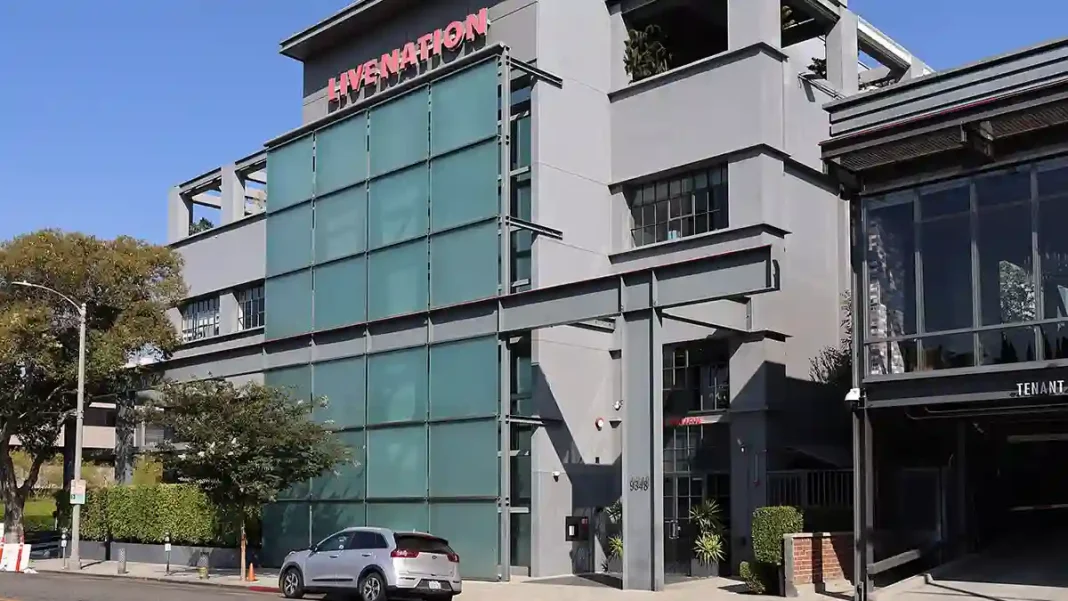
Live Nation’s HQ in Beverly Hills (Photo: Coolcaesar, CC BY 4.0, via Wikimedia Commons)
Live Nation Entertainment is facing three proposed class action lawsuits following the disclosure of a cybersecurity incident involving highly sensitive personal information, including Social Security numbers, government identification numbers and health records.
The three cases were filed in the U.S. District Court for the Central District of California within two days of one another: Fraga v. Live Nation Entertainment, Inc. on Oct. 6, followed by Gosman v. Live Nation Entertainment, Inc. and Ramos v. Live Nation Entertainment, Inc. on Oct. 7. Federal court docket records confirm all three complaints.
The suits come less than a week after Live Nation reported the breach to the Vermont Attorney General on Oct. 1. That filing lists only two affected Vermont residents but identifies the compromised information as Social Security numbers, government IDs and health records.
How many people were affected nationwide remains unknown, and the available public filings do not identify when the incident occurred, how Live Nation’s systems were accessed or whether Ticketmaster customer systems were involved.
Live Nation has characterized the incident as limited.
In a statement provided to Billboard, the company said it had identified and contained a cybersecurity incident and brought in an outside cybersecurity firm to investigate. Live Nation said the incident was “limited in scope,” had “no impact on our operations” and involved a “small number of individuals” who are being notified and offered monitoring support.
That characterization contrasts with allegations in the newly filed lawsuits, which seek to represent substantially larger classes of potentially affected people. Plaintiffs have alleged that Live Nation failed to implement adequate security measures and exposed sensitive personal information belonging to potentially thousands of people.
Those figures remain allegations, however. Live Nation has not disclosed a nationwide affected-person count, and the complaints do not independently establish that thousands of records were compromised.
Former Employees Among Live Nation Plaintiffs
Details contained in the complaints also raise questions about early reports characterizing the incident as a breach of Live Nation customer information.
Two of the named plaintiffs describe themselves as former Live Nation employees who provided personal information to the company through their employment, according to a review of the complaints. The third plaintiff describes providing information in connection with services from Live Nation without further specifying that relationship.
That distinction could prove important in determining the actual scope of the incident.
Social Security numbers, government IDs and health information are types of records commonly maintained for employment, payroll or benefits purposes, while they are not normally required to maintain a standard ticketing account. The available evidence therefore leaves open the possibility that the newly disclosed incident primarily involved employee or personnel information rather than Ticketmaster customer data.
Neither the Vermont disclosure nor Live Nation’s public statement has clarified whether the affected individuals were employees, customers, contractors or another group.
The three proposed class actions generally allege negligence, breach of implied contract and unjust enrichment, among other claims. Plaintiffs are seeking damages as well as credit or identity monitoring and changes to Live Nation’s data-security practices.
No class has been certified, and the cases remain at the earliest stages of litigation.
The rapid filing of multiple proposed class actions following a corporate breach disclosure is not itself evidence of the ultimate size of the incident. The complaints were filed only days after Live Nation’s state disclosure and rely substantially on information that was already publicly available.
Separate From Massive 2024 Ticketmaster Breach
The new incident also appears to be distinct from the far larger Ticketmaster breach disclosed in 2024.
That breach involved customer information stored in a third-party Snowflake cloud database. Live Nation disclosed at the time that it discovered unauthorized activity in a cloud database containing Ticketmaster data in May 2024, while hackers claimed to have obtained information associated with hundreds of millions of Ticketmaster customers.
TicketNews reported in August that Canadian hacker Connor Riley Moucka pleaded guilty to federal charges stemming from the broader campaign targeting Snowflake customer accounts.
Ticketmaster had previously notified affected customers that an unauthorized party accessed information from the third-party hosted database between April 2 and May 18, 2024.
Nothing disclosed about the newly reported 2026 Live Nation incident has established a connection to that breach.
The differences in the information identified so far are also notable. The 2024 Ticketmaster incident centered on customer-account information, while the new Vermont filing specifically identifies Social Security numbers, government identification and health records.
Live Nation has not publicly disclosed the date of the latest incident, the systems involved or the source of the intrusion.
TicketNews emailed Live Nation seeking clarification on the nationwide number of affected individuals, whether the compromised information belonged to current or former employees or customers, when the incident occurred, whether any Ticketmaster systems or customer data were involved and whether the event is connected to any previously disclosed breach. No response had been received as of press time.