



Original Coverage & Source Attribution: fintechnews.ch
Get the hottest Fintech Switzerland News once a month in your Inbox
The artificial intelligence (AI) boom ignited by the release of ChatGPT in November 2022 has sparked widespread frenzy around the technology, fueling demand, investments, and adoption.
According to a new report from Zurich Insurance Group, this momentum will continue in the coming years, boosting enterprise productivity and affecting financial markets.
Released in September 2026, the paper outlines how AI is reshaping labor markets and global economies, and shares predictions and investment trends, emphasizing productivity gains, investment opportunities, and ongoing influence on financial markets.
AI investment surges
Over the coming years, Zurich Insurance Group expects that AI’s primary influence on the wider economy will likely emerge through demand. It notes that investments in the technology have risen sharply, with infrastructure spending driving a strong capital expenditure cycle.
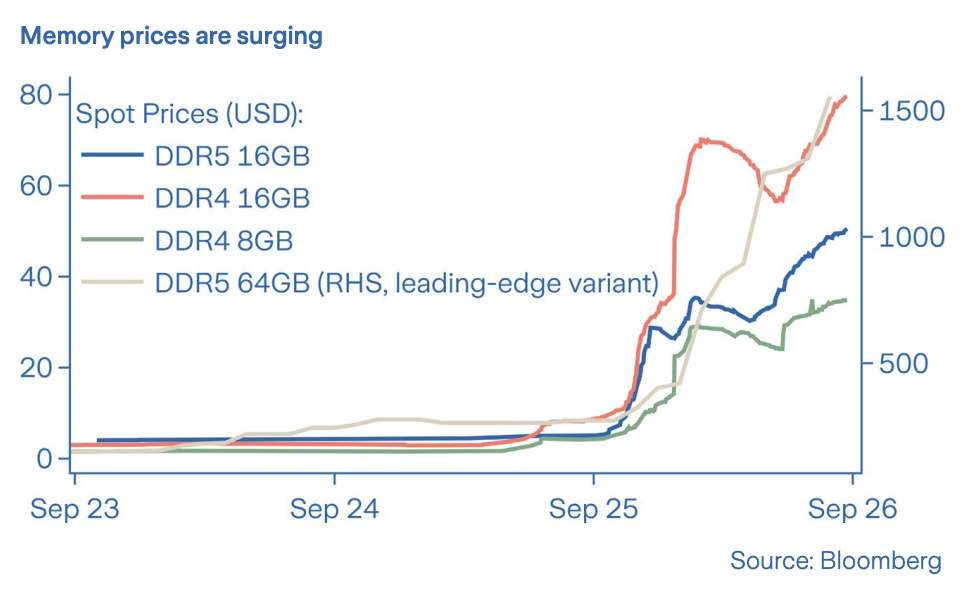
Pockets of price pressures are now appearing, especially in dynamic random-access memory (DRAM) chips used in computers, smartphones, and other devices to store data for immediate processing, which saw their prices up by a factor of six over the past year.
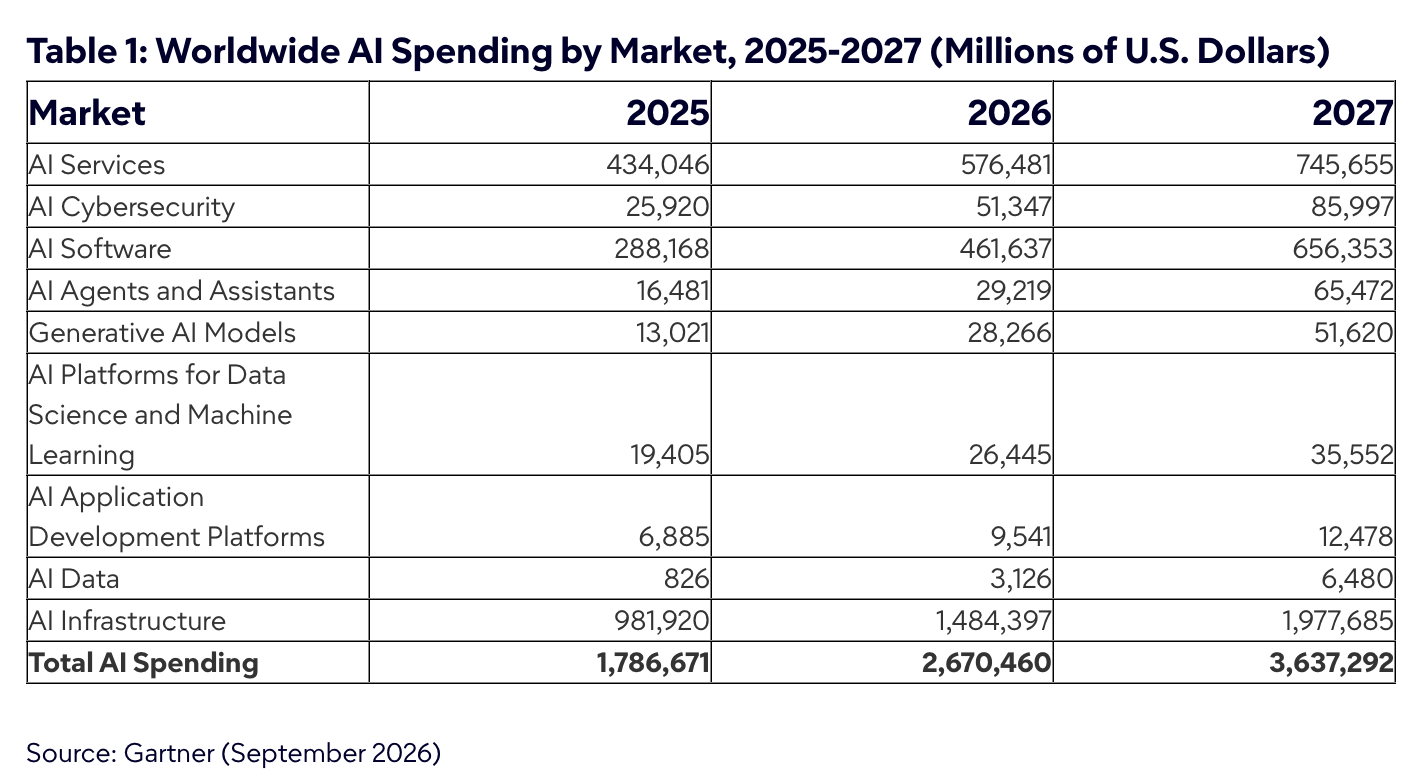
Business and technology insights company Gartner estimates that worldwide spending on AI will reach US$2.6 trillion in 2026, marking a 49.5% increase year-over-year (YoY), driven by AI infrastructure and AI embedding into software and services. By 2027, that amount is projected to surpass US$3.6 trillion, marking a 38.5% YoY increase.
However, the Zurich Insurance Group report notes that the levels of AI investment are still relatively moderate, both in proportion to the overall economy and compared to previous investment cycles. In particular, current spending remains below the levels reached during the information and communication technology (ICT) investment cycle of 1980-2020, as well as during the railway boom and the electrification period. This suggests that the current capex cycle has room to run before signs of overheating, reflecting investment opportunities.
Driving productivity
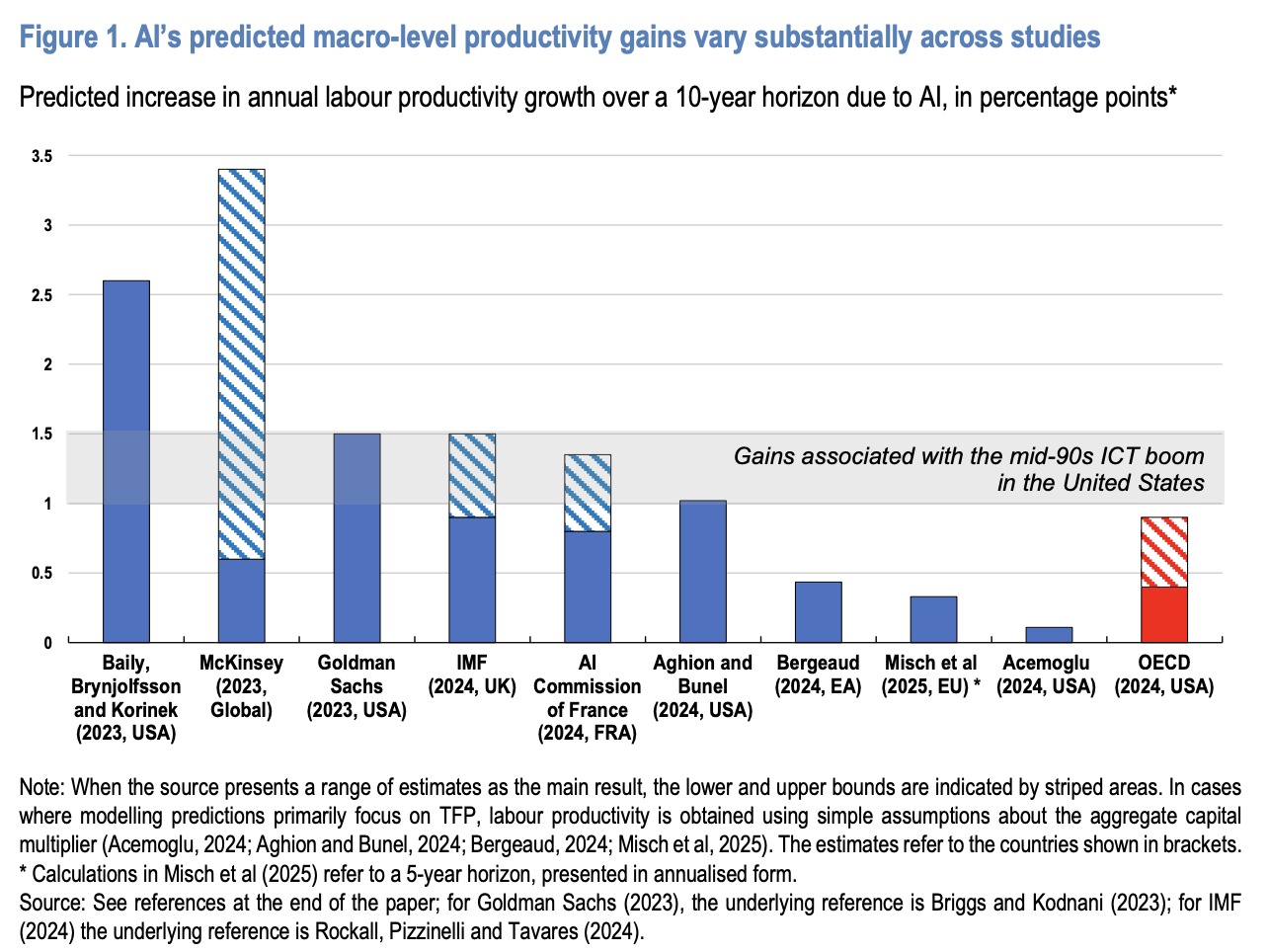
Companies are investing in AI capabilities because the technology is expected to boost productivity and corporate profitability. Although it is still early to measure AI’s productivity gains, several researchers have offered views and estimates, claiming that additional annual growth over ten years could range anywhere from 0.1% to 3.4%.
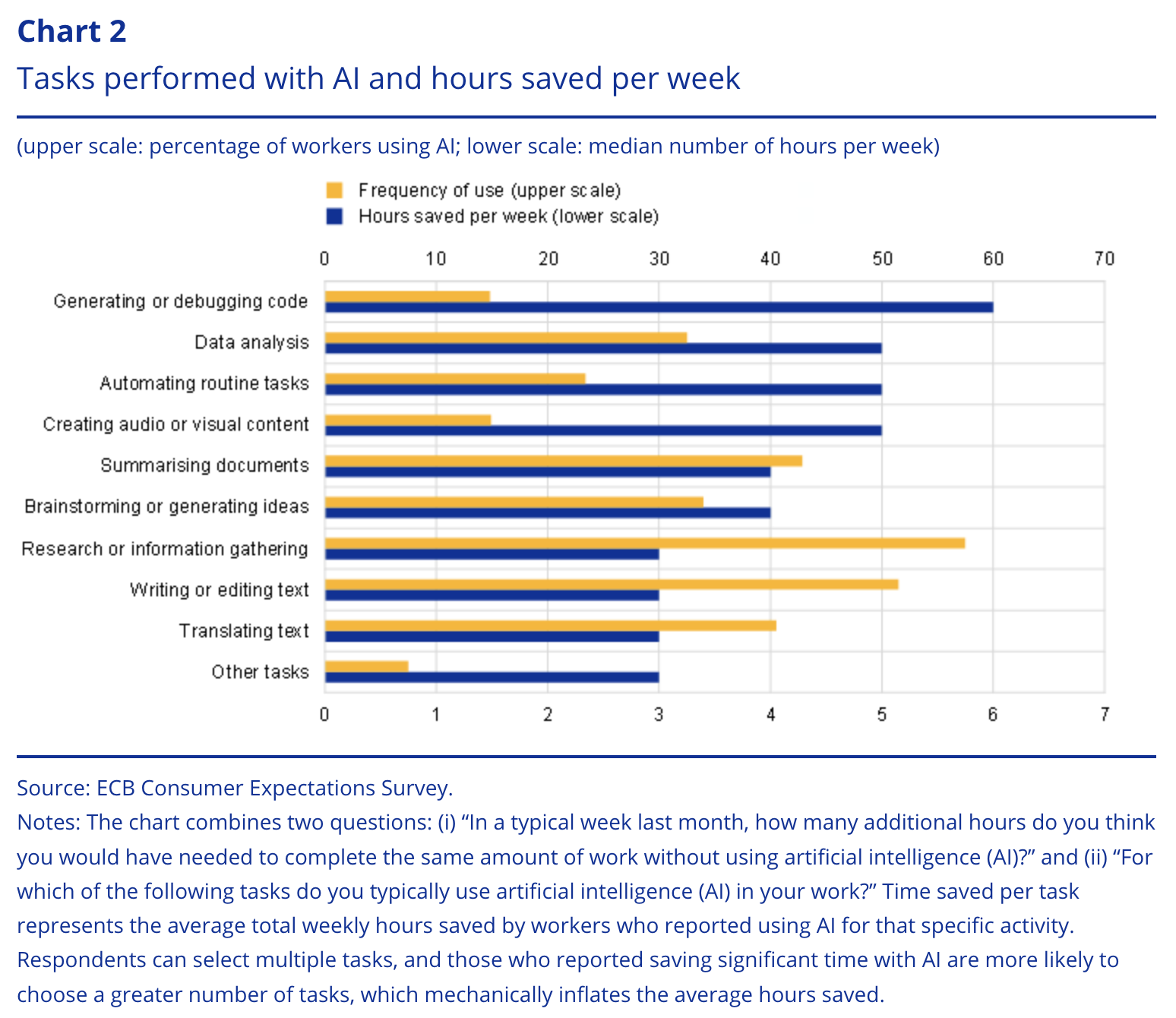
According to the European Central Bank (ECB), the median European consumer saves three hours per week, or about 7.7% of median working time, from using AI. However, only 48.8% of workers reported using and saving time thanks to AI. Thus, for the whole economy, the organization estimates overall efficiency gain, or the share of savings in working hours attributed to the use of AI, to be close to 3.8% in the region.
Further ECB work on this topic suggests that gains vary considerably by task. Generating or debugging code yields the largest gains, at nearly eight hours per week, though use remains limited at only around 8% of workers. A similar pattern emerges for data analysis, automation of routine tasks and creating audio or visual content.
By contrast, research, information gathering, writing and text editing are among the most frequently cited uses, yet time-savings reported for these tasks are considerably lower.
Impact on financial markets
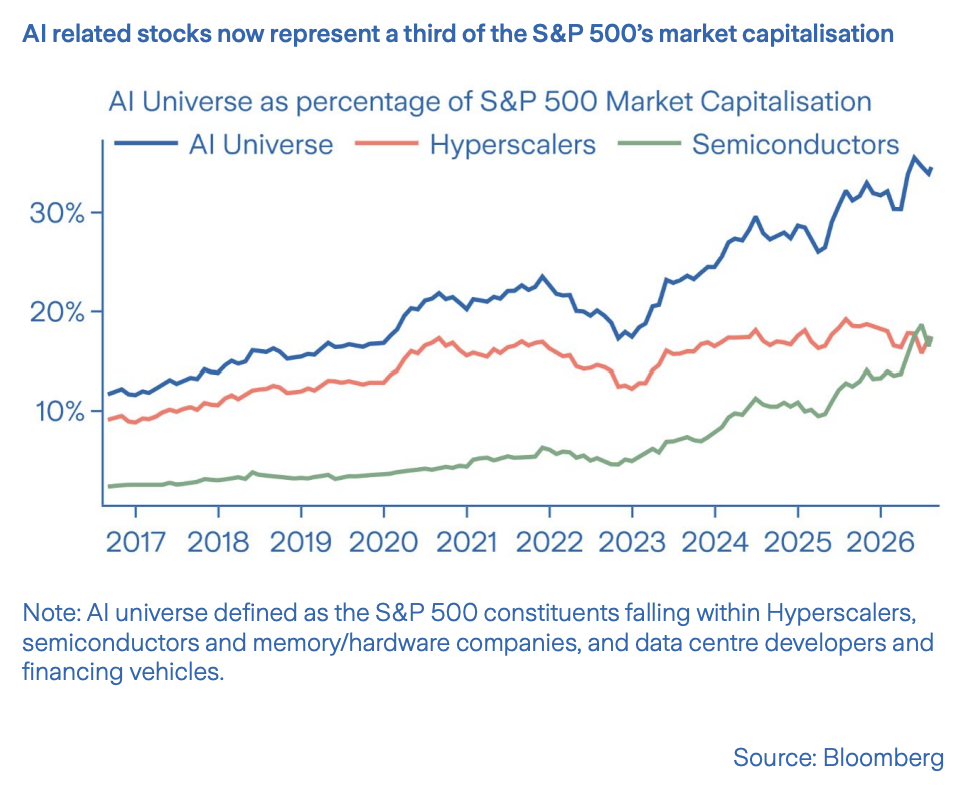
Looking at the impact of AI on financial markets, the Zurich Insurance Group report notes that in equity markets, the AI revolution has already driven remarkable returns for technology stocks with the market capitalization of AI related stocks skyrocketing to around a third of the entire market capitalization of the US S&P 500 stock index since November 2022.
It states that while semiconductors have benefited significantly from the frenzy, hyperscalers stocks, including Amazon, Microsoft, and Alphabet, have also seen meaningful gains. Amazon has risen by more than 180% since November 2022, while Microsoft and Alphabet grew more than 140% and 300%, respectively, during the same period.
Credit markets are also changing quickly as hyperscalers and related issuers tap equity and debt markets at unprecedented pace, and as the variety of funding instruments is expanding significantly across the capital structure.
These include equity issuance, investment grade (IG) and high yield (HY) corporate bonds, asset-backed securities (ABS), commercial mortgage-backed securities (CMBS), off-balance sheet structures, and private debt across currencies and maturities ranging up to 100 years.
AI in the Swiss insurance industry
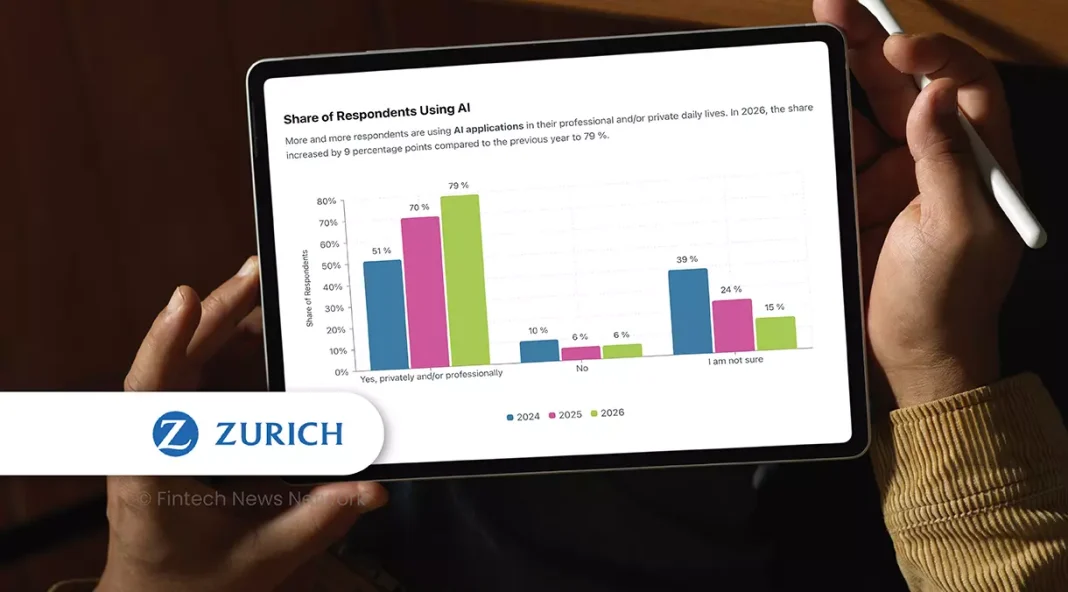
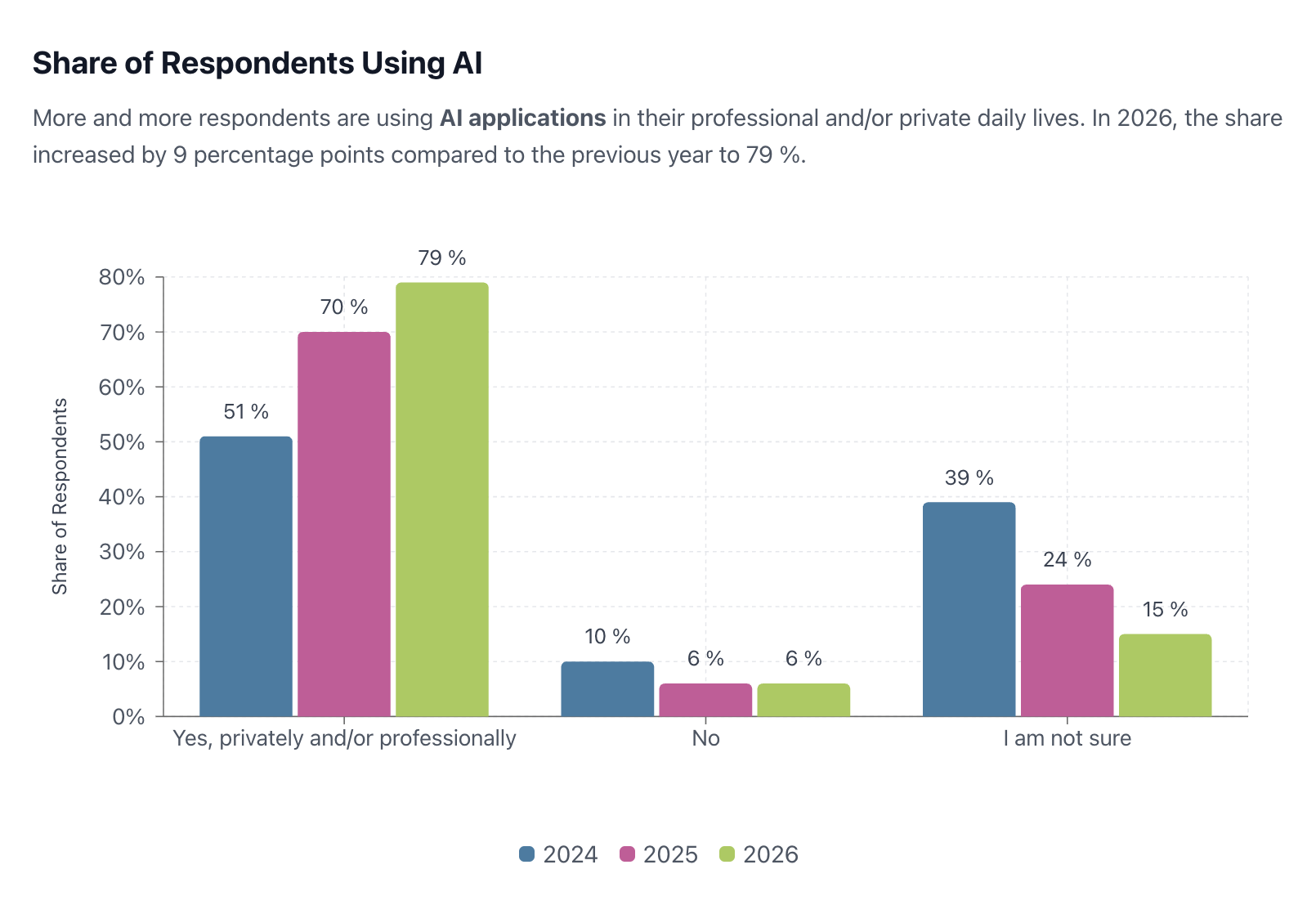
In the Swiss insurance sector, AI is spreading fast. According to a 2026 study by ETH Zurich, the Technical University of Munich (TUM), and the University of St. Gallen (HSG) together with a consortium of partners from the insurance and digital sectors, 79% of the Swiss population now have experience with AI application, rising from 70% in 2025 and 51% in 2024.
The study, which polled nearly 2,000 consumers in Switzerland, found that people see the greatest potential from AI in quote calculation and information searches. Regarding AI assistants, chat tools are favored over voice options.
However, the study found that attitudes towards AI are more negative in insurance than in broader settings. In particular, customers expressed greater doubt about insurers using AI than about general business use, with 46% holding a negative view in insurance compared to 39% overall.
This may reflect the personal and financial risks of using AI for insurance purposes, where errors can lead to denied claims, higher premiums, or lost coverage, while mistakes in general contexts carry little consequence.
Additionally, consumers may feel more sensitive about personal data such as health, finance, and lifestyle details, which can be used to profile or discriminate against them. Fundamentally, insurance relies on trust during vulnerable times, and many consumers believe a human should remain responsible for such decisions.
Featured image: Edited by Fintech News Switzerland, based on image by thanyakij-12 via Magnific