Original Coverage & Source Attribution: www.mk.co.kr
OpenAI Plunges Stock Price On Nvidia’s Choice
“Missing Demand Due to Data Center Shortage”
” Investing in AI to Move Overseas Due to Residents’ Resistance”
“New Industry If AI Speedes Up by 30x”
Although artificial intelligence (AI) technology is rapidly developing, the lack of data centers to support it is emerging as a new growth barrier for the AI industry. Amid growing opposition to the construction of data centers due to power consumption and environmental issues in many parts of the United States, it has been pointed out that the AI industry has failed to communicate with local communities, creating obstacles to growth on its own. The CEO of Cerebras, a U.S. semiconductor company that could not meet the demand for business expansion of OpenAI, the world’s largest AI company, unveiled the reality of competition to secure data centers.
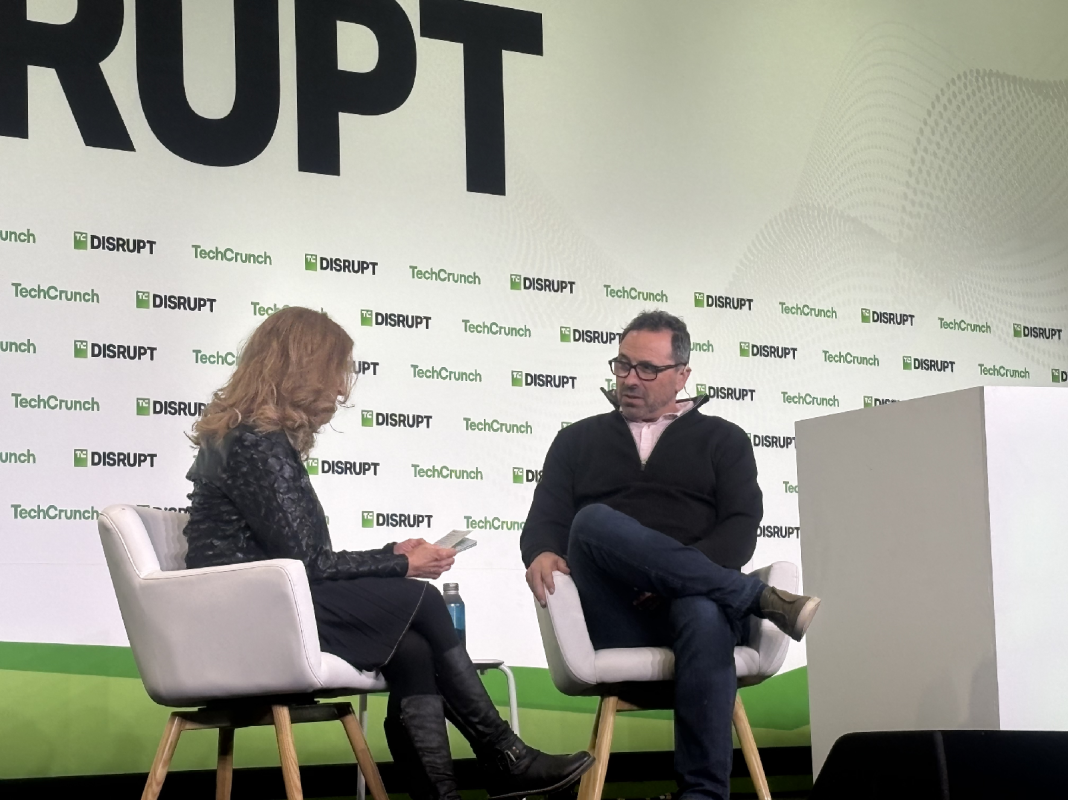
Andrew Feldman, CEO of Cerebras, said at the ‘TechCrunch Disrupt 2026’ meeting held in San Francisco on the 13th (local time), “AI demand is increasing at a tremendous rate,” but added, “Over the past few years, the AI industry has not been able to cooperate properly with the community where the data center is built.” “We didn’t communicate enough with residents like companies in the electricity or gas industry, and this became a problem,” he pointed out.
Cerebras is a company that has developed an ultra-large AI semiconductor against Nvidia’s GPU. It raised $5.5 billion through an initial public offering (IPO) in May and secured OpenAI and Amazon Web Services (AWS) as major customers. Instead of connecting multiple semiconductors, its strength is a technology that processes AI operations in one huge semiconductor to speed up response and reduce power consumption.
However, Serebras recently suffered a drop in its shares as its core customer, OpenAI, chose Nvidia Semiconductor for its next-generation AI service. In August, Cerebras introduced a high-speed service that generates up to 750 tokens per second by supplying its semiconductors to OpenAI’s AI model “GPT-5.6 Sol.” It is up to 14 times faster than existing general services. However, investors’ concerns grew late last month when news broke that OpenAI would use Nvidia GPUs for high-speed services of the next-generation model ‘GPT-6.1 Sol’. Cerebras shares fell about 19.5% from the 25th of last month to the 2nd of this month and fell to the $147 level on the 12th.
CEO Feldman explained why OpenAI chose Nvidia, saying, “OpenAI tried to expand the supply scale much further in the next-generation model based on the success of existing services, but we didn’t have a data center to handle it.” Securing facilities was an obstacle as Cerebras built its own data center, installed its own semiconductors, and sold AI computation services to OpenAI. This is an example of how even if AI semiconductors have excellent performance, it is difficult to meet the demand of large-scale customers without securing data centers and power to operate them.
CEO Feldman also pointed out the AI industry’s responsibility for the growing opposition to data centers in the United States. Some AI industry leaders have become too obsessed with the dangers and negative aspects of technology, scaring society, he said. “People are against data centers because they don’t know where to express their fear of AI.”
On the other hand, Canada, Norway, Finland, Sweden, Iceland, Mexico, and Brazil are encouraging the construction of data centers. “In these countries, companies cooperate with local communities and residents welcome the construction of data centers,” he said. “If there is a strong backlash in one area, companies move to another area or another country.” This means that if the conflict over data center construction in the U.S. is prolonged, investment in AI infrastructure can move overseas.
However, he stressed that increasing the number of data centers without intention is not the only solution. CEO Feldman said, “We need to build more data centers, but at the same time, we need to increase the efficiency of existing facilities,” adding, “We need to improve at every level from power supply to communication equipment, cooling facilities, AI semiconductors and models.”
Cerebras has developed a much larger chip than the existing semiconductor to increase power efficiency. It is explained that power consumption can be reduced by processing operations inside one huge semiconductor instead of exchanging data between multiple semiconductors. “Moving data out of the semiconductor requires thousands of times more power than moving it inside,” he said, claiming that his technology can handle the same operation with less power than existing GPUs.
It gave an optimistic outlook on the future of the AI industry. He predicted that personal AI assistants will soon be able to take over from purchasing goods with credit cards by understanding users’ tastes and schedules as they are in everyday life like home appliances.
He also introduced that he is using various AI agents to check schedules, collect information on the other party of the meeting, and organize past sales records. “It is important to automate what people have been doing before, but it is more interesting to make new things possible that have not been done so far,” he said. In particular, it is predicted that new industries will emerge if AI’s response speed increases. It is explained that the same changes that Netflix, which used to deliver DVDs by mail as the Internet speed increased, turned into a movie producer can also be seen in the AI industry.
“If we increase the speed of AI reasoning by 10, 15, 20, and 30 times, people will use AI more,” Feldman said. “If technology speeds up enough, a completely new industry will open up.” [Silicon Valley correspondent Wonho-seop]