Original Coverage & Source Attribution: www.techpolicy.press
On Oct. 7, EU DisinfoLab’s annual conference, #Disinfo2026, opened in Vilnius, Lithuania with an interview with International Criminal Court (ICC) Judge Kimberly Prost. Prost, who is from Canada and lives in the Netherlands, has been under US sanctions since August 2025 along with other ICC officials involved in investigations into possible war crimes in Afghanistan and Gaza. On conference banners listing sponsors, the logos of the Canadian and Lithuanian foreign ministries and the European External Action Service (EEAS) had been covered with white paper. According to Politico, a State Department cable ahead of the conference told US embassies to convey, verbally and not in writing, Washington’s displeasure with two panels. One panel examined the threat of foreign information manipulation and interference (FIMI) from the United States to Europe; the other asked how social media researchers were coping with pressure from the US government, including through travel bans. Canada, Lithuania and the EEAS withdrew their support. France, also approached, remained the conference’s only main supporter.
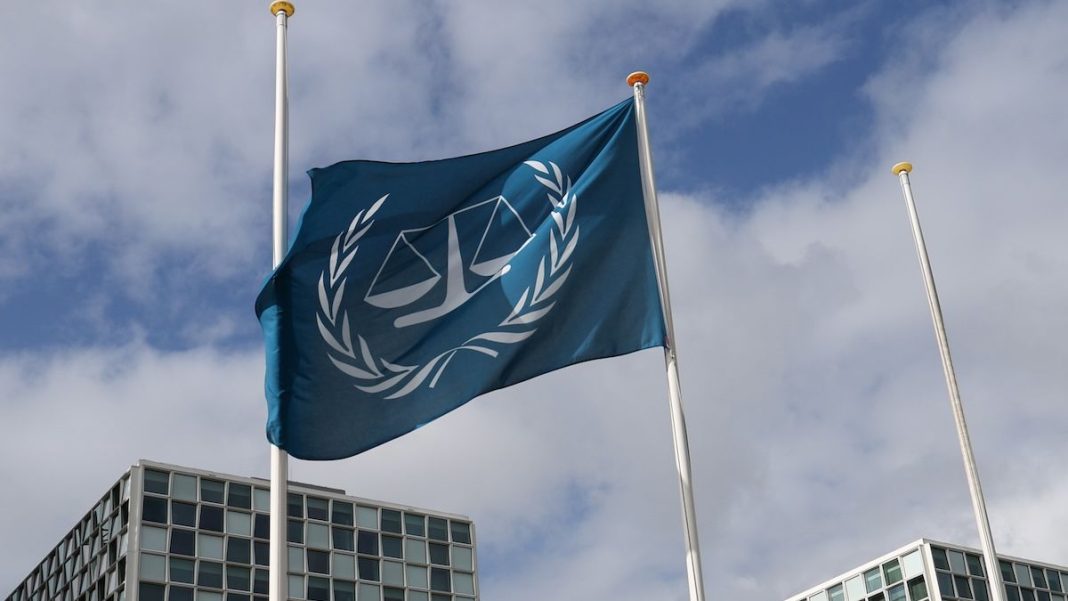
Two days later, on Oct. 9, the US Treasury sanctioning the ICC itself. Hours earlier, Navi Pillay, a former judge of the Court, had won the Nobel Peace Prize. Secretary of State Marco Rubio declared: “Either the ICC will end its threats, or we will end the ICC.”
I attended #Disinfo2026 as a lawyer who has represented victims of international crimes for more than 20 years, before French courts and before the ICC. Despite the difference of time and place, I see close parallels between these two attempts by the US government to suppress inconvenient truths.
The work in question is distinct too. International justice practitioners track sanctions against the ICC, while the counter-disinformation community tracks pressure on researchers and potential violations of European laws such as the Digital Services Act (DSA). Yet in little more than a year, the same government has repeatedly used the same external methods to silence both of these institutions working to establish public facts. Lawyers who work on transitional justice know this method from domestic cases of judicial capture where justice institutions are bent to political interests: discredit them first, then criminalize their staff, then take control.
First, delegitimization. At the United Nations General Assembly on Sept. 22, President Trump called the ICC an “out of control institution” and “an anti-American tribunal with no jurisdiction over us,” and urged its members “to officially resign from this rogue institution immediately.” Rubio calls it a “rogue court.” European information-integrity work gets similar treatment. In August 2025, Rubio instructed US diplomats in Europe to lobby against the DSA. House Judiciary Committee reports published in July 2025 and February 2026 present European regulation as a “foreign censorship threat.”
Then, coercion. Washington sanctioned the Court’s prosecutor, judges and president, and on Oct. 9 the ICC itself. In December 2025, the State Department barred five Europeans who work on online harms from entering the country. One of them was Thierry Breton, the former European commissioner who oversaw the DSA, and the department accused all five of pressuring tech platforms to censor American viewpoints. This fall, it turned to the sponsors of #Disinfo2026. Neither the ICC nor the counter-disinformation field answers to Washington. In both cases, the aim is to silence them through outside pressure.
Freedom of expression is a right people hold against the state, not a license for governments to mislead. A “Joint declaration of Freedom of Expression and “Fake News”, Disinformation and Propaganda” by UN and international representatives from 2017 lays this out clearly: : state actors “should not make, sponsor, encourage or further disseminate statements which they know or reasonably should know to be false.” The US case against the ICC does exactly that. Executive Order 14203 states that the Court “has no jurisdiction over the United States or Israel.” Under Article 12(2)(a) of the Rome Statute, which was ratified by 125 states, the ICC has jurisdiction over crimes committed on the territory of a state party, whatever the nationality of the accused. The US Congress itself authorized support for the Court’s investigation of Russian nationals in 2023 on that very basis. The order also leaves out complementarity: a case is inadmissible when a state genuinely investigates or prosecutes its own nationals.
Our content delivered to your inbox.
Join our newsletter on issues and ideas at the intersection of tech & democracy
Thank you!
You have successfully joined our subscriber list.
Nor is the ICC an ungoverned body waiting to be captured. Its 125 States Parties, through the Assembly of States Parties, elect its judges and prosecutor and adopt its budget. The US campaign seeks to override that governance from the outside with each designation that turns an official of the Court into a wrongdoer on the record. Russia is pursuing many of the same people for its own reasons, sentencing ICC President Tomoko Akane (also under US sanctions), former Prosecutor Karim Khan and other officials in absentia to prison terms from 3.5 to 15 years in a Moscow court in December 2025. On Oct. 8, the eve of the US designation, Russia asked several countries, including the Netherlands, to arrest and extradite Akane and nine other officials
Each of these actions is a step on a familiar path for the counter-disinformation field. Within 12 hours of the former president of the Philippines, Rodrigo Duterte, being arrested on an ICC warrant on charges of crimes against humanity in March 2025, at least 200 Facebook accounts and pages posted identical messages calling it a kidnapping. Families of victims of Duterte’s drug war were later targeted with AI-generated videos.
The chilling effect is now on the record before a US court. In an amicus brief filed Sept. 22 in a federal lawsuit against Executive Order 14203, 38 civil society organizations, including Amnesty International and the International Federation for Human Rights (FIDH). Everyone sanctioned lost access to US banking and information technology systems, including even access to YouTube and other online services. Because of the global dependence on US tech infrastructure in particular, it has been called a “civil death” by one targeted official, UN Special Rapporteur Francesca Albanese. The effect reaches well beyond those designated: lawyers representing victims before the Court have withdrawn, and the ICC Bar Association has told the court that counsel are turning down new cases. People are choosing to stop speaking to stay safe.
States Parties have answered, so far mostly only with words. On Oct. 9, the foreign ministers of Canada, Denmark, France, Germany, Italy, Japan, the Netherlands and the United Kingdom said they “strongly disagree” with the designation, without announcing any measure. Belgium’s foreign minister called for activating the EU’s Blocking Statute, which would forbid European companies from complying with the sanctions. Amnesty International called for “a global response of resistance and protection.” Protecting the Court from outside control falls first to its States Parties. Their defense will only hold, however, if the facts about the Court are established and kept in public view. This is precisely the work the counter-disinformation field is equipped to do.
This is why the campaign against the ICC belongs on the agenda of the counter-disinformation community, and not only on that of international lawyers and human rights groups. Russian claims that the Court is a politicized tool of the West, or that the arrest warrant for Putin in 2023 was organized by “British pedophiles,” are already cataloged as disinformation. In the Philippines, fact-checkers such as Tsek.ph and VERA Files correct false claims about the Court case by case. The Institute for Strategic Dialogue and the Centre for Information Resilience have analyzed campaigns around the Putin and Taliban warrants. Frameworks such as DISARM or the Information Manipulation Sets model developed by France’s Vigilance and Protection against Foreign Digital Interference Service (VIGINUM) would make these incidents comparable across borders. They would show which narratives recur, which targets are hit first, and whether information operations precede sanctions and counter-prosecutions.
The EEAS’s annual reports on FIMI threats could track attacks on judicial and accountability institutions as a category of their own. Under the Digital Services Act, content exposing protected witnesses can be notified to platforms as illegal wherever national law makes it an offense. In tandem, practitioners of international justice can contribute three things: The first is the legal qualification of what they observe. The second is the procedural calendar, which informs when disinformation campaigns will peak. The third is sharing early warnings from victims, who in my experience often report harassment before it shows up prominently online. Documenting disinformation and intimidation campaigns is not the same as supporting the Court, but no one has tested that line. Anyone taking on this work should know that Executive Order 14203 allows for the designation of foreign persons who assist the Court. There is some hope of reprieve, as a New York court today granted a preliminary injunction that bars federal agencies from imposing fines or criminal penalties on US organizations that submit evidence to the ICC.
The institutions built over the past three decades to establish facts and responsibility, from the ICC to the research and regulatory ecosystem defending information integrity, grew with significant Western support, at times including from the United States. Its government now treats them as adversaries, and it uses financial and technical tools as much as diplomatic ones. The covered sponsorship logos in Vilnius and a sanctioned court in The Hague are two signs of the same shift away from justice and free speech. Sanctions silence what hurts. Our response must be to make sure what hurts keeps working.
Disclosure: the author heads the International Justice Commission of Amnesty International France; Amnesty International is among the signatories of the amicus brief cited in this article. The views expressed are her own.