


Original Coverage & Source Attribution: www.ess-news.com
“Made in Europe” isn’t an unusual tag in large-scale battery systems, but last week, at an open day held at Maxxen Energy’s facility in Aydın, Türkiye, an almost no-limits event was held for its factory that began operations in 2026 in a 20,000-square-meter containerized battery manufacturing facility.
Speaking on site during media tours and detailed interviews, Ruben Valiente, Maxxen’s Managing Director, staff, and leadership from parent company Kontek Energy, offered a rare, transparent look into the strategy, supply chain realities, and automated assembly powering their 20,000-square-meter containerized battery manufacturing plant.
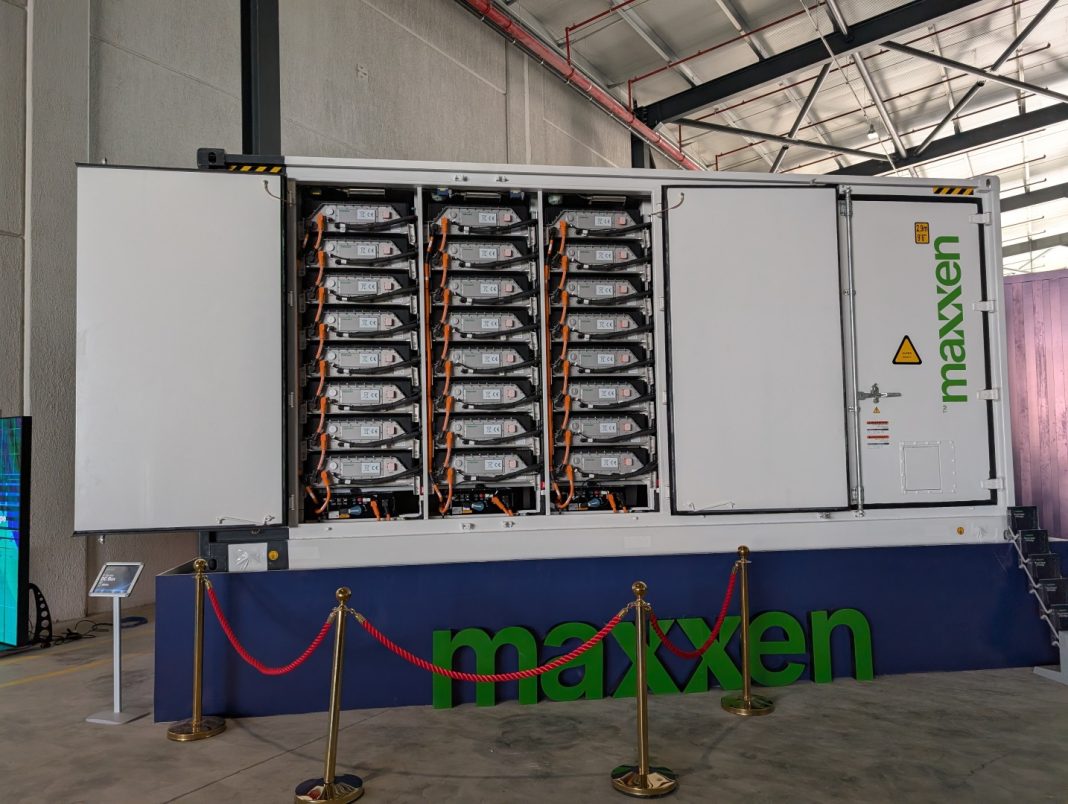
Maxxen, which is headquartered in Switzerland, produces two main products: its 5 MWh DC Box container, and offers an optional MV Power Station dubbed MV Box, with a power output of 2.5 MW, 5.0 MW or 10 MW, and facility certifications include TÜV Accredited, ISO 27001, LEED Certified (100% self-sustained).
With a nameplate capacity of 5 GWh per year, and with current utilization at 1.5 GWh per year, the factory continues to ramp. The company announced that a total of 664 MWh has been sold across 21 global projects in the nine months from January 2026.
Maxxen emerged as a 100% owned subsidiary of Kontek Energy, a Turkish renewable energy specialist with more than 30 of engineering expertise. It built the Maxxen factory, and crucially, signed a layered agreement with Chinese battery cell and ESS manufacturer Hithium, which currently supplies 314 Ah cells for manufacture, each around approximately 1 kWh, with 5,000 packing into a single DC Box.
Maxxen’s products are essentially Hithium-spec, assembled in Europe, with significantly deep agreements between the two parties, though no ownership or equity stakes have been taken by either party. Hithium was chosen, among many criteria, for their strict focus on ESS.
The facility, ESS News was told, represented a $35 million investment designed to supply European, Middle Eastern, and regional utility-scale projects. Maxxen reps further indicated that the site will transition to using 587 Ah cells by end-2027.
Utility-scale BESS assembly
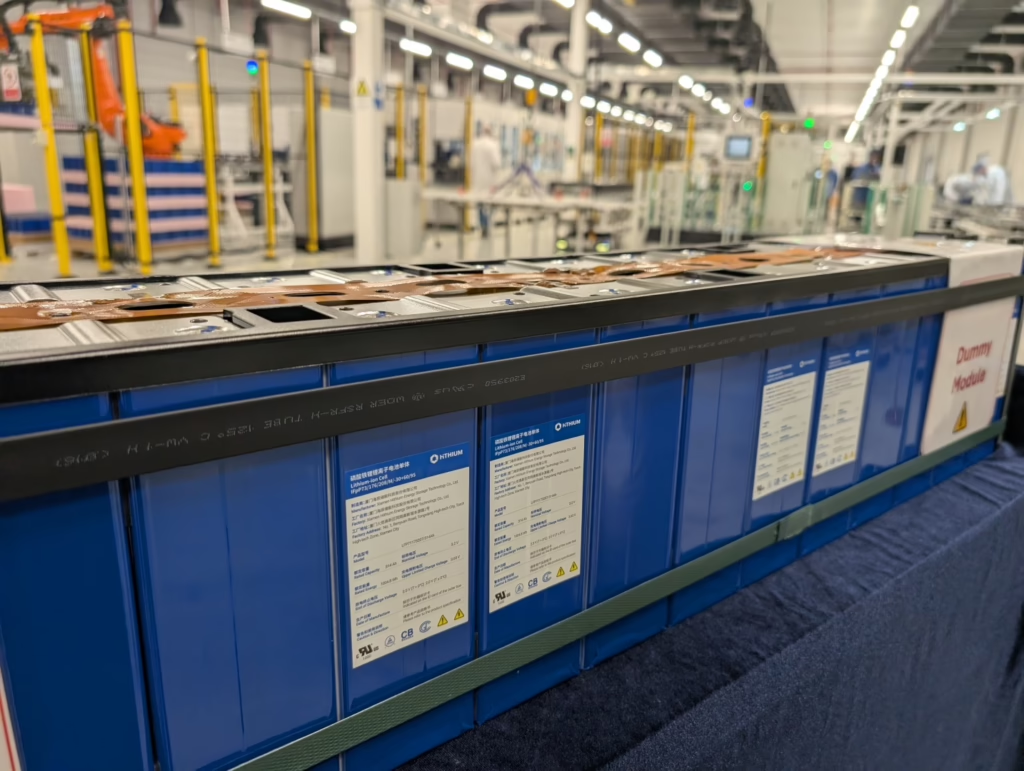
Pleasingly, media tours of the ESS assembly factory were allowed to capture photos and videos of the product line, which included detailed explanations, questions, and flow chart visuals to aid understanding.
The following guide walk through the plant’s four main assembly stages. Automation is used throughout, but still involves on-site staff for key actions, including visual inspections. KUKA robotic arms are in use across the facility for picking and packing cells and modules.
The Cell Pre-Charging & Testing stage is completely automated, where Hithium-branded Prismatic LFP cells, each rated at 314 Ah and 3.2 V nominal, undergo automated open-circuit voltage (OCV) testing and 100% barcode and QR-code scanning for digital traceability.
The facility treats each cell as an unknown, and each large prismatic and bright blue cell undergoes controlled pre-charging and testing to activate and stabilize chemistry. Energy used in this process is, for want of a better term, recycled and captured within the site’s own energy storage, fulfilling LEED self-sustained energy criteria. Charging and discharging losses through heat are compensated by solar generation in the day.
This section of the factory is sealed off as a clean room, under positive ventilation, producing a distinct white-noise din. In the case of a fire caused by a cell, strict safety routines are followed, and the room can be evacuated completely of oxygen within 100 seconds.
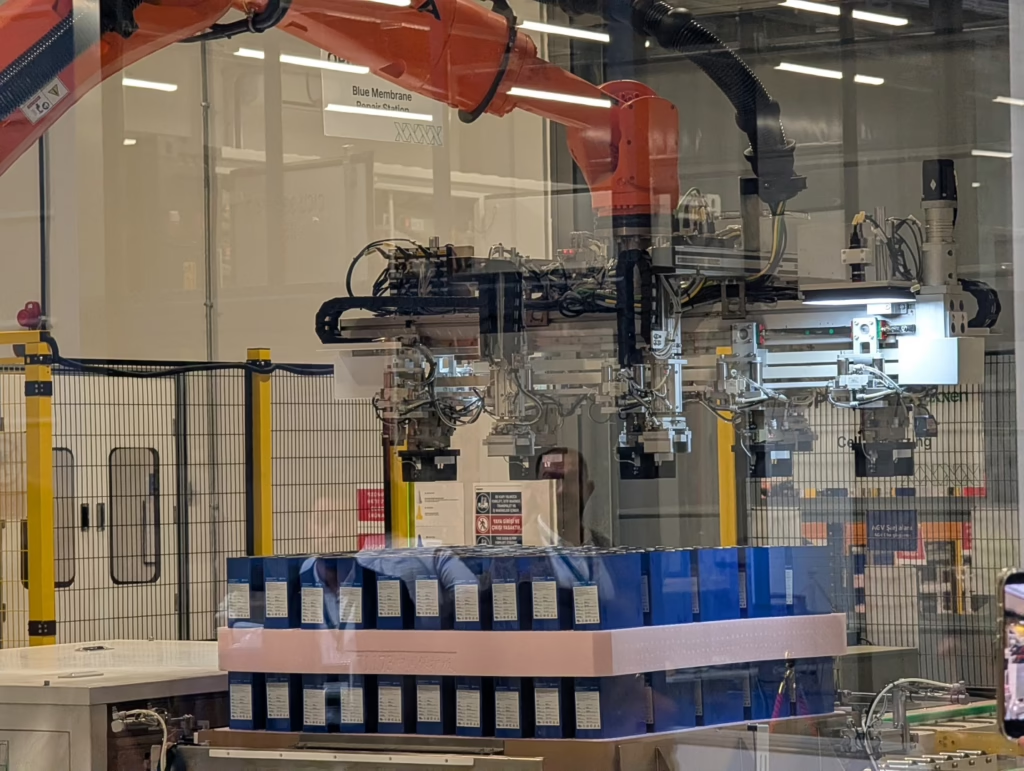
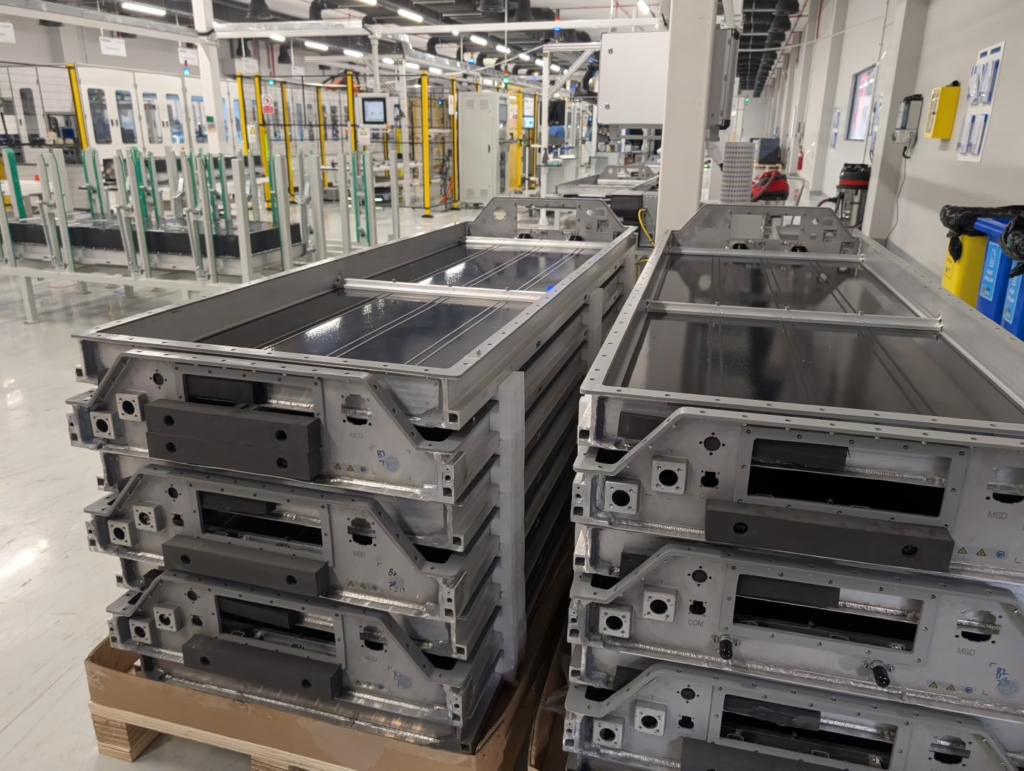
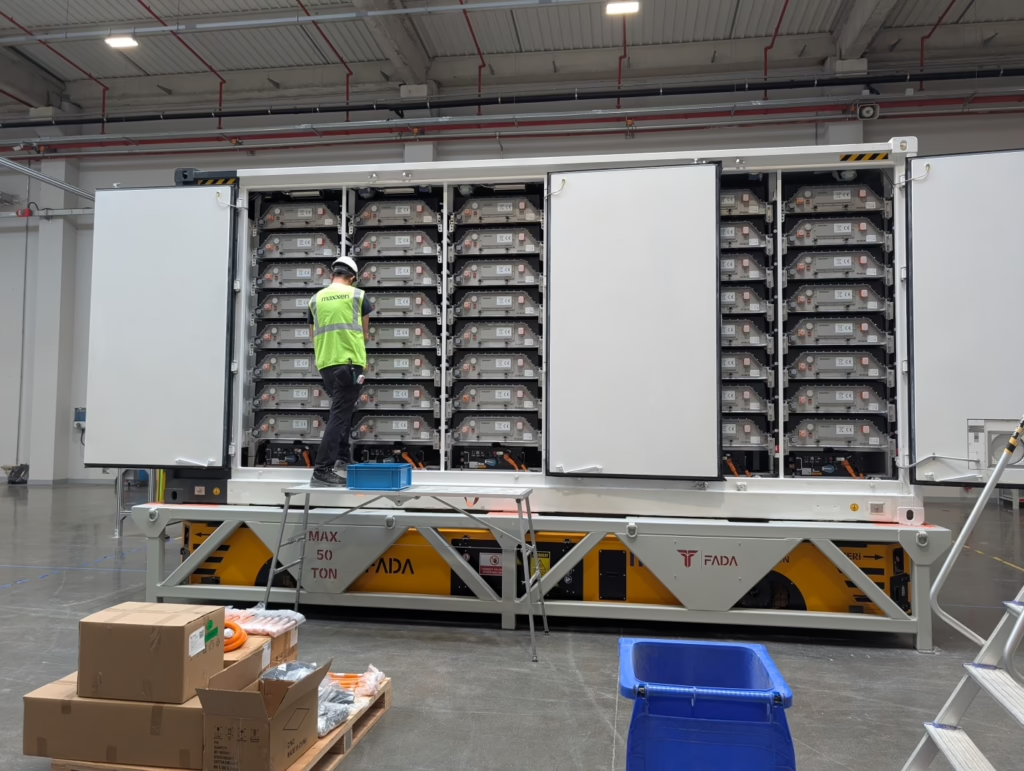
The second stage is Robotic Stacking & Laser Welding. KUKA robotic arms place cells into module structures, stacking cells into 2P52S module configurations (104 cells per module). End plates are installed, and the cell stack undergoes mechanical steel belt compression and PET auto-strapping. Pole surfaces on the cell are laser-cleaned to remove oxidation, and a flex-printed Cell Contact System (CCS) and circuit is installed. Laser welding joins the connection points. Automated 3D CCD cameras check the welds, followed by a final electrical safety test. Each module then weighs approximately 667 kg.
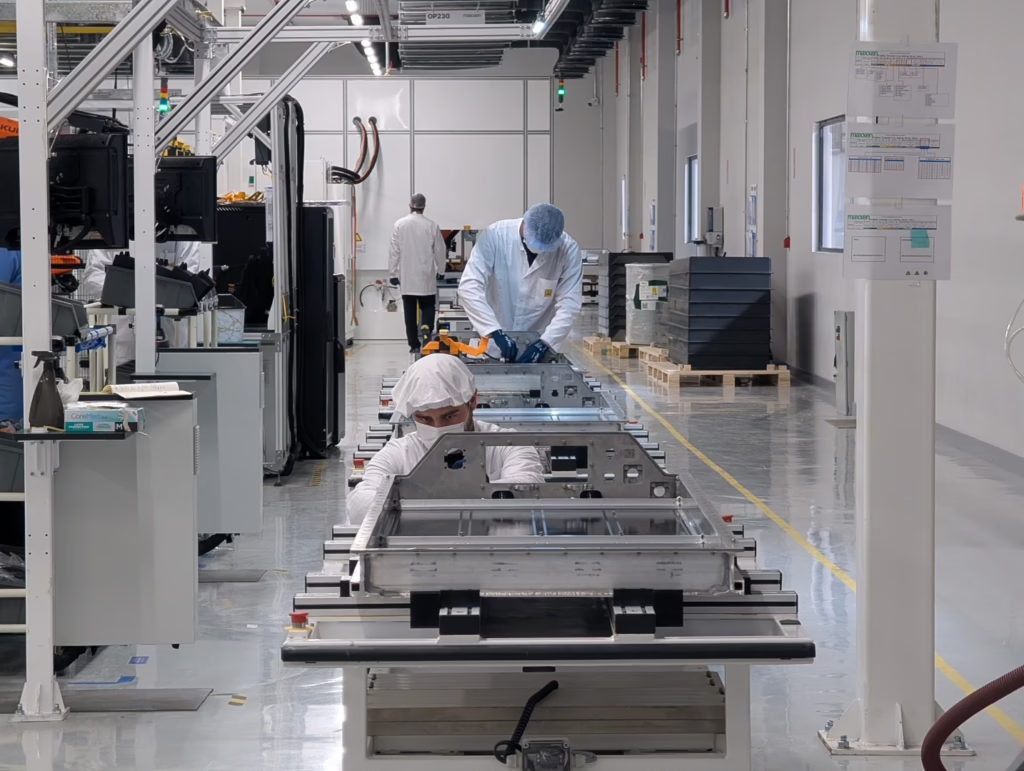
The third stage relates to the liquid-cooling setup, which keeps temperatures in check. Cells are bonded onto the thermal cooling plate using a glue described as a ‘structural thermal adhesive’. In this stage, the Coolant & Water Verification, each rack of cells and module cooling manifolds undergo pressurized liquid chiller leak testing and water verification checks prior to container loading.
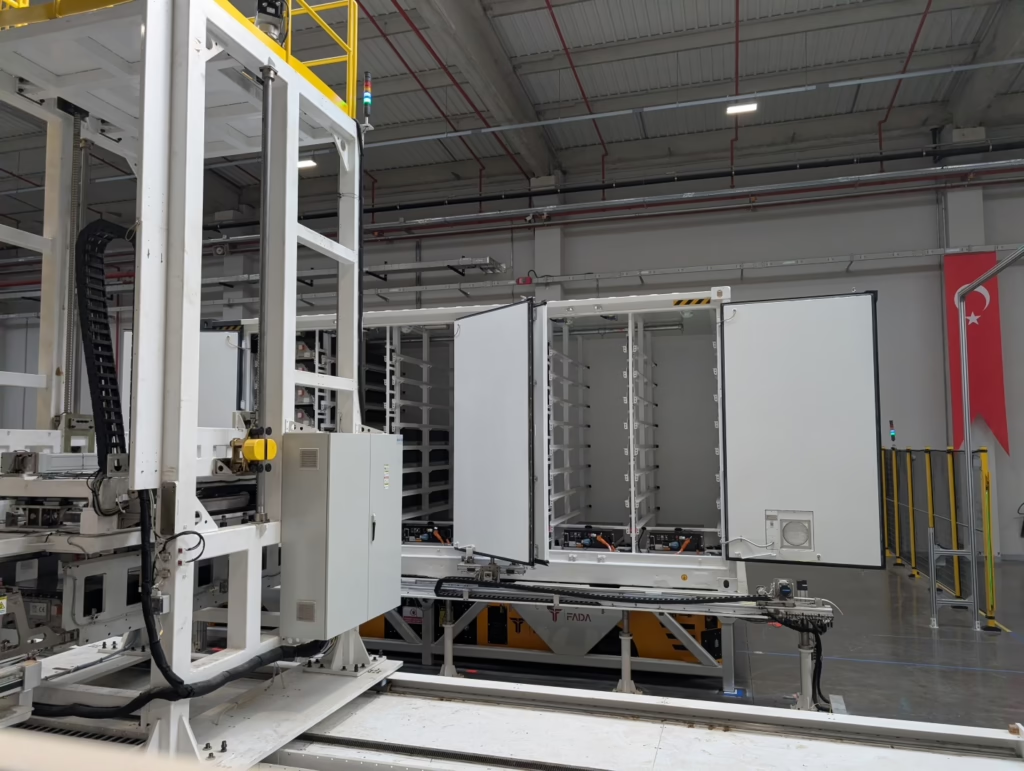
In the final stage, Container Integration & Load Testing, which was the most manual and labor-intensive, finished battery modules are transferred via overhead cranes onto AGV (Automated Guided Vehicle) platforms, which position and slide each 667 kg rack into a standard 20ft container enclosure. Separately, power electronics, liquid cooling units and pumps, HVAC compartments, and automated fire protection systems are integrated, away from the battery cell line, before full functional load testing.
Logistics and supply chains
Operational takeaway from the Aydin includes how Maxxen’s supply-chain strategy works. To hedge against maritime shipping delays from Asia (such as Red Sea vessels needing to reroute around the horn of Africa), Maxxen maintains a 200 to 250 MWh warehouse buffer stock of battery cells and raw materials directly on site.
This inventory buffer allows Maxxen to offer deliveries within 1 to 2 weeks by truck across mainland Europe (including, for example, Germany, Romania, Spain), enabling developers to receive containerized batteries when needed, and not earlier.
Target markets at this stage include Southern Europe, the Middle East, the Balkans, and regional utility-scale grid projects across mainland Europe.
In terms of certifications, Maxxen holds 27 official safety certificates directly under its own name. In terms of the so-called large-scale fire test, it relies on Hithium’s UL 9540A burn test data for container-level fire validation.
Early successes
In its first nine months of operation (January to September), the factory delivered 664 MWh across 21 global projects, capturing an estimated 5% market share in its European target segment.
Vendor financing, a key pitch of Maxxen’s and one that has attracted considerable commercial interest.
Ruben Valiente, Maxxen’s Managing Director, told ESS News, “We have received letters of intent for 4 GWh. We have signed 2 or 3 activation fees already to deploy this over the next 6 to 12 months, and once the contract is signed, we are bound to commit and obliged to deliver.”