Original Coverage & Source Attribution: trinidadexpress.com
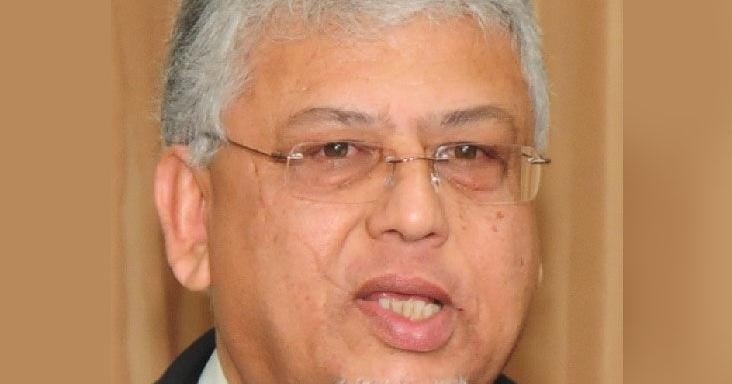
Pro Vice Chancellor for Planning and Development at The University of the West Indies Dr Bhoe Tewarie has described the country’s economic position as one in which the Government was struggling to stay afloat while attempting to move against difficult economic currents.
Speaking at a virtual discussion hosted by The University of the West Indies’ Trade and Development Economic Unit (TEDU) on Friday night, the former government minister said the country’s economic challenges would not disappear even if natural gas production increased through upcoming projects. He said: “This is a budget which says to the country that we are going to find a way to float, and right now we just have to tread water and float. We can’t do much more than that. We know that we will need a lifeboat, and we know that we need time because it is not on our side, but little by little we will get there.”
Tewarie said the Government had inherited a difficult economic situation and had taken steps to stabilise the economy, including measures to improve tax collection, strengthen Customs enforcement and broaden financial inclusion.
However, he said those measures had not yet translated into recovery or a clear growth path.
“The Government inherited an awful situation. I don’t think that can be argued against. They have met the challenge and stabilised the economy, but there is no recovery and there is no clear growth path,” he said.
Tewarie also warned that approximately $70 billion in existing public debt would fall due within the next five years, creating a significant refinancing challenge.
He cautioned that efforts to increase foreign exchange earnings through exports and import substitution would not necessarily increase the country’s overall supply of foreign exchange.
“It is the same pool of forex that you are dealing with; you are not increasing it. It is only a redirection of what is in the pool,” he said.
Tewarie said diversification, investment and exports remained major challenges, with limited growth in exports and insufficient investment in new areas of economic activity.
He also raised concern about the country’s political climate, warning that confrontational rhetoric was adding to the pressures facing citizens.
“The economic climate is extremely challenging. The financial system situation, in my view, is equivalent to one of entrapment. And the political climate, in my view, is much too adversarial. It is much too confrontational,” he said.
Tewarie warned that racial tensions were also surfacing.
“I think some of the political rhetoric is stoking racial polarisation and creating the conditions for instability in Trinidad and Tobago,” he said.
He urged both the Government and Opposition to be more measured in their public statements.
“I would advise that both the Government and the Opposition be much more judicious in the way they manage the tone of the politics and the language of engagement as we navigate this very, very difficult period in Trinidad and Tobago’s economic and political history,” he said.
‘Hung out to dry’
Also speaking at the virtual event, businessman Vivek Charran said small and medium-sized enterprises had felt the effects of the economic downturn over the past decade and needed greater support to become part of the country’s diversification drive.
“As someone who’s been representing SMEs and as an owner of a family business as well, we acutely felt the downturn, the contraction of the economy over those last, let’s say, ten years. We felt that we weren’t being listened to. We felt that we were being hung out to dry, that we were being abandoned in a sense, and we were being marginalised and blamed for things that really weren’t within our responsibility,” he said.
Charran said the budget did not contain direct delivery for SMEs, but argued that small businesses had an important role to play in building the non-energy sector.
“More than ever, what the opportunity presents itself in the economy for is taking the risk to diversify as a way to survive, augment your current income flow and prepare for the future,” he said.
He identified access to financing as one of the biggest barriers facing small businesses seeking to enter manufacturing.
“One of the first barriers is actually getting finance from the commercial banks,” Charran said, explaining that many SMEs were already carrying debt, facing lower sales and struggling with cash flow.
He said banks often required collateral valued at one and a half to two times the amount being invested, making it difficult for smaller businesses to obtain financing for expansion.
Charran also called for greater investment in agriculture and food production, arguing that reducing imports was just as important as earning foreign exchange.
“We often talk about what can we do as an economy to earn more forex. But equally important is what do we need to do as an economy to save forex?” he said.
He pointed to the country’s dairy import bill, estimated at between $300 million and $350 million annually, and said local producers had opportunities to supply more of the domestic market.
“If we can attract investment into dairy and then start to produce our own milk, increase our milk production, that is an opportunity,” he said.
Charran said SMEs could also explore egg production, broiler farming, leafy greens and hydroponics to meet local demand and reduce dependence on imported food.
He further noted that businesses could not simply wait for Government intervention while the economy was being rebuilt.
“Asking the Government alone what they could do or what they’re doing with the economy is not enough. We need to ask ourselves what are we prepared to do to ensure our survival and to initiate some growth for ourselves,” he said.