Original Coverage & Source Attribution: channel4news.substack.com
By Georg von Harrach
EU diplomats have begun poring over drafts for new agreements between the UK and the EU reached after months of negotiations.
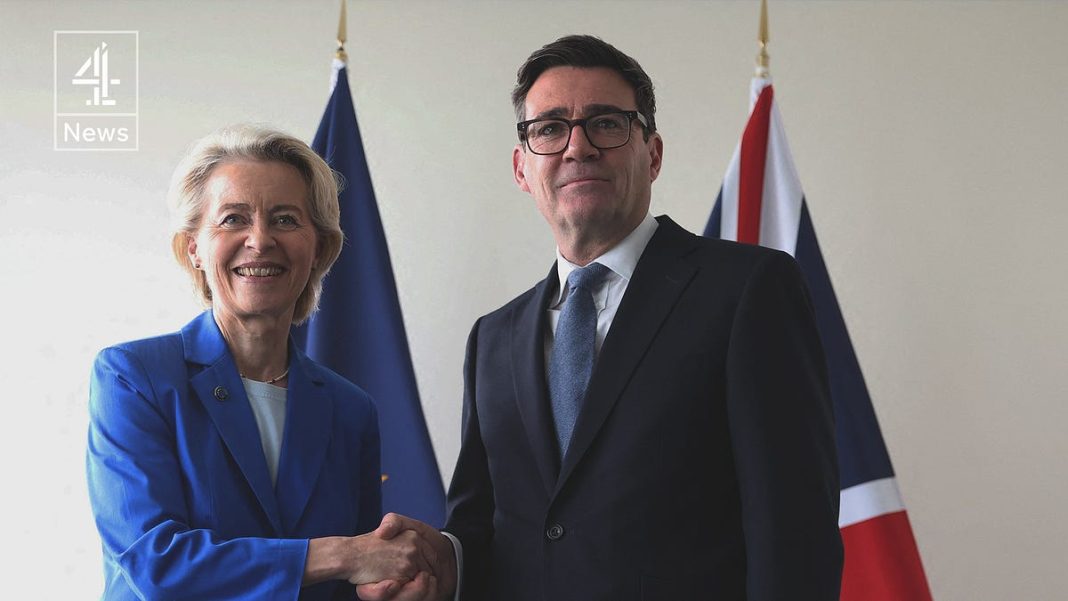
The deals, which are expected to be signed off by Ursula von der Leyen and Andy Burnham, both pictured above, at a dedicated summit in two weeks’ time, are not insignificant. For some sectors they will bring about the biggest changes to UK-EU trade since Britain left the European Union.
But they are small fry compared to the leap back into – or at least towards – the arms of the European Union that the Prime Minister now appears to favour.
Just a few months before taking office, Andy Burnham said that re-running Brexit arguments was “the last thing we should do”.
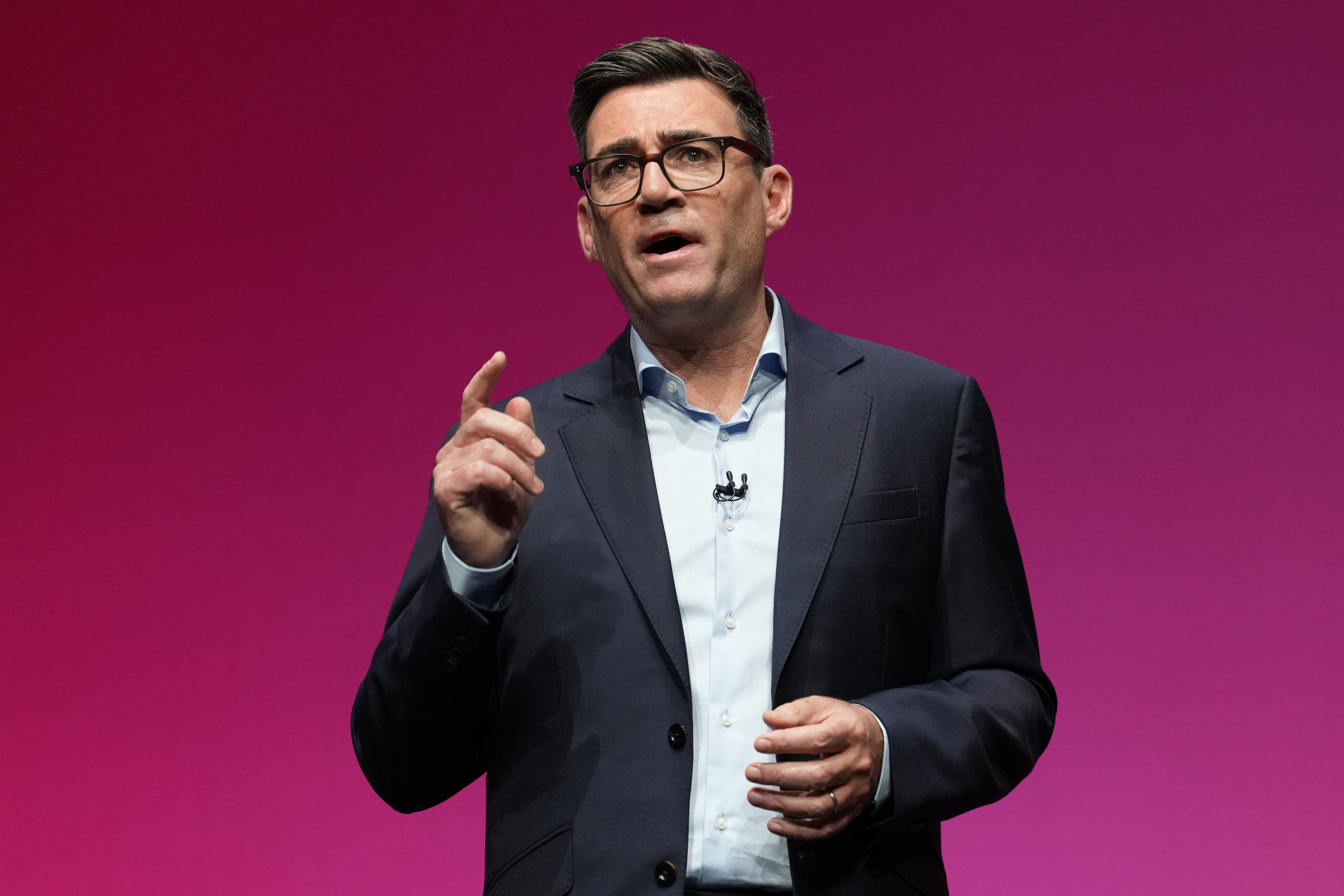
But at the Labour Party conference in September, he announced that Brexit “is not working” and instead promised to lay out “different options for Britain’s long-term relationship” with the European Union, including the possibility of rejoining.
“I would like to see that happen” in my lifetime, Burnham reiterated last week.
Britain’s current deal with the EU was tortuously negotiated on the basis of the Brexit mantra “take back control”.
Britain regained the power to make its own trade deals with other parts of the world, control European immigration numbers and set its own rules in areas from farming to the environment to tech and trading standards.

Could Britain actually rejoin the EU?
But British businesses lost the ability to sell into the EU’s market of 450 million people without considerable friction and expense. And both Brits and Europeans lost the mutual right to live, work and study in each others’ countries.
The Brexit agreements have not remained static though.
Since the initial deals – the Withdrawal Agreement and the Trade and Cooperation Agreement – there have been various attempts to tinker in the hope of easing the pain.
In 2023, a new agreement – branded the Windsor Framework – was reached to ease trade between Britain and Northern Ireland which was causing friction both politically and economically within the UK.
In 2024, the UK rejoined Copernicus, the EU’s space and satellite programme and the EU’s €95.5 billion Horizon programme that funds scientific research.
And from January next year, UK students will once again be able to spend a year abroad at European universities as Britain rejoins the Erasmus exchange programme.
All of these deals have come at a cost to British taxpayers who must foot the EU’s participation fees – totalling around £3 billion per year – that come free of charge to the EU’s 27 existing member states.
The government says that it makes decisions based on a careful cost-benefit analysis and that has sometimes meant saying no.
Last year, talks to join the EU’s €150bn SAFE defence fund collapsed after the UK said the entry fee was too high, a warning that negotiations do not always go the way you would like.
At the summit in two weeks’ time, the UK and EU are expected to agree to allow British food producers to export to the European Union without the need for expensive checks.
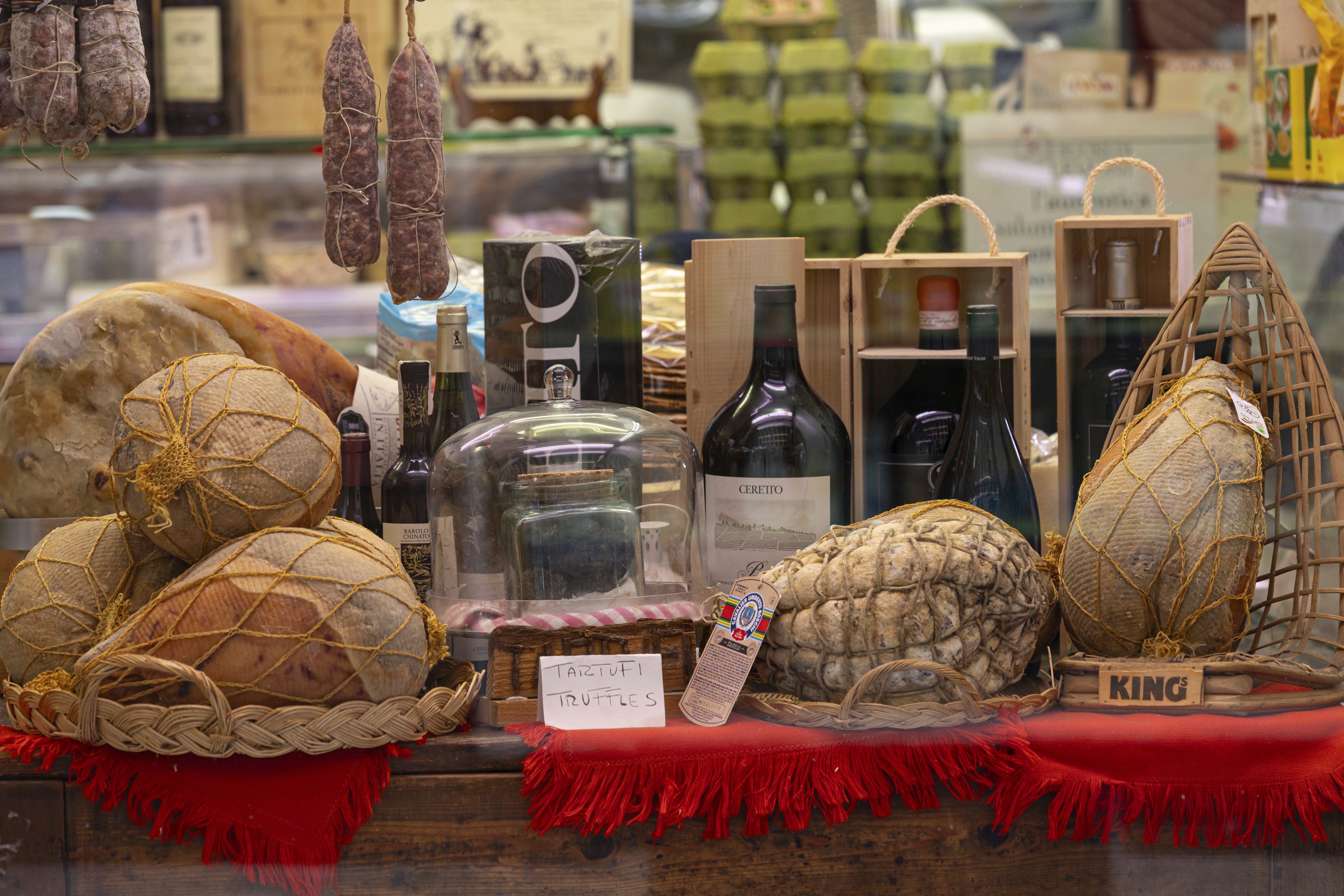
Some exports of fresh sausages and shellfish have effectively been banned since Brexit, but may now be able to resume.
And pet owners look set to regain the use of the EU pet passport scheme to take their animals on holiday.
There will also be an agreement that avoids the need for UK exporters to pay the EU’s so-called carbon border tax.
10 years of Brexit: What has happened since?
In exchange, the UK will agree to sign up to all EU animal and food safety laws over which it will have no tangible say.
Burnham and von der Leyen are also expected to sign off on a limited ‘Youth Experience’ scheme.
As one diplomat put it, the scheme will allow a limited number of young Brits to go and work as ski instructors in the alps and for young Europeans to work as au pairs in Britain, for example.
Other “negotiations will continue beyond the summit”, the EU’s negotiator, Maroš Šefčovič, pictured below, has admitted.
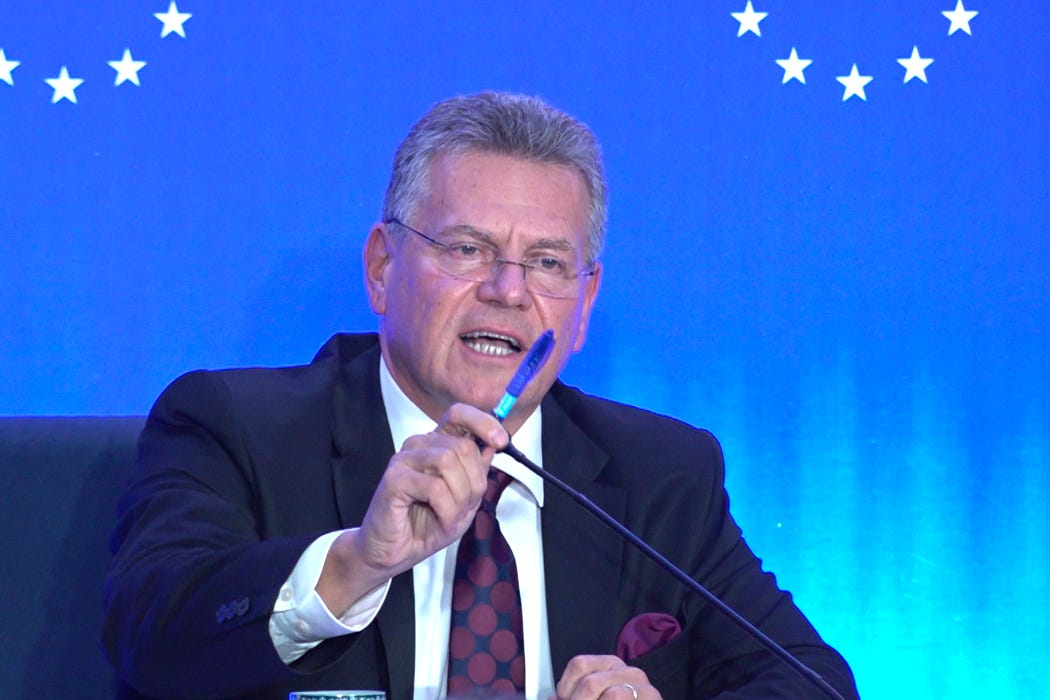
But that work would become academic if the UK now decided to rejoin the EU or cosy up close with the kind of relationship the EU has with Norway.
Senior EU politicians I have spoken to are enthusiastic about that prospect of the UK coming back.
The more sober of them warn – just like in the original Brexit negotiations – there will be no cherry picking i.e. that if the UK wants in, it’s got to give as well as take.
The Conservatives are sceptical about Andy Burnham’s chances.
“He is not going to get a better deal,” Kemi Badenoch, pictured below, said, speaking in the House of Commons last month. “The EU are tough negotiators,” she said.
And there are plenty of areas where selling closer relations to the British public could come unstuck.
Take migration. Under the EU’s new Pact on Migration and Asylum, EU member states must take a share of migrants from front line states like Greece and Italy or else pay a hefty fee to ensure their processing and welfare.
Or how about trade. The EU has imposed high tariffs on Chinese electric car exports accused of undercutting European automotive manufacturing. If the UK rejoins, or signs up to EU rules, it would have to do the same, likely resulting in higher car prices in Britain too.
And then there is the emotion that surrounds all Brexit questions.
Last time – 10 years ago now – the country was split down the middle by the referendum. Do we really want to go there again?
Last week, Downing Street was forced to backtrack after the Prime Minister appeared to suggest that joining EU freedom of movement (the right to live, work and study in Europe) could be put to a public vote.

Was Brexit self-harm or ‘taking back control’?
Visiting Brussels yesterday, Defence Secretary, Wes Streeting, appeared to be on a mission to lower expectations.
“You can’t just leave the European Union and then expect to turn the switch back on and expect to rejoin the European Union, I don’t think that’s where we are,” he warned.
“Our immediate priority is securing a successful outcome at the summit”, Andy Burnham told MPs in the Commons last month.
“I believe we should then set up a serious dialogue about the different options for our relationship in the long term. At every stage, the British public will be the boss.”
Share Channel 4 News
Leave a comment