




Original Coverage & Source Attribution: parametric-architecture.com
Architecture is experiencing a technological shift that goes beyond the introduction of new software. Artificial intelligence can now produce convincing building images in seconds, while computational design systems can generate thousands of architectural configurations according to carefully defined rules.
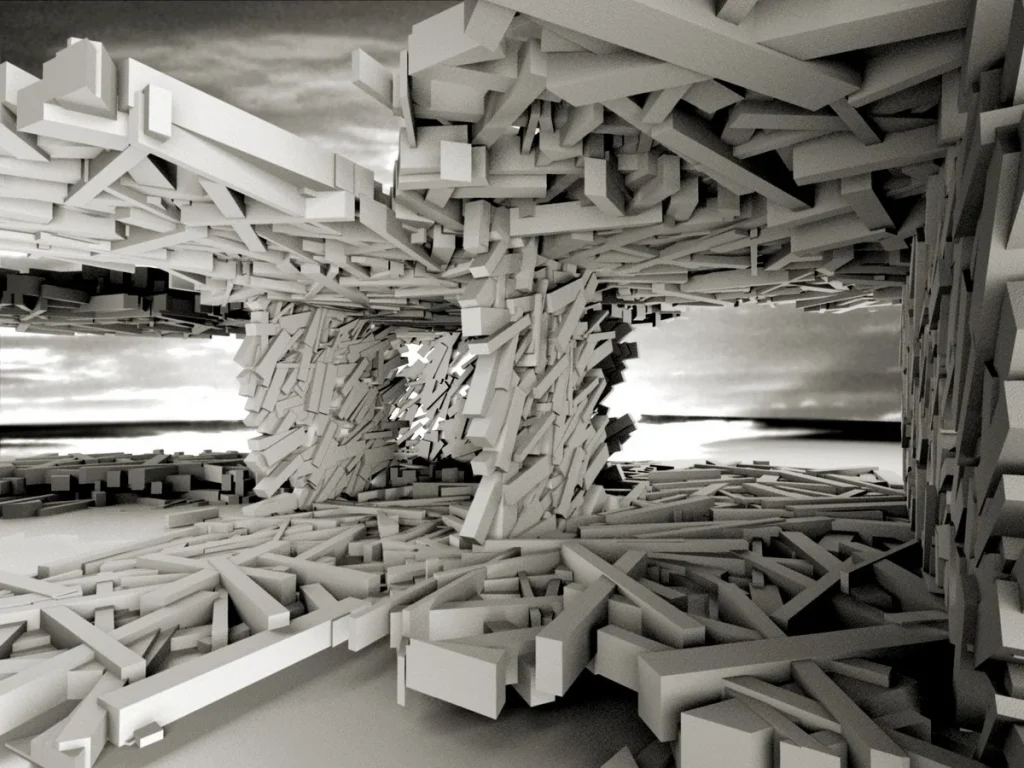
Both approaches are frequently grouped under the label of generative design, creating confusion about what these technologies actually do, how they differ, and where they belong in architectural practice. The distinction matters because an attractive image, a measurable design alternative, and a building that can be constructed are three fundamentally different outcomes.
Understanding the relationship between generative design and generative AI requires looking beyond their shared ability to produce multiple possibilities. One operates primarily through explicit parameters, relationships, constraints, and computational logic. The other learns patterns from data and uses those patterns to generate new content. Their capabilities overlap, but their underlying processes, limitations, and implications for architectural decision-making remain distinct.

Two Technologies, Two Different Ways of Thinking
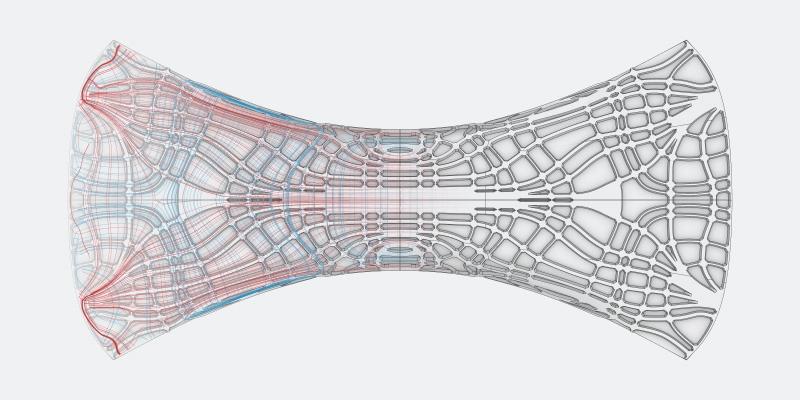
Generative design is a computational approach in which architects establish a system of rules, parameters, constraints, and objectives to explore possible design solutions. Rather than manually developing every alternative, designers construct a framework that allows software to generate and evaluate variations. Building orientation, structural spans, circulation distances, daylight access, usable floor area, and energy performance can become variables within this system.
A generative design workflow might investigate how the arrangement of residential units affects daylight distribution, how a building’s massing influences pedestrian-level wind conditions, or how a structural grid can accommodate different spatial configurations. Depending on the method, the system can generate alternatives randomly, systematically, or through optimization algorithms that search for solutions meeting specified objectives. The architect defines the problem, establishes the rules, interprets the results, and decides which compromises are acceptable.
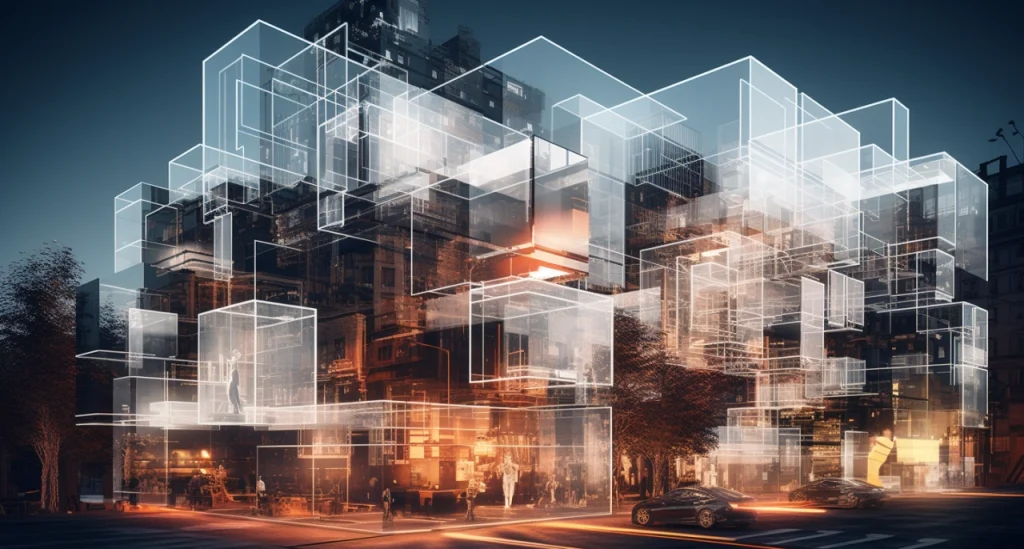
Generative AI approaches architectural problems differently. Using models trained on large datasets, these systems generate new content based on learned statistical relationships. Text-to-image tools can transform a written description into an architectural visualization, while language models can assist with design briefs, preliminary programming, technical explanations, and code generation. More specialized AI systems can also support geometry generation, image segmentation, prediction, and other computational tasks.
The distinction is not simply that generative design produces technical results while generative AI produces images. AI can generate structured geometry, and conventional generative design systems can produce highly expressive forms. The essential difference concerns how their outputs are produced and controlled. In rule-based computational design, relationships are explicitly encoded by the designer. In generative AI, outputs emerge from patterns learned during training and from the instructions and conditions supplied at generation time.
Generative Design: Making Architectural Decisions Measurable
The greatest strength of generative design is its capacity to connect architectural alternatives to explicit criteria. It allows architects to investigate complex relationships that would be difficult to evaluate through manual iteration alone. This becomes particularly valuable when projects involve competing requirements, limited resources, environmental pressures, and demanding technical constraints.
Consider the design of a university building in a hot climate. The architectural team may need to balance daylight access, solar heat gain, natural ventilation, structural efficiency, and the distribution of teaching spaces. A parametric model can establish variables such as building depth, façade orientation, shading geometry, atrium dimensions, and window-to-wall ratios. Computational simulations can then assess how different configurations perform against selected criteria.
The result is not necessarily one perfect building. In many cases, the process produces a range of alternatives with different strengths and weaknesses. A configuration that maximizes daylight may increase cooling demand, while a compact building may reduce its external surface area but compromise certain spatial qualities. Multi-objective optimization makes these tensions visible rather than concealing them behind a single performance score.
Tools such as Grasshopper, Rhino, and Dynamo support this kind of computational workflow, while simulation engines and optimization methods extend the possibilities for testing alternatives. Their usefulness, however, depends on the quality of the model and the assumptions behind it. A sophisticated optimization algorithm cannot compensate for inaccurate environmental data, inappropriate performance targets, or a poorly formulated design problem.
This is where architectural judgment becomes indispensable. A computational system can identify solutions that perform well according to its objectives, but it cannot independently determine whether those objectives adequately represent the needs of the people who will occupy the building. Accessibility, cultural meaning, privacy, spatial dignity, and the character of public life are not automatically captured by measurable variables. They must be translated into meaningful evaluation criteria where possible and assessed through informed human interpretation where they cannot.

Generative AI: Expanding the Space of Architectural Imagination
Generative AI has attracted considerable attention in architecture because it lowers the time and effort required to produce visual alternatives. An architect can explore different material palettes, spatial atmospheres, façade expressions, landscape relationships, or conceptual narratives without constructing every option from scratch. This changes the pace of early-stage design and can make visual exploration accessible to people with limited experience in specialized rendering software.
For example, a design team developing a cultural center might use text-to-image generation to investigate contrasting architectural identities: a building integrated with its landscape, a more monumental civic composition, or a contemporary interpretation of local construction traditions. The images can help clients articulate preferences, challenge initial assumptions, and establish a visual direction before detailed modeling begins.
Yet the convenience of generating images introduces a serious professional risk. Visual plausibility can easily be mistaken for architectural feasibility. A convincing image may depict unsupported cantilevers, inconsistent structural systems, impossible junctions, arbitrary circulation routes, or building components that cannot be assembled as shown. Materials may look convincing without corresponding to realistic thicknesses, fixing methods, fire ratings, or weathering behavior.
The problem becomes more complicated when AI-generated images are used to communicate design intentions to clients or the public. The image can acquire the authority of a proposal even when it represents little more than a visual hypothesis. If the distinction between an exploratory image and a developed architectural solution is not made clear, expectations can become detached from what the project can realistically deliver.
Generative AI should therefore be understood as a powerful instrument for producing and testing ideas, not as an automatic substitute for architectural development. Its output becomes valuable when architects interrogate it, reconstruct its useful elements, and connect visual possibilities to spatial, environmental, structural, and material reasoning.

Where the Workflows Converge
The most interesting development is not the competition between generative design and generative AI, but their potential integration into a connected architectural process. Each can address the other’s limitations, provided their roles are clearly defined.
Imagine an architectural team designing a mid-rise residential building. Generative AI could support the initial exploration of architectural character, façade expression, material combinations, and relationships between the building and its urban context. The team could then translate selected concepts into a parametric model, define measurable variables, and generate alternatives that respond to site dimensions, daylight requirements, circulation standards, structural logic, and energy targets.
The process can also work in the opposite direction. A computational system might generate several technically viable massing options, which an AI tool can help visualize in different material or landscape contexts. These visualizations can make abstract alternatives easier to communicate, although they should not be treated as proof of performance or construction feasibility.
A more advanced workflow may use AI to assist with scripting, automate repetitive modeling tasks, classify design alternatives, or help designers interact with complex computational systems through natural language. Meanwhile, simulation and optimization tools can provide measurable feedback that grounds design development in project-specific conditions.
However, integration is not automatic. An image generated by an AI model does not necessarily contain reliable geometric information, and a parametric model does not automatically understand the architectural intentions expressed in a visualization. Moving between these environments requires interpretation, modeling, verification, and sometimes substantial reconstruction. The workflow becomes genuinely useful when information can be transferred reliably, not merely when several software packages appear in the same process diagram.

The Hidden Problem: What Counts as a Good Design?
Both technologies inherit the values embedded in the processes that guide them. In generative design, those values appear in the parameters, constraints, objective functions, and evaluation criteria selected by the architectural team. In generative AI, they are also influenced by training data, model architecture, prompting strategies, and the material that designers choose to accept or reject.
This raises questions that software demonstrations rarely address. Who decides what constitutes architectural quality? Which environmental impacts are measured? Whose spatial preferences influence the definition of success? What happens when a system optimizes a building for energy efficiency while overlooking the quality of its shared spaces?
Generative systems can reproduce the priorities of their designers without making those priorities more legitimate. If a housing project rewards floor-area efficiency above every other consideration, a computational system may produce highly efficient layouts that leave residents with poor access to daylight, inadequate privacy, or monotonous communal environments. The result may satisfy its numerical objectives while failing as a place to live.
Generative AI introduces another concern: the reproduction of familiar architectural imagery. Models trained on existing visual material can make established styles and widely circulated design conventions exceptionally easy to reproduce. This can accelerate exploration, but it can also encourage visual sameness, particularly when designers repeatedly rely on similar prompts and accept the first convincing results. Architectural originality requires more than combining recognizable stylistic elements in unfamiliar arrangements.
Neither problem can be solved by increasing computational power alone. Better tools may improve the quality of predictions, expand the number of alternatives, or make complex operations easier to perform. They cannot independently establish a defensible architectural position. That remains a cultural, ethical, and professional responsibility.
Rethinking the Architect’s Role
The emergence of these technologies does not make architectural expertise less important. It changes where that expertise is exercised. When software can generate numerous alternatives rapidly, the architect’s value increasingly lies in framing the problem, deciding which possibilities deserve investigation, interpreting conflicting evidence, and establishing a coherent relationship between technical performance and human experience.
This shift also has implications for architectural education. Students need more than the ability to operate AI tools or assemble parametric definitions. They need to understand how models represent buildings, where simulations become unreliable, how data influences outcomes, and why certain design criteria deserve priority over others. A student who can produce hundreds of variations without explaining their architectural significance has automated production without necessarily improving design thinking.
Professional practice faces a similar challenge. Firms adopting these tools should distinguish between genuine improvements in decision-making and the superficial appearance of technological sophistication. Automation is useful when it reduces repetitive work, reveals overlooked alternatives, or improves the reliability of design evaluation. It is less convincing when it simply generates more images, adds complexity to presentations, or shifts responsibility away from the people making consequential decisions.
There are also practical questions concerning authorship, intellectual property, data privacy, and professional liability. AI-generated content may incorporate stylistic patterns derived from training material, while automated workflows can make it difficult to identify who approved a particular design decision. Architectural offices need transparent review procedures and clear responsibilities, especially when generated outputs influence construction documents, regulatory submissions, or contractual commitments.
Toward a More Intelligent Architectural Workflow
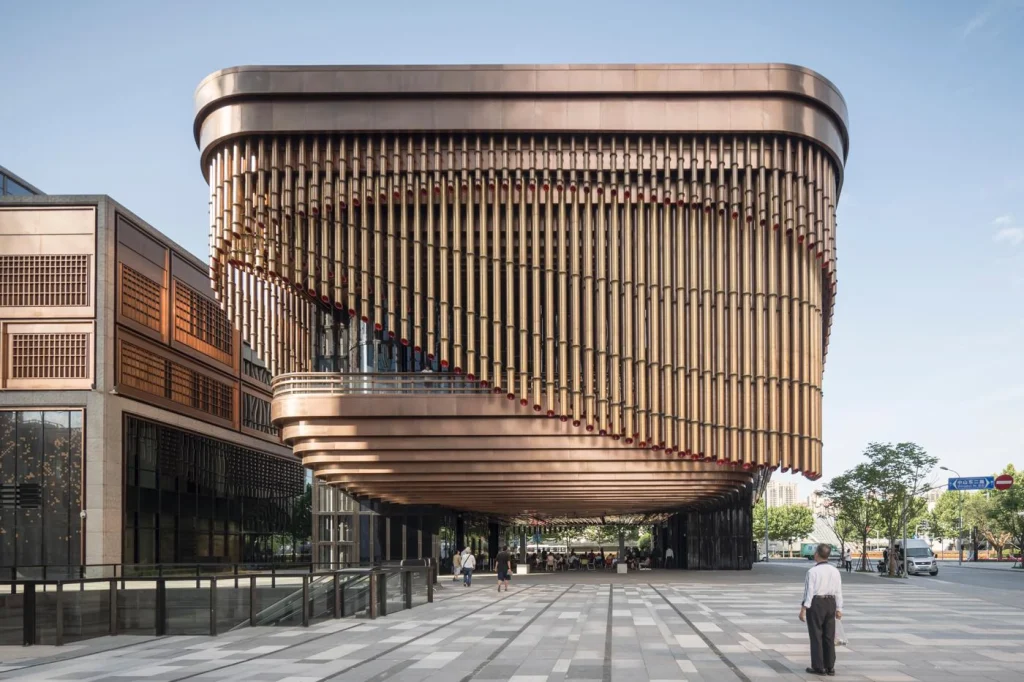
The next stage of computational architecture should not be measured by the number of alternatives a system can produce or the realism of its images. It should be judged by whether it helps architects make better-informed decisions, respond more thoughtfully to environmental and social conditions, and develop buildings that perform as intended.
Generative AI can expand the range of concepts that designers explore and improve the communication of architectural ideas. Generative design can structure that exploration around explicit relationships and measurable objectives. Together, they can support a workflow in which imagination generates questions, computation investigates consequences, and architectural judgment determines what should ultimately be built.
The crucial step is to resist treating either technology as an autonomous designer. Buildings are not simply visual compositions or optimization problems. They are long-lasting material interventions in people’s lives and in the ecosystems that support them. Their quality depends on decisions about resources, labor, accessibility, identity, comfort, and collective responsibility, many of which cannot be reduced to a generated image or a performance score.
The future of architectural design will therefore depend less on choosing between generative design and generative AI than on understanding what each can contribute, what each leaves unresolved, and how their outputs should be scrutinized. Technology can widen the field of possibilities, but it cannot relieve architects of the obligation to decide which possibilities are worth pursuing.