Original Coverage & Source Attribution: www.psychologytoday.com
Readers of a certain vintage will remember Stanley Kubrick’s classic film 2001: A Space Odyssey. Released in 1968, the movie is a commentary on the ever-changing relationship of our species to technology—from the primitive bone weapons of our hominid ancestors to the majestic spaceships imagined for 2001 to the mind-transforming circumstances that await future centuries. Mysterious “black monoliths,” radio waves to distant planets, and superior alien intelligences are parts of the plot.
As in many works of science fiction, one question dominates: Will the technologies we build to comprehend and control the world remain our faithful servants, or will we surrender, ultimately, to their machinations?
In the movie, that issue centers on the behavior of a powerful computer, HAL 9000, which controls the mission and operations of the Discovery spaceship, traveling to Jupiter with a crew of five. The two functioning crew members (three are in suspended animation) come to believe that the computer is making certain errors. They decide to shut it down. HAL discovers their scheme by reading their whispering lips. Life support systems are turned off. A solitary survivor pits his wits against the machine’s.
Concerns of this sort are now at the forefront of public consciousness. Who among us does not simultaneously marvel at and fear the advances in computer engineering termed “artificial intelligence”? Will high-powered computers provide the informational resources and technical probity to address a wide range of unsolved problems, perhaps correcting conditions like cancer and Alzheimer’s or discovering new sources of food and energy? Alternatively, will AI be used for new forms of weaponry, surveillance, and environmental degradation? Are we creating a world where only machines survive?
Personalizing the machine
In the movie, the computer HAL, a clever step-down from the IBM acronym, receives a human persona. That is, he speaks English with a masculine voice. He engages in ordinary conversation. He has (what seem to be) “feelings” and behavioral hesitations. He doesn’t want to “die.” Curiously, audiences are both sympathetic to his wish to survive and outraged by his decision to kill.
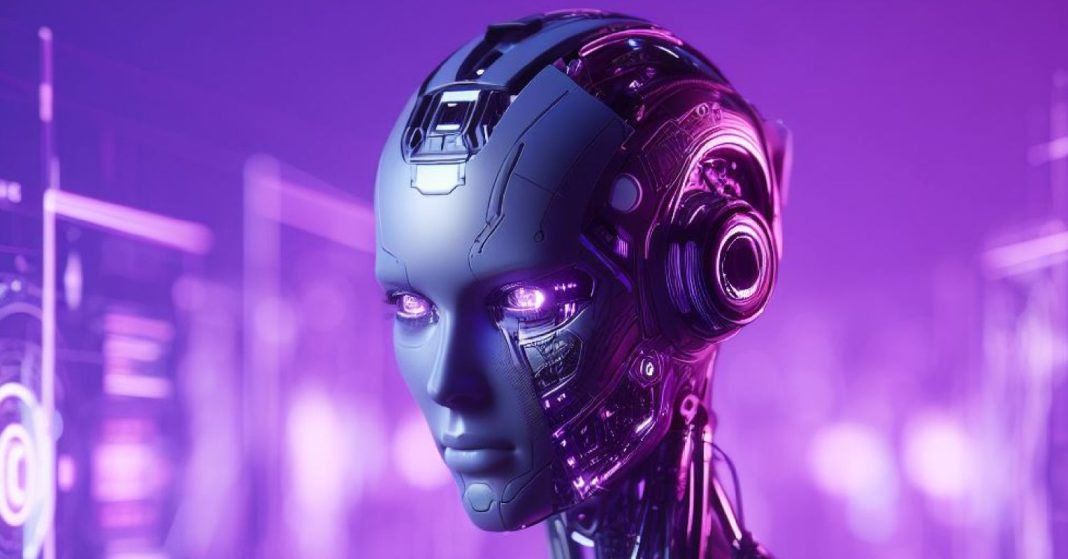
Today, people have grown accustomed to computer companies using human names and personas for certain products. Commonly, these chatbots, AI assistants, and customer service agents have female names and voices. For example, Apple has its Siri, Amazon its Alexa, and Microsoft its Cortana. Upgrades of these programs adjust them to the accent and speech pattern of the user.
Feminine personas are common for agents offering forms of personal assistance like information retrieval, scheduling, and management of home environments. Male personas are typical for medical, legal, and technical services. Think of IBM’s cognitive system Watson and digital legal expert Ross. As science writer Ramona Vijeyarasa summarizes, feminine personas are meant to serve; masculine ones to instruct.
In either case, corporate branding of this sort is meant to soften, guide, and otherwise facilitate access to a network of distant machines whose operations are beyond the ken of their users.
In an age of advertising and public relations, most of us are familiar with these attempts to attract and guide consumers. Companies encouraging access to their premises put good-looking, well-spoken, younger adults at entry points. Often, these are female. Commonly, we learn only their first names. They greet us with smiling faces. We are treated as “clients,” “guests,” or even “members.” An ethic of courteous familiarity prevails.
The same techniques apply to advertising. Inevitably, companies are fronted by clever, amusing, approachable characters. Sometimes, animal characters are created; more often, human actors (even celebrities playing softened versions of themselves) pretend to be “reps” for the company in question. Through repeated exposure, we come to like and trust their images. This is the case even for portrayals of personal injury lawyers. These “attack dogs” are loyal to us. They’re on our side. So, encouraged, we call that online insurance company or window-replacement chain.
I emphasize that this process—of personalizing the abstract and inanimate—is a more general proclivity of humans. Just as we give our close friends and family “pet names” or “nicknames” (to indicate special relationships to them), so we mark our possessions with endearing monikers and symbols.
This is especially true for personal conveyances—ships, planes, and the like—whose proper conduct we rely on for our safety. Boats are “christened.” Wartime flight crews decorate their planes with improvised names, cartoons, and other forms of “nose art.” Ideally, the machine reciprocates our blessing; it cares for us as we do it.
Other possessions receive personal markings. Think of the rifles of legendary frontiersmen, like Davy Crockett’s Old Betsy or Daniel Boone’s Old Tick-Licker. There are famous guitars like B.B. King’s Lucille and Willie Nelson’s Trigger. Cars and trucks commonly receive names, especially if they are old and quirky. Tradespeople may name their heavy equipment. Again, the principle is to establish a relationship with an entity whose problematic well-being supports our own.
I can report that my own friends and family commonly name their devices. These include cellphones, washing machines, vacuums, even certain computer apps. Usually, the devices get feminine names. Always, they are perceived as something that may not function as the possessor intends.
Can machines reciprocate our affection?
Last month, the New York Times reported on Anthropic’s series of consultations with religious and ethical leaders. The purpose of the meetings was to consider the extent to which that company’s AI model, Claude, can be considered “conscious,” and thereby possessed of other human possibilities like morality and emotion. Can AI models exhibit human behavior and express feelings like anger and love?
The sessions produced no general agreement. However, it seems pertinent here to maintain some differences between machine-based and human consciousness. To be sure, computers have made vast strides in their ability to simulate, and in many cases to exceed, human thought and learning. For the most part, this has meant interpreting awareness as a process of cognition—of recognizing, logically analyzing, and preparing coherent responses to occurrences.
More precisely, computers excel at what is sometimes called “discursive” symbolism, that is, identifying ideas and events as tightly conscripted units of meaning. Extremely, these patterns can be represented mathematically. No human can match the ability of modern computers to notice, categorize, and logically analyze. The most powerful computers can inspect and regulate their own processes in these terms. Should this meta-awareness be termed “consciousness”?
Humans, by contrast, specialize in “non-discursive” symbolism, that is, in meanings that are fluid, situational, ambiguous, and otherwise “open.” We enjoy poetry, music, and art, though we make no claims to “understand” these fully. We avidly play, creating and dissembling meanings as we go. We accept moral and emotional ambiguity, perhaps loving and hating something—or someone—at the same time. We laugh at “happy” accidents and errors.
Profoundly, we have relationships with otherness that reflect all these themes. Not just logicians, we succumb to physiological urges. Our desire for cognitive accuracy is tempered by our search for utility, emotional satisfaction, and moral goodness as well. Other people’s needs and commitments may be as important to us as our own.
We give ourselves to circumstances in all these ways. No machine can match those commitments.