Original Coverage & Source Attribution: www.greenbuildingafrica.co.za
- A study of a proposed 200 MW electrolyser in Rotterdam found that all three electricity sourcing models remained unbankable without policy support.
- Fifteen year hydrogen Contracts for Difference covering the full production volume sharply reduced financial risk, especially for projects integrated with renewable generation.
- The findings point to revenue certainty as a bigger factor in bankability than modest differences in production costs across the sourcing models.
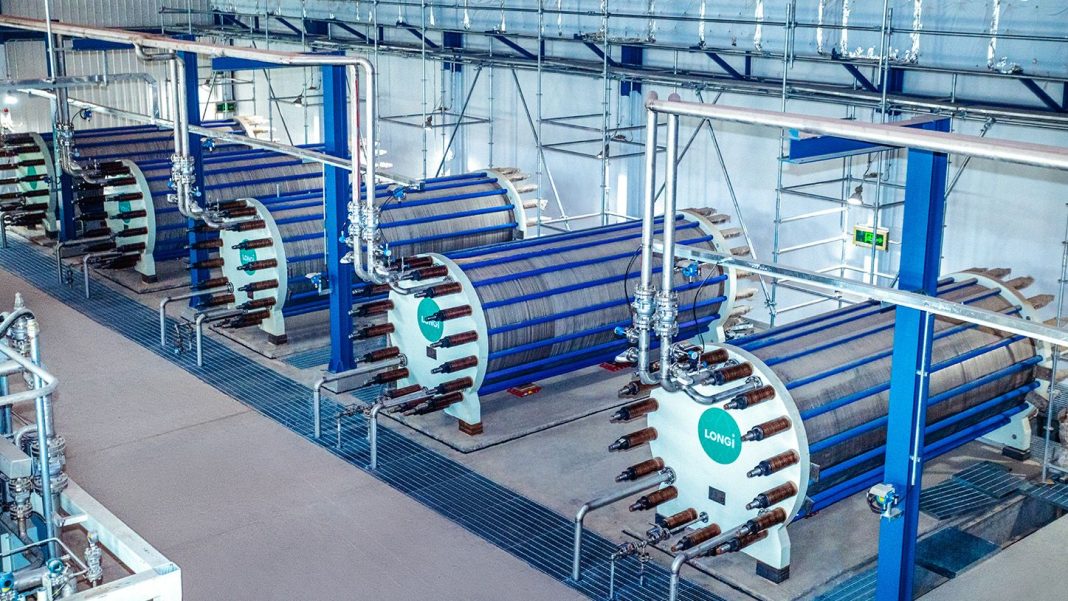
Green hydrogen projects in the Netherlands may need long term revenue support to secure investment, according to a study assessing a 200 MW alkaline electrolyser in the Rotterdam Rijnmond industrial cluster.
The study is titled ‘From volatility to viability: A stochastic evaluation of electricity-sourcing strategies and policy support for green hydrogen bankability in the Netherlands.’
The researchers compared three electricity sourcing strategies: buying power from the wholesale market, using a baseload green power purchase agreement, and integrating renewable energy generation with the electrolyser. Under baseline assumptions, each option had a loss probability close to 100%.
Simulations put the average levelised cost of hydrogen at €6.94 to €8.67 per kilogram across the configurations. The study found that the differences between sourcing models were modest compared with the gap between production costs and the hydrogen sale price.
Hydrogen Contracts for Difference, which stabilise revenue by guaranteeing a set price, improved the projects’ financial outlook. In the study’s model, a 15 year contract covering 100% of output brought the renewable integrated configuration to a 90% bankability threshold at strike prices of €6.67 to €7.34 per kilogram.
The baseload green power purchase agreement configuration required a higher strike price of €8.01 to €8.16 per kilogram to reach the same threshold. Partial volume support or shorter contracts were less effective, as they left projects exposed to market risk and often resulted in negative net present values.
The research also tested a favourable hydrogen price scenario, with prices 20% higher and reaching €6.00 per kilogram. Even then, the probability of losses remained high across the unsupported sourcing models, at 87% to 100%.
Electricity prices, carbon prices and financing costs all influence green hydrogen project economics. The study’s findings suggest that reducing exposure to volatile revenues can matter more to bankability than small improvements in technical performance or production costs.
For developers and investors, the authors say sourcing and contracting strategies should be assessed alongside downside risk, not just the levelised cost of hydrogen. They also argue that policymakers should consider the strike price, contract duration and share of production covered together when designing support.
The analysis focuses on the Netherlands and the regulatory requirements for renewable fuels of non biological origin. Its modelling framework could be applied elsewhere, the researchers say, provided local energy prices, network charges, renewable resources and support schemes are taken into account.
Author: Bryan Groenendaal